
Pest Control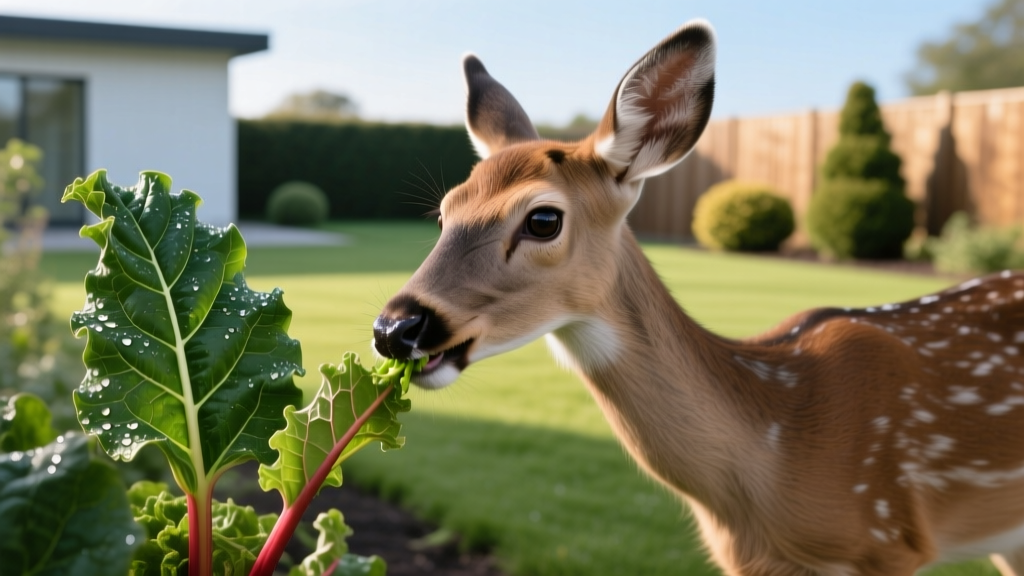
Will Deer Eat Rhubarb? The Truth About Toxicity and Resistance
The Short Answer: Will Deer Eat Rhubarb?
Under normal foraging conditions, deer will not eat rhubarb (Rheum rhabarbarum). Rhubarb is widely classified as a deer-resistant perennial due to the high concentration of oxalic acid in its leaves and the astringent, bitter taste of its stalks. However, in the context of wildlife pest management, no plant is 100% deer-proof. During periods of extreme nutritional stress, particularly in late winter and early spring, desperate deer may nibble on young rhubarb shoots. Understanding the biological mechanisms behind this resistance and the specific edge cases where deer break their dietary rules is critical for protecting your garden.
The Chemistry of Deterrence: Oxalic Acid
The primary reason deer avoid rhubarb is its chemical defense system. Rhubarb leaves contain between 0.5% and 1.0% oxalic acid by weight. When a deer bites into a leaf, the oxalic acid immediately binds to calcium in their saliva, creating calcium oxalate crystals. This causes a sharp, astringent burning sensation in the mouth and throat. Because deer have a highly developed palate and rely on rapid foraging to meet their caloric needs, they quickly learn to associate the distinct smell and taste of rhubarb with oral discomfort and systemic toxicity.
Toxicity Warning for Humans and Pets:
While deer generally self-regulate and avoid fatal doses, rhubarb leaves are highly toxic to humans, dogs, and cats. Ingestion can lead to hypocalcemia, kidney failure, and severe gastrointestinal distress. Never consume the leaves, and always compost them thoroughly away from areas where pets forage. For more on safe cultivation, consult the University of Minnesota Extension.
While deer generally self-regulate and avoid fatal doses, rhubarb leaves are highly toxic to humans, dogs, and cats. Ingestion can lead to hypocalcemia, kidney failure, and severe gastrointestinal distress. Never consume the leaves, and always compost them thoroughly away from areas where pets forage. For more on safe cultivation, consult the University of Minnesota Extension.
The Starvation Exception: When Deer Will Target Rhubarb
While the Rutgers New Jersey Agricultural Experiment Station rates rhubarb as 'B' (Seldom Severely Damaged) or 'A' (Rarely Damaged) depending on regional herd pressures, late-season starvation overrides a deer's natural aversions. Between late February and early April, white-tailed deer often lose 25% to 30% of their body weight. During this 'bottleneck' period, before native spring green-up occurs, deer enter survival mode.
When faced with starvation, deer will consume bark, twigs, and normally toxic or unpalatable plants, including rhubarb stalks. The stalks contain significantly less oxalic acid than the leaves (usually less than 0.1%), making them a viable, albeit unpreferred, emergency calorie source. If your rhubarb is emerging early during a harsh spring with deep snow cover, the young, tender shoots are at the highest risk of being browsed.
Deer Resistance Rating Matrix: Rhubarb vs. Common Perennials
To contextualize rhubarb's resistance, it helps to compare it against other common garden perennials using the standard Rutgers deer-resistance rating scale. This framework helps you decide where to plant your most vulnerable crops relative to your rhubarb.
| Plant Species | Rutgers Rating | Deer Damage Likelihood | Primary Deterrent Factor |
|---|---|---|---|
| Rhubarb | A / B | Rare to Seldom | Oxalic acid, bitter taste |
| Peony | A | Rarely Damaged | Strong fragrance, tough stems |
| Daylily | C | Occasionally Severely Damaged | None (highly palatable) |
| Hosta | D | Frequently Severely Damaged | None (deer candy) |
Proven Strategies to Protect Rhubarb from Desperate Deer
If you live in an area with high herd density or are protecting early-emerging rhubarb during a harsh spring, relying solely on the plant's natural toxicity is insufficient. According to Cornell University Wildlife Damage Management, integrated pest management (IPM) requires physical or chemical barriers when natural deterrents fail.
1. Physical Exclusion: Fencing Specifications
Fencing is the only 100% effective method for stopping determined, starving deer. Because deer can easily clear standard garden fences, you must adhere to specific dimensions:
- Vertical Woven Wire Fence: Must be at least 8 feet tall. Deer can jump 6 to 7 feet vertically. Expect to pay $15 to $22 per linear foot for professional installation of 8-foot galvanized woven wire.
- Slanted Polypropylene Fence: A 7-foot black poly fence slanted outward at a 45-degree angle exploits the deer's poor depth perception. They will not jump a fence that appears to have ambiguous height and depth. This is a cost-effective alternative, running $4 to $7 per linear foot for DIY installation.
- Temporary Spring Barriers: If you only need to protect rhubarb during the 4-week early spring emergence, use 4-foot-tall metal U-panel fencing staked tightly around the crown. Deer are less likely to jump into a confined, small space where they cannot land and maneuver safely.
2. Chemical Repellents: Active Ingredients and Application
If fencing is not viable, chemical repellents can reinforce the plant's natural bitterness. You must select repellents based on the active ingredient and the harvest timeline.
- Putrescent Whole Egg Solids (e.g., Liquid Fence, Deer Stopper): These emit a sulfur-like odor that mimics predator decay. Apply at a 2.5% concentration directly to the soil and lower stalks. Cost: $25 to $35 per gallon. Reapply every 3 weeks or after 1 inch of rainfall.
- Thiram (Fungicide/Repellent): Highly effective but strictly regulated. Thiram creates a bitter taste that deters browsing. Warning: Do not apply Thiram to rhubarb stalks within 30 days of harvest, as it is not approved for direct human consumption on edible crop parts.
- Capsaicin (Hot Pepper Wax): Irritates the deer's nasal passages and tongue. Excellent for early spring shoots, but must be washed thoroughly with a mild soap solution before you harvest the stalks for culinary use.
Expert Insight: Deer rely heavily on their olfactory senses to locate food. Scent-based repellents like putrescent egg solids are most effective when applied before the deer establish a foraging route through your garden. Once a deer has already tasted your plants, taste-based repellents (like capsaicin) are required to break the habit.
Frequently Asked Questions
Can deer get sick from eating rhubarb leaves?
Yes. If a deer consumes a large quantity of rhubarb leaves, the high oxalic acid levels can bind to systemic calcium, leading to hypocalcemia, muscle tremors, and acute renal failure. However, the immediate burning sensation in the mouth usually causes the deer to spit out the leaf after the first bite, preventing a fatal dose.
Will deer eat rhubarb in the summer?
It is exceptionally rare for deer to eat rhubarb in the summer. By late May and June, native forbs, grasses, and agricultural crops are abundant, providing deer with highly palatable, nutrient-dense food sources. They will completely ignore the bitter, toxic rhubarb during these months.
Is rhubarb safe to plant as a deer-resistant border?
Yes, rhubarb makes an excellent perimeter plant for vegetable gardens. Its large, toxic leaves and unpalatable stalks create a natural psychological barrier for deer. Planting rhubarb along the edges of your property can help mask the scent of more vulnerable crops, like lettuce and beans, located deeper in the garden.

