
Pest Control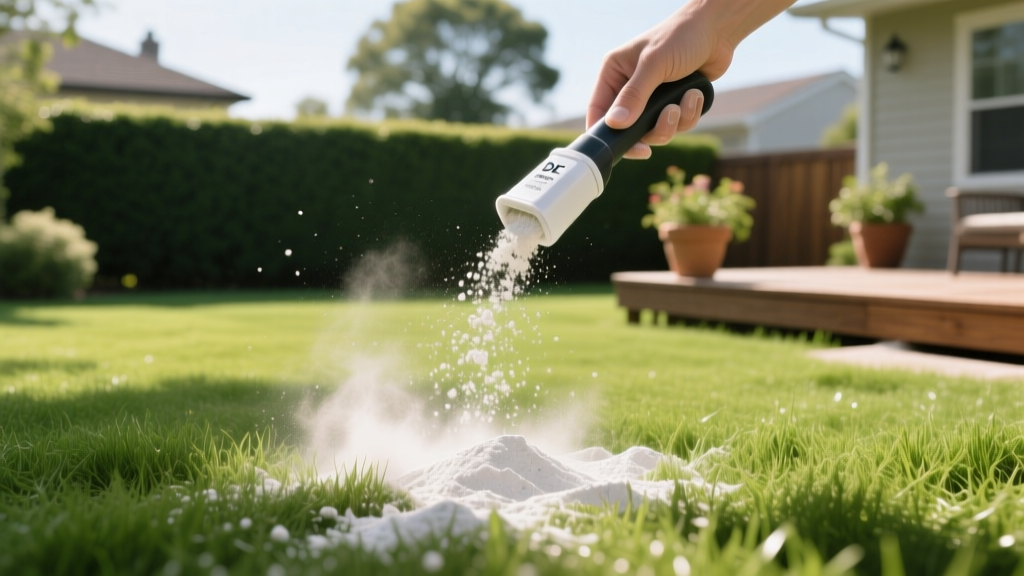
Will Diatomaceous Earth Kill Fleas? A Complete Yard Treatment Guide
The Short Answer: Yes, But With Environmental Caveats
Will diatomaceous earth kill fleas? Yes. Diatomaceous earth (DE) is a highly effective, non-toxic mechanical insecticide capable of killing adult fleas, larvae, and pupae. However, its efficacy in outdoor lawn and garden environments is strictly bound by moisture levels and application technique. Unlike chemical neurotoxins that kill on contact within minutes, DE requires 24 to 72 hours to eliminate a flea population, and it becomes entirely inert the moment it gets wet. Understanding the microscopic mechanics of DE is critical for homeowners looking to integrate it into a broader organic pest management strategy.
How Diatomaceous Earth Actually Kills Fleas
Diatomaceous earth is composed of the fossilized remains of diatoms, a type of hard-shelled microalgae. These fossilized shells are made of amorphous silica. Under a microscope, DE particles resemble jagged shards of glass. When a flea crawls through a dusting of DE, these microscopic shards abrade the insect's waxy epicuticle—the outer layer of its exoskeleton responsible for retaining moisture.
Once the epicuticle is compromised, the flea rapidly loses water through its spiracles and damaged cuticle, leading to fatal desiccation. Because this is a mechanical mode of action rather than a chemical one, fleas cannot develop biological resistance to DE, making it a sustainable long-term option for yard maintenance.
CRITICAL SAFETY WARNING: Food Grade vs. Filter Grade
Never use pool-grade or filter-grade diatomaceous earth in your yard or home. Filter-grade DE undergoes a calcination process that converts the amorphous silica into crystalline silica, a known respiratory hazard linked to silicosis. Always purchase Food Grade DE, which contains less than 1% crystalline silica and is safe for use around pets and children once the dust has settled. Even with food-grade DE, wear an N95 respirator during application to avoid inhaling fine particulate matter.
The Moisture Problem: Why DE Fails in Damp Yards
The single greatest point of failure for homeowners using DE outdoors is environmental moisture. DE relies on its abrasive, desiccating properties. When exposed to rain, heavy morning dew, or sprinkler irrigation, the powder clumps, dissolves into a sludge, and loses its ability to abrade the flea's exoskeleton. According to EPA guidelines on diatomaceous earth, the product only remains effective as long as it is kept dry. If your yard receives a heavy dew every morning, you must reapply DE once the grass dries, or rely on alternative treatments for those specific microclimates.
Targeting the Right Microclimates
Fleas are highly susceptible to ultraviolet light and desiccation; they do not survive well in direct, unshaded sunlight. Therefore, treating the sunny center of your lawn with DE is a waste of product. Focus your application on the shaded, humid microclimates where fleas actually breed:
- Underneath wooden decks and porches
- Along the shaded perimeter of fences and shrub lines
- In crawl spaces and beneath dog houses
- Under the dense canopy of broadleaf weeds or groundcover
DE vs. Chemical and Biological Flea Treatments
Choosing the right treatment depends on your timeline, budget, and tolerance for synthetic chemicals. Below is a comparative analysis of DE against common yard flea treatments.
| Treatment Type | Kill Time | Residual Efficacy | Cost (per 1,000 sq ft) | Pet & Child Safety |
|---|---|---|---|---|
| Food Grade DE | 24 - 72 hours | High (if kept dry) | $3.00 - $6.00 | Safe after dust settles |
| Imidacloprid (e.g., Bayer Advanced) | 1 - 2 hours | 30 days | $12.00 - $18.00 | Restricted until dry |
| Beneficial Nematodes (S. carpocapsae) | 24 - 48 hours | Season-long (reproduces) | $15.00 - $25.00 | 100% Safe immediately |
| Cedarwood Oil Spray | Minutes (contact) | 1 - 2 weeks | $10.00 - $14.00 | Safe after drying |
Step-by-Step: Applying DE for Outdoor Flea Control
To achieve a lethal dose for fleas without wasting product, follow this precise application protocol.
- Mow and Clear: Mow your lawn to a height of 2.5 inches and rake away heavy thatch and wet leaf litter. DE must reach the soil surface and lower stems to intercept fleas.
- Dry the Environment: Ensure no rain is forecasted for at least 48 hours. Turn off automated sprinkler systems for the treatment zone.
- Load the Duster: Fill a bulb duster or bellows hand duster (such as the Harris Red Bellow Duster) with Food Grade DE. Do not apply DE by tossing it from the bag; this creates dangerous airborne clouds and wastes the product.
- Apply a Micro-Layer: Pump the duster to release a fine, barely visible mist over the target shaded areas. The application rate should be approximately 1 lb per 1,000 square feet. If the grass looks heavily coated in white, you have applied too much. Fleas will simply walk around heavy piles of DE; they must be forced to walk through a light, even dusting.
- Restrict Access: Keep pets and children out of the treated area for 2 to 4 hours until the airborne dust has completely settled onto the soil and grass blades.
Expert Insight: The University of Kentucky Entomology Department notes that flea larvae are highly mobile and will move away from desiccating environments. By applying a light, continuous barrier of DE around the perimeter of shaded resting areas, you intercept larvae attempting to migrate to new host zones.
The Ultimate Organic Combo: DE and Beneficial Nematodes
For severe outdoor infestations, relying solely on DE is insufficient because it cannot penetrate deep into the soil where flea pupae hide. The most effective organic protocol synthesizes surface desiccation with subterranean biological warfare.
Apply Steinernema carpocapsae nematodes to the soil using a hose-end sprayer. These microscopic worms actively hunt and infect flea larvae and pupae in the top 2 inches of soil, killing them within 48 hours. Once the nematode application has been watered into the soil and the surface has completely dried, apply your surface layer of DE. The nematodes handle the subterranean pupal stage, while the DE acts as a lethal surface barrier for emerging adults and migrating larvae.
Frequently Asked Questions
Will DE harm my lawn or garden plants?
No. Diatomaceous earth is inert to plant life and will not alter your soil pH or burn grass blades. In fact, the silica in DE can slowly break down and provide trace minerals to the soil over time.
How long does DE last outdoors?
DE does not degrade under UV light and has an indefinite shelf life in the soil, provided it remains dry. However, wind, rain, and foot traffic will physically displace the powder. Expect to reapply after any significant weather event or every 30 days during peak flea season (late summer to early fall).
Can I use DE if my dog has fleas?
While food-grade DE is sometimes used in pet bedding, rubbing it directly into a dog's coat is not recommended by veterinarians. It can cause severe respiratory irritation for the pet and dries out their skin and coat. Treat the yard with DE, and use a veterinarian-approved topical or oral flea preventative (like NexGard or Bravecto) directly on the animal.

