
Pest Control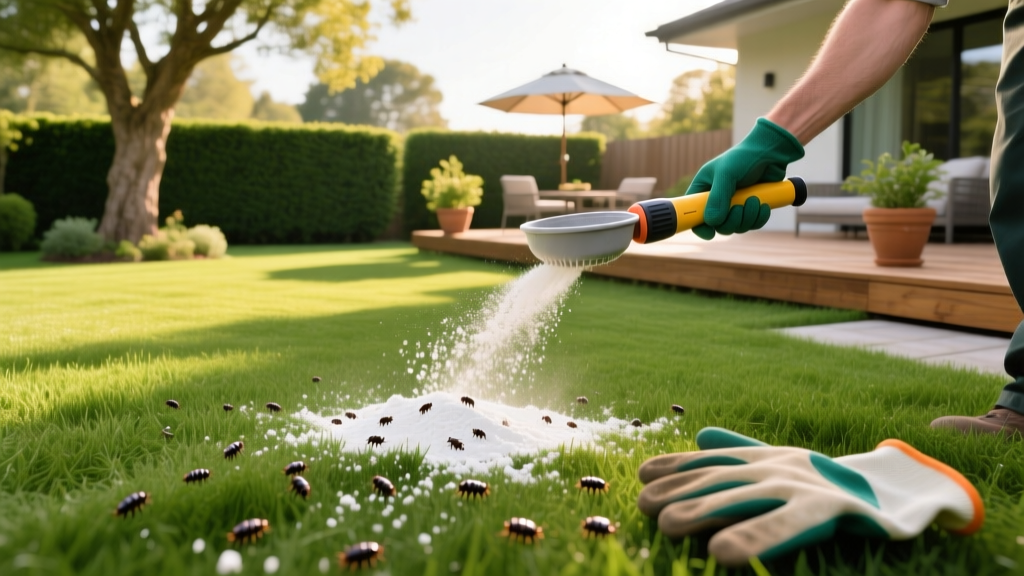
Will Lime Kill Fleas in Your Yard? The Truth and Better Alternatives
If you are battling a severe outdoor flea infestation, you have likely encountered the old gardening folklore suggesting that spreading lime across your lawn will eradicate the pests. But will lime kill fleas effectively and safely? The short answer is no. Using lime as a primary flea control method is not only ineffective, but depending on the type of lime you choose, it can also severely damage your turfgrass and pose significant health risks to your pets and family.
This guide breaks down the chemical realities of using lime outdoors, explains why this myth persists, and provides a scientifically backed, step-by-step protocol for actually eliminating fleas from your yard.
The Chemistry of Lime: Agricultural vs. Hydrated
To understand why lime fails as an insecticide, we must distinguish between the two primary types of lime sold at hardware and garden stores. They are chemically distinct and have vastly different effects on your landscape.
Agricultural Lime (Calcium Carbonate)
Agricultural lime, often sold as "garden lime," is primarily calcium carbonate ($CaCO_3$). It is a mild, naturally occurring mineral used to raise the pH of acidic soils. It is completely non-toxic to insects. Sprinkling agricultural lime on your lawn will do absolutely nothing to disrupt the flea life cycle. It will merely alter your soil chemistry, potentially causing nutrient lockout if your soil is already neutral or alkaline.
Hydrated Lime (Calcium Hydroxide)
Hydrated lime, also known as slaked lime or builder's lime, is calcium hydroxide ($Ca(OH)_2$). It is highly caustic and alkaline. While the extreme alkalinity and desiccating properties of hydrated lime can technically kill soft-bodied insects on direct contact, it is never recommended for residential pest control.
⚠️ SAFETY WARNING: Hydrated lime is a severe irritant. Direct exposure can cause chemical burns to human skin, severe eye damage, and respiratory distress if inhaled. For dogs and cats running through treated grass, hydrated lime can cause painful chemical burns on their paw pads and severe internal damage if licked off their fur.
Why the "Lime for Fleas" Myth Persists
The misconception that lime kills fleas usually stems from a confusion between lime and Diatomaceous Earth (DE). Both are white, powdery substances mined from the earth, but their mechanisms of action are entirely different.
Diatomaceous earth is composed of fossilized diatoms (silica). Under a microscope, DE looks like shards of glass. When fleas crawl through DE, the microscopic silica shards lacerate their waxy exoskeletons, causing them to dehydrate and die. Lime lacks these abrasive, microscopic structures. Furthermore, homeowners often conflate the "drying out" effect of hydrated lime (which aggressively pulls moisture from organic matter) with the mechanical desiccation caused by DE. According to the Environmental Protection Agency (EPA), mechanical desiccants like DE are viable components of an integrated pest management plan, whereas caustic lime is not recognized as a safe or registered outdoor insecticide.
The Real Dangers of Using Hydrated Lime Outdoors
Beyond the immediate physical danger to pets and children, applying hydrated lime to your lawn triggers a cascade of negative agronomic effects. Fleas thrive in shaded, moist areas with a slightly acidic to neutral pH (around 6.0 to 7.0). Attempting to alter the entire yard's pH to kill fleas will destroy your grass first.
| Impact Category | Effect of Hydrated Lime Application | Long-Term Consequence |
|---|---|---|
| Soil pH Spike | Rapidly raises soil pH above 7.5 | Induces iron, manganese, and zinc chlorosis (yellowing) |
| Turfgrass Health | Causes immediate foliar burn to grass blades | Thins the lawn, creating bare patches where weeds invade |
| Soil Microbiome | Sterilizes topsoil and kills beneficial microbes | Halts organic matter decomposition and thatch breakdown |
| Flea Pupae | Fails to penetrate the flea's protective pupal cocoon | Flea population rebounds within 2-3 weeks of application |
The most critical failure of lime is its inability to affect the pupal stage of the flea life cycle. Flea pupae are encased in a sticky, highly resilient cocoon that is virtually impervious to environmental changes, mild chemicals, and desiccants. Even if hydrated lime killed adult fleas and larvae on contact, the pupae would simply emerge later, rendering the treatment useless.
Proven Alternatives: What Actually Kills Yard Fleas
Instead of relying on ineffective and dangerous lime, modern pest management relies on targeted biological and chemical controls. The Centers for Disease Control and Prevention (CDC) recommends focusing on areas where pets rest and where wildlife frequently travels. Here is a comparison matrix of the three most effective, scientifically validated yard flea treatments.
| Treatment Type | Active Agent | Mechanism of Action | Est. Cost & Coverage |
|---|---|---|---|
| Beneficial Nematodes | Steinernema carpocapsae | Microscopic worms enter flea larvae and release lethal bacteria. | $35-$45 per 10 million (covers ~3,000 sq ft) |
| Insect Growth Regulators (IGR) | Pyriproxyfen or Methoprene | Mimics juvenile hormones, preventing larvae from maturing into biting adults. | $60-$85 per pint concentrate (covers up to 16,000 sq ft) |
| Desiccant Dusts | Food-Grade Diatomaceous Earth | Microscopic silica shards lacerate the exoskeleton, causing dehydration. | $15-$25 per 4 lb bag (spot treatment only) |
Step-by-Step Yard Flea Eradication Protocol
To achieve total control, you must attack the flea life cycle at multiple vulnerable points. Follow this 4-step protocol for optimal results.
- Habitat Modification (Day 1): Fleas require high humidity and shade to survive. Mow your lawn to a height of 2.5 to 3 inches to allow sunlight to penetrate the soil surface. Trim back overhanging shrubs and tree branches to eliminate deep shade. Remove piles of leaves, dead wood, and organic debris where rodents and wildlife (the primary flea vectors) might nest.
- Apply Beneficial Nematodes (Day 2): Purchase Steinernema carpocapsae nematodes. These must be kept refrigerated until use. Mix the nematodes with water according to the package instructions and apply using a hose-end sprayer in the late afternoon or early evening. Critical detail: Nematodes are killed by UV light and require moist soil to move. Water the lawn lightly before application and keep the soil moist for the next 7 days.
- Deploy an IGR Spray (Day 7): Mix an Insect Growth Regulator containing Pyriproxyfen (such as Archer IGR or Tekko Pro) at a rate of 1 oz per gallon of water. Spray this solution heavily in shaded areas, under decks, along fence lines, and around the perimeter of your home. Pyriproxyfen is photostable and can remain active in the soil and thatch layer for up to 7 months, breaking the reproductive cycle of any newly introduced fleas.
- Treat the Host (Ongoing): Yard treatments will fail if your pets continuously reintroduce flea eggs into the environment. Ensure all dogs and cats are on a veterinarian-prescribed oral or topical flea preventative (e.g., Fluralaner, Afoxolaner, or Selamectin) year-round. Wash all pet bedding in hot water (at least 140°F) weekly.
Frequently Asked Questions
Can I use pelletized lime to dry out a wet, flea-infested yard?
No. Pelletized agricultural lime will not dry out the yard or kill fleas. If your yard is chronically wet, you need to address the drainage issue by aerating compacted soil, installing French drains, or regrading the landscape to direct water away from the house.
Does sweet lime or citrus oil work better than agricultural lime?
Citrus oils contain d-limonene, which is a known contact insecticide that can kill adult fleas by breaking down their nervous system. However, citrus oil has no residual effect. It will only kill fleas it directly touches upon application and will not prevent re-infestation or kill hidden pupae.
How long does it take to completely eliminate a yard flea infestation?
Because the pupal stage can remain dormant in its cocoon for up to 5 months waiting for environmental cues (like vibrations or carbon dioxide from a host), complete eradication typically takes 3 to 4 weeks of consistent IGR and nematode applications to ensure all emerging adults are neutralized before they can lay new eggs.

