
Pest Control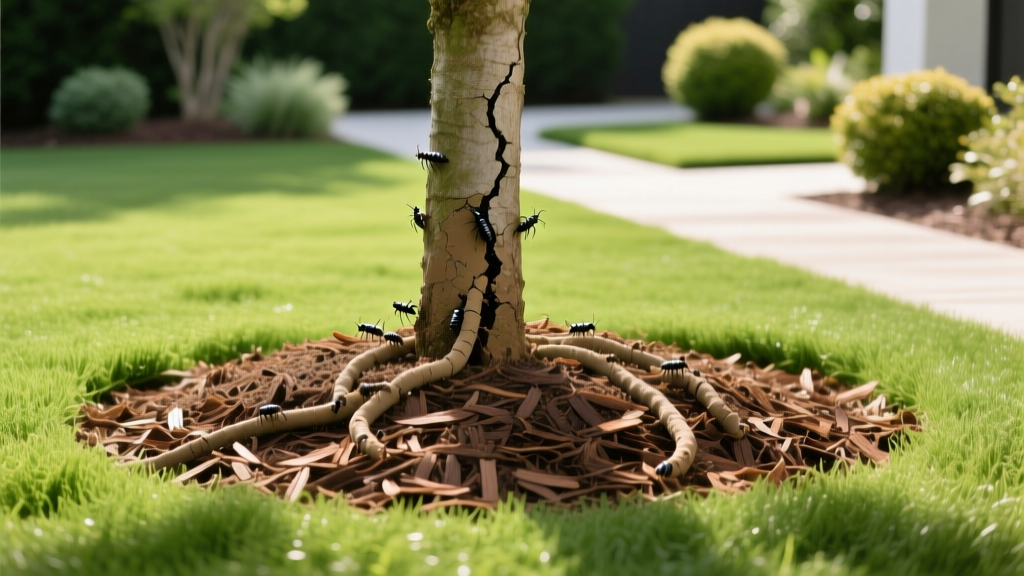
Will Mulch Bring Termites to Your Home? The Truth About Landscaping
The Short Answer: Does Mulch Attract Termites?
Homeowners frequently ask, "will mulch bring termites to my house?" The short answer is no; mulch does not act as a magnetic beacon that draws termites from miles away. Subterranean termites (Reticulitermes flavipes) forage randomly through the soil in search of cellulose and moisture. However, while mulch does not attract termites from a distance, it creates the exact microclimate they need to survive, thrive, and build undetected mud tubes directly against your foundation. According to the Environmental Protection Agency (EPA), moisture retention is the primary catalyst for termite infestations, and improper mulching is a leading cause of compromised soil treatments.
This guide breaks down the biological relationship between landscaping materials and wood-destroying insects, providing exact measurements, material resistance data, and chemical defense strategies to protect your home's structural integrity.
The Biology of Foraging: Moisture vs. Food Source
To understand the risk, you must separate the concept of "food" from "habitat." Most commercial mulches (like pine bark or hardwood) are already partially decomposed and are not the preferred food source for subterranean termites, which favor the solid cellulose found in structural lumber. The real danger is moisture retention.
Termites require a constant moisture level to prevent desiccation. A 3-inch layer of mulch traps soil moisture, lowers soil temperature, and provides a physical bridge over your home's termite-treated soil barrier. If termites are already foraging in your yard, the mulch bed acts as a protected highway, allowing them to bypass the chemical treatment zone and enter your home through weep holes, siding gaps, or slab cracks.
Mulch Material Matrix: Resistance and Risk Profiles
Not all mulches carry the same level of risk. Some contain natural resins and oils that deter pests, while others provide an ideal environment. Below is a comparative analysis of common landscaping materials based on termite resistance, moisture retention, and current 2026 pricing.
| Mulch Type | Termite Resistance | Moisture Retention | Avg. Cost (per cu. yd.) | Best Use Case |
|---|---|---|---|---|
| Cedar Mulch | High (Contains thujone) | Moderate | $40 - $55 | Direct foundation borders |
| Cypress Heartwood | High (Resinous) | Moderate | $35 - $45 | General landscaping beds |
| Pine Bark / Nuggets | Low (Highly susceptible) | High | $18 - $25 | Away from structures (>15 ft) |
| Hardwood Shredded | Low to Moderate | Very High | $20 - $30 | Pathways, distant tree rings |
| Rubber Mulch | None (Zero cellulose) | Low (But traps soil moisture) | $70 - $90 | Playgrounds, non-organic beds |
| Crushed Gravel / Stone | Absolute (Inorganic) | Lowest (Excellent drainage) | $45 - $65 | Direct foundation perimeter |
⚠️ Warning on Cypress Mulch: Only heartwood cypress is termite-resistant. Many budget-friendly "cypress" mulches sold at big-box stores contain high percentages of sapwood, which termites will readily consume. Always verify the source or opt for cedar if using wood-based mulch near the home.
The 12-Inch Rule: Proper Foundation Spacing
The most critical factor in preventing termites in mulch beds is not the material you choose, but how you place it. The Clemson University Home & Garden Information Center strongly recommends maintaining a visible inspection zone between your landscaping and your foundation.
Exact Landscaping Specifications
- The Inspection Gap: Maintain a strict 6 to 12-inch gap of bare soil or inorganic gravel between the edge of your mulch bed and the foundation wall. This exposes any mud tubes the termites attempt to build.
- Maximum Depth: Never apply wood mulch deeper than 2 to 3 inches. Deeper piles retain excessive moisture and begin to compost, generating heat and fungal growth that attracts termite colonies.
- Siding Clearance: Ensure the top of the mulch layer is at least 6 inches below the bottom edge of your exterior siding or brick weep holes. Termites frequently use mulch piled too high to bypass physical termite shields.
- Grade Slope: The bare soil gap must slope away from the foundation at a minimum grade of 5% (a 6-inch drop over the first 10 feet) to prevent water from pooling against the structure.
Integrating Chemical and Bait Defenses
If you insist on using organic mulch near your home, you must pair it with a robust subterranean termite defense system. Relying solely on "termite-resistant" mulch is a critical failure point, as the repellent oils in cedar and cypress degrade within 12 to 18 months.
Liquid Soil Barrier: Termidor SC (Fipronil)
For a continuous chemical barrier, professionals use Termidor SC (9.1% Fipronil). This non-repellent termiticide utilizes a transfer effect; termites cannot detect it, walk through it, and share it with the colony.
- Application Rate: 0.8 fluid ounces of Termidor SC per gallon of water.
- Trenching Specs: Dig a trench 6 inches wide by 6 inches deep directly against the foundation (under the bare-soil inspection gap before gravel is laid).
- Volume: Apply 4 gallons of finished solution per 10 linear feet of trench.
- Cost: A 20 oz bottle costs approximately $75 and treats roughly 60 linear feet of foundation.
Baiting Systems: Sentricon Always Active
If trenching is impossible due to hardscaping or thick mulch beds, bait stations are the alternative. Sentricon Always Active uses Noviflumuron, a chitin synthesis inhibitor that prevents termites from molting.
- Placement: Stations are installed every 10 feet around the perimeter, directly in the soil, regardless of the mulch layer above.
- Cost: Professional installation and annual monitoring typically range from $1,200 to $2,500 for an average 2,500 sq. ft. home.
Inspection Checklist: Spotting Termites in Mulch Beds
Even with proper spacing and treatments, annual inspections are mandatory. Perform this check in early spring when soil temperatures reach 65°F and termite swarming activity peaks.
- Probe the Mulch: Use a flathead screwdriver to turn over the top layer of mulch near the foundation. Look for pale, translucent worker termites or the darker, winged reproductive swarmers.
- Hunt for Mud Tubes: Inspect the bare 12-inch soil gap and the foundation wall. Subterranean termites build pencil-width (1/4 to 1/2 inch) tunnels of packed soil and saliva to travel safely above ground.
- Check Wood Debris: Remove any buried landscape timbers, railroad ties, or tree stumps within 20 feet of the foundation. These act as satellite feeding stations that sustain local colonies.
"The presence of termites in your mulch bed does not automatically mean your house is infested. It indicates that a colony is foraging in the immediate vicinity. The critical variable is whether your soil treatment or physical barrier has been compromised by the mulch layer." — Structural Pest Control Industry Guidelines
✔️ Summary Action Plan:
1. Keep mulch 12 inches away from the foundation.
2. Limit mulch depth to 3 inches maximum.
3. Use cedar, cypress heartwood, or gravel near the house.
4. Maintain an active liquid (Fipronil) or bait (Noviflumuron) termite warranty.
5. Inspect the bare soil gap annually for mud tubes.
1. Keep mulch 12 inches away from the foundation.
2. Limit mulch depth to 3 inches maximum.
3. Use cedar, cypress heartwood, or gravel near the house.
4. Maintain an active liquid (Fipronil) or bait (Noviflumuron) termite warranty.
5. Inspect the bare soil gap annually for mud tubes.
By understanding the biological drivers of termite foraging and adhering to strict landscaping clearances, you can enjoy the aesthetic and horticultural benefits of mulch without compromising your home's structural defense. For further reading on wood-destroying organisms, consult the University of California Statewide IPM Program for region-specific management guidelines.

