
Pest Control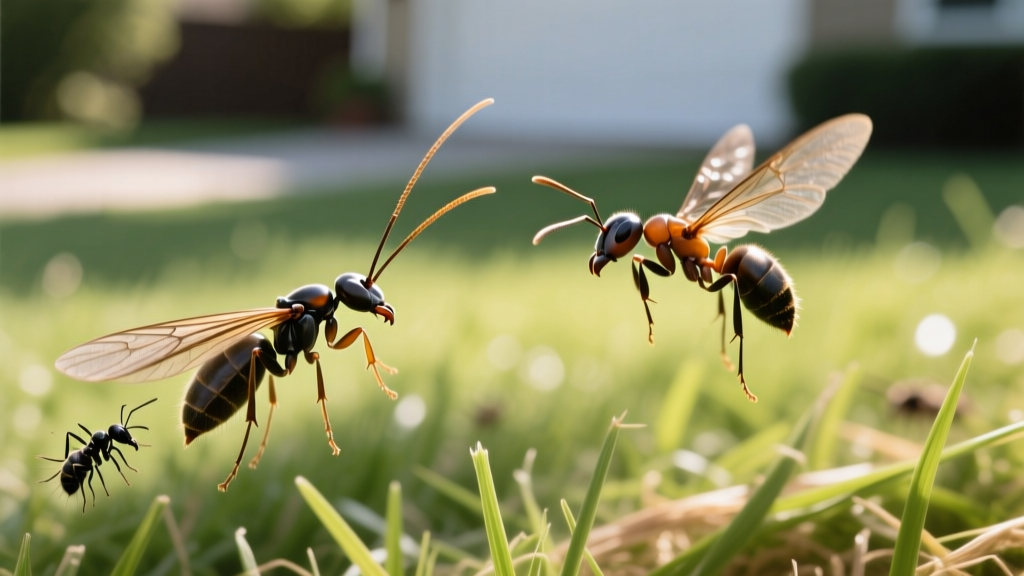
Identify Swarming Pests: Picture of Winged Termite vs Flying Ant
The Spring Swarm: Why You Are Seeing Winged Insects
When reproductive termites emerge from their subterranean colonies to mate and establish new nests, they create a phenomenon known as a swarm. For homeowners, spotting these insects on patios, windowsills, or near foundation walls triggers immediate concern. The primary challenge is distinguishing between destructive termite alates (swarmers) and harmless carpenter ants. Misidentification can lead to either unnecessary panic or catastrophic structural damage. Understanding the morphological differences and implementing proactive yard defense protocols are critical steps in protecting your property from wood-destroying organisms.
Decoding the Bug: Picture of Winged Termite vs. Flying Ant
If you have ever looked up a picture of winged termite alates online to compare with the bugs on your patio, you likely noticed that both pests share superficial similarities. Both have two pairs of wings and swarm during the spring or early summer. However, their anatomical structures reveal entirely different biological classifications and threat levels.
| Feature | Winged Termite (Alate) | Flying Carpenter Ant |
|---|---|---|
| Waist | Thick, straight, and uniform (no constriction between thorax and abdomen). | Pinched, narrow, and distinctly segmented (hourglass shape). |
| Wings | Two pairs of equal-length wings that extend well past the abdomen. Wings are fragile and easily break off. | Two pairs of unequal-length wings (front wings are longer than hind wings). Wings are durable and veined. |
| Antennae | Straight and bead-like (moniliform). | Bent or elbowed at a distinct 90-degree angle. |
| Swarm Behavior | Weak fliers; often shed wings shortly after landing near light sources. | Stronger fliers; do not typically shed wings immediately after swarming. |
⚠️ Warning: The Shed Wing Indicator
Finding piles of translucent, identical-length wings on your windowsills or outdoor furniture is a definitive sign of a termite swarm. Termites shed their wings because they no longer need them after mating and burrowing into the soil. Carpenter ants retain their wings. If you find discarded wings, assume you have a subterranean termite colony within 100 yards of your home.
What a Winged Termite Means for Your Yard and Home
Spotting a winged termite outdoors does not automatically mean your house is actively infested. According to North Carolina State University Extension, outdoor swarms often originate from decaying stumps, mulch beds, or fence posts in the yard. However, a swarm indicates a mature colony (typically 3 to 5 years old) is in the immediate vicinity, and foraging workers may already be probing your foundation for cellulose and moisture.
Identifying Secondary Yard Signs
Beyond the swarming alates, look for these physical indicators in your landscaping:
- Mud Tubes (Shelter Tubes): Subterranean termites build pencil-sized tunnels of soil and saliva to travel between the soil and wood while protecting themselves from desiccation and predators. Check the perimeter of your foundation, crawl space piers, and retaining walls.
- Frass (Termite Droppings): While drywood termites push out hexagonal fecal pellets, subterranean termites use their feces to construct mud tubes. If you see small, wood-colored pellets accumulating on the ground, you may be dealing with drywood termites, which require entirely different treatment protocols.
- Blistered Wood: Tap wooden fence posts, deck stairs, and siding with a screwdriver handle. A hollow sound or wood that easily caves in indicates internal galleries hollowed out by worker termites.
Strategic Yard Defense: Keeping Termites Away from Your Foundation
Effective termite yard defense relies on creating an environment that is hostile to termite survival. The Environmental Protection Agency (EPA) emphasizes integrating moisture control, physical barriers, and targeted chemical applications to manage subterranean populations.
1. Moisture Control and Grading
Termites require high moisture levels to survive. Eastern subterranean termites (Reticulitermes flavipes) will abandon an area if the soil moisture drops below optimal thresholds.
- Regrade Soil: Ensure the soil slopes away from your foundation at a minimum grade of 6 inches of drop over the first 10 horizontal feet.
- Downspout Extensions: Route gutter downspouts at least 5 feet away from the foundation using rigid PVC or corrugated extensions to prevent pooling near the perimeter.
- Fix Leaks: Repair dripping outdoor spigots and HVAC condensation lines immediately. A single slow leak can provide enough moisture to sustain a satellite colony.
2. Wood-to-Soil Clearance and Mulch Management
Physical contact between soil and wood provides termites with undetected access to your home's structural framing.
- The 6-Inch Inspection Gap: Maintain a strict 6-inch vertical gap between the top of any mulch or soil and the bottom of your home's wood siding or brick weep holes.
- Mulch Alternatives: Replace organic wood mulch near the foundation with inorganic options like crushed gravel, river rock, or rubber mulch. If you must use wood mulch, limit the depth to 2 inches and keep it 12 inches away from the foundation.
- Fence Post Isolation: Never set wooden fence posts directly into concrete, which traps moisture and accelerates rot. Use galvanized steel post anchors elevated above the soil line.
3. Chemical and Bait Barrier Systems
When environmental modifications are insufficient, chemical intervention becomes necessary. Homeowners have two primary professional-grade options for yard perimeter defense:
Liquid Trenching Protocol (Termidor SC)
Applying a non-repellent termiticide like Fipronil 9.1% (Termidor SC) creates an invisible, lethal barrier. Termites cannot detect the chemical, allowing them to tunnel through it and transfer it to the colony via grooming (the Transfer Effect).
- Trenching: Dig a trench 6 inches wide and 6 inches deep directly against the foundation.
- Dilution: Mix 0.8 fluid ounces of Termidor SC per gallon of water to achieve a 0.06% active ingredient suspension.
- Application: Apply 4 gallons of the finished solution per 10 linear feet of trench. For a standard 200-foot perimeter, you will need 80 gallons of solution and roughly 5 bottles (20 oz each) of product.
- Backfilling: Treat the excavated soil with the remaining solution before pushing it back into the trench.
Alternatively, bait systems like Trelona ATBS (utilizing the active ingredient Novaluron, an insect growth regulator) are installed in plastic stations buried flush with the soil every 10 feet around the perimeter. Worker termites consume the cellulose bait matrix and share it with the colony, ultimately preventing molting and collapsing the population. Bait systems are ideal for properties with well systems, drainage issues, or extensive hardscaping where trenching is impossible.
Financial Breakdown: DIY vs. Professional Termite Defense
Deciding whether to tackle yard defense yourself or hire a licensed pest control operator depends on your budget, property layout, and risk tolerance.
| Treatment Method | Estimated DIY Cost (Materials Only) | Estimated Professional Cost | Longevity & Maintenance |
|---|---|---|---|
| Liquid Trench (Fipronil) | $400 - $600 | $1,500 - $2,800 | Lasts 5-10 years; requires physical labor and proper soil conditions. |
| Bait Stations (Novaluron) | $600 - $900 (Initial setup) | $900 - $1,400 (Initial) + $250/yr | Requires quarterly monitoring and bait replacement; highly effective for colony elimination. |
| Moisture/Physical Barriers | $100 - $300 | N/A (Usually bundled with structural repairs) | Ongoing maintenance; essential prerequisite for chemical treatments. |
Frequently Asked Questions About Swarming Termites
Do winged termites bite humans or pets?
No. Termite alates do not possess the mandible strength to bite humans or pets, nor do they carry stingers. They are entirely harmless to living tissue. Their sole purpose during the swarm is to mate and locate a new wood source to start a colony.
If I see a swarm in my yard, is my house infested?
Not necessarily. An outdoor swarm indicates a mature colony is nearby—often in a dead tree, stump, or neighbor's yard. However, it confirms that the local environment is highly conducive to termite activity, meaning your home is at elevated risk and requires a thorough professional inspection of the foundation and crawl spaces.
Can I just spray flying termites with over-the-counter bug spray?
Spraying swarming termites with aerosol pyrethroids (like Raid) will kill the visible alates but will do absolutely nothing to stop the millions of worker termites hidden underground. Worse, using repellent sprays near the foundation can cause subterranean colonies to alter their tunneling paths, making them harder to detect and treat later. Focus on soil barriers and baiting, not surface sprays.

