
Pest Control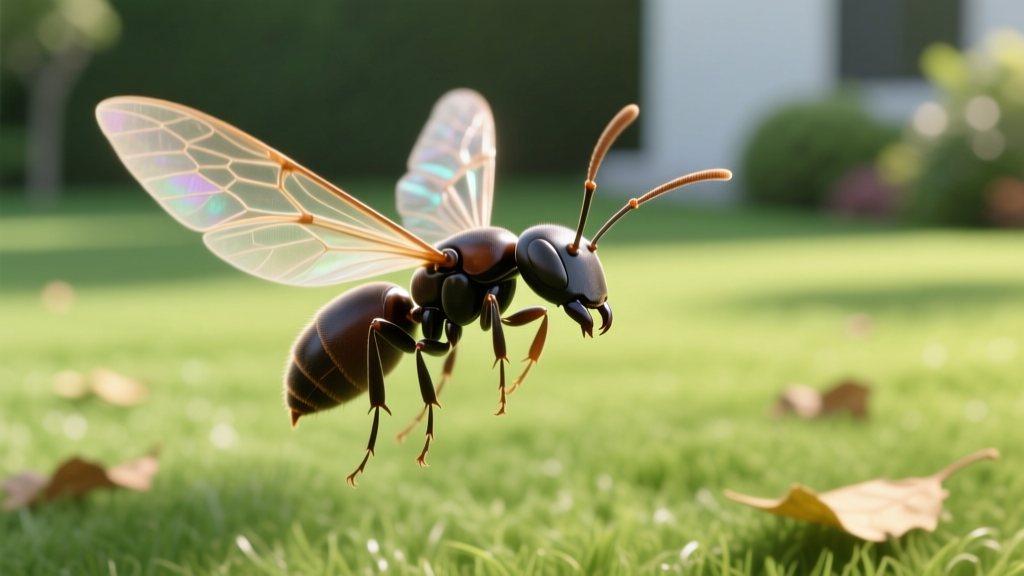
What Do Termites Look Like With Wings? Swarmer ID Guide
The Anatomy of a Winged Termite (Alates)
When homeowners ask, "what do termites look like with wings?", they are referring to the reproductive caste of the termite colony, scientifically known as alates or swarmers. These insects are the future kings and queens responsible for establishing new colonies. Unlike the pale, blind worker termites that remain hidden inside wood and soil, alates are fully developed with eyes, hard exoskeletons, and two pairs of wings.
A winged termite typically measures between 1/4 inch and 3/8 inch in length, including the wings. Their coloration varies strictly by species:
- Subterranean Termites: Dark brown to black bodies with smoky gray or translucent wings.
- Drywood Termites: Reddish-brown to dark brown bodies with clear or slightly smoky wings.
- Dampwood Termites: The largest species, featuring dark reddish-brown bodies and clear wings.
⚠️ Critical ID Feature: The Wings
Termite wings are uniform in size. Both the front and hind wings are exactly the same length, extending roughly twice the length of the termite's body. The wings feature a distinct, net-like venation pattern and are highly fragile, often breaking off shortly after a swarming event.
Winged Termites vs. Flying Ants: The Comparison Matrix
The most common misidentification in pest control is confusing winged termite swarmers with flying carpenter ants. Both emerge in large numbers during the spring and early summer, but their anatomical differences are stark when viewed up close. Misidentifying the pest leads to incorrect treatment protocols, as carpenter ant baiting strategies will fail entirely on a termite colony.
| Anatomical Feature | Winged Termite (Swamer) | Flying Carpenter Ant |
|---|---|---|
| Antennae | Straight, bead-like (moniliform) | Elbowed or bent (geniculate) |
| Waist (Thorax-Abdomen) | Broad, uniform thickness (no pinch) | Pinched, narrow petiole (node) |
| Wings | Four wings of equal length and shape | Front wings longer than hind wings |
| Wing Durability | Fragile, shed easily after flight | Sturdy, remain attached to body |
| Body Color | Uniform dark brown, black, or reddish | Often multi-colored (red/black mix) |
The Biology of the Nuptial Flight
Understanding why termites grow wings requires looking at their reproductive cycle. A mature termite colony (typically 3 to 5 years old and containing hundreds of thousands of workers) will produce alates when environmental triggers align. This event is called a nuptial flight or swarm.
Environmental Triggers for Swarming
Swarmers do not emerge randomly. They require highly specific micro-climate conditions to trigger their departure from the nest:
- Soil Temperature: Subterranean termites typically require soil temperatures between 70°F and 85°F at a depth of 6 inches.
- Moisture Levels: Swarms frequently occur 24 to 48 hours after a significant spring rainfall, which softens the soil for newly mated pairs to excavate founding chambers.
- Photoperiod: Subterranean species usually swarm in the morning following a rain event, while drywood termites prefer swarming at dusk during late summer or early fall.
Once airborne, the swarmers rely on wind currents to disperse. The flight is notoriously weak; they rarely travel more than 100 to 300 yards from the parent colony. Upon landing, the alates perform a behavior called dealation, where they intentionally flex their bodies to snap off their wings at the basal suture. They then pair up, tandem-run to find a crevice in wood or soil, and mate to become the primary king and queen of a new colony.
💡 Pro-Tip: Finding Discarded Wings
Because swarmers shed their wings almost immediately upon landing, you are far more likely to find piles of discarded, translucent wings on window sills, near exterior doors, or caught in spider webs than you are to see the live insects. Finding piles of uniform-length wings indoors is a definitive indicator of an active, mature infestation inside your walls.
Action Plan: What to Do When You Spot Swarmers
If you have positively identified winged termites, the colony has been established in or immediately adjacent to your property for a minimum of three years. Over-the-counter aerosol sprays (like Raid or Ortho Home Defense) are entirely ineffective against the primary colony hidden deep underground or inside structural voids. Spraying visible swarmers only kills the reproductive caste in the open while the millions of wood-eating workers continue destroying your home's framing.
Professional Treatment Modalities and Costs
Effective eradication requires targeting the worker caste through professional transfer effects or baiting matrices. Below is the current 2026 cost and efficacy framework for the two industry-standard treatments:
| Treatment Type | Active Ingredient / Brand | Mechanism of Action | Average Cost (2,500 sq ft home) |
|---|---|---|---|
| Liquid Soil Barrier | Fipronil (Termidor SC / Termidor HE) | Non-repellent transfer effect. Termites tunnel through treated soil, pick up the chemical, and transfer it to the colony via trophallaxis (grooming/feeding). | $1,400 – $2,800 (Initial trenching and rodding) |
| Cellulose Bait Stations | Hexaflumuron / Noviflumuron (Sentricon Always Active / Trelona) | Chitin synthesis inhibitor. Termites consume the bait matrix, molt, and die. Disrupts colony growth over 60-90 days. | $1,200 – $2,200 (Installation) + $350/year (Monitoring) |
The 4-Step Homeowner Inspection Protocol
Before calling a licensed exterminator, perform this rapid inspection to gather data that will help the technician pinpoint the colony's origin:
- Map the Swarm Origin: Note exactly which room or exterior wall had the highest concentration of live swarmers or discarded wings. This usually indicates the location of the primary mud tube or wood-to-ground contact point.
- Check the Foundation Perimeter: Walk the exterior perimeter with a flashlight. Look for flat, brown, pencil-width mud tubes running from the soil up the concrete foundation toward the wooden sill plate.
- Inspect Moisture Sources: Check for leaking HVAC condensation lines, poorly graded soil pooling against the siding, or mulch piled higher than the weep holes in brick veneer. Subterranean termites require constant moisture contact.
- Probe Suspect Wood: Use a flathead screwdriver to gently probe baseboards or door frames near the swarm origin. If the wood yields easily and reveals a honeycomb pattern packed with gray soil, you have located active gallery damage.
Authoritative Resources for Termite Management
Accurate identification and treatment require adherence to integrated pest management (IPM) standards. For detailed biological data, regional swarming maps, and structural protection guidelines, consult the following peer-reviewed and institutional resources:
- University of California Agriculture and Natural Resources (UC IPM): Termites Pest Note – Provides exhaustive, scientifically backed data on termite biology, swarming triggers, and non-chemical structural prevention methods.
- National Pest Management Association (NPMA): Termite Identification Guide – Offers high-resolution morphological comparisons between alates and carpenter ants, alongside professional treatment standards.
Correctly answering "what do termites look like with wings" is the first line of defense in structural pest management. By distinguishing the straight antennae, broad waist, and uniform wings of a termite swarmer from a flying ant, homeowners can bypass ineffective DIY remedies and deploy targeted, colony-eliminating treatments before catastrophic load-bearing damage occurs.

