
Pest Control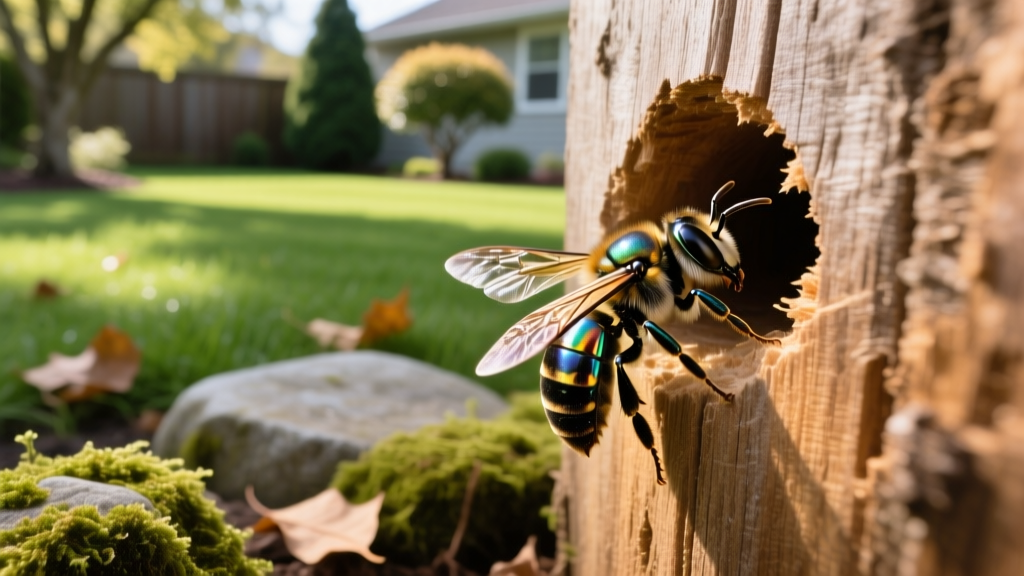
What to Do About Wood Boring Bees: ID and Control Guide
Wood boring bees, scientifically classified under the genus Xylocopa and commonly known as carpenter bees, are large, solitary insects that excavate tunnels in structural timber to rear their young. Unlike termites, they do not consume the wood for sustenance; instead, they chew through it, ejecting coarse sawdust (frass) to create extensive internal galleries. If left untreated, multi-generational nesting can compromise the structural integrity of eaves, fascia boards, decks, and window frames, while simultaneously attracting destructive secondary pests like woodpeckers.
This guide provides a precise, entomologist-backed framework for identifying carpenter bee activity, selecting the correct insecticidal dusts, and executing a permanent exclusion protocol to protect your home's exterior woodwork.
Carpenter Bee vs. Bumblebee vs. Termite: Quick Identification Matrix
Homeowners frequently misidentify carpenter bees as bumblebees or confuse their damage with termite activity. Accurate identification dictates the correct treatment protocol. Use the matrix below to confirm the pest you are dealing with.
| Feature | Carpenter Bee (Xylocopa) | Bumblebee (Bombus) | Subterranean Termite |
|---|---|---|---|
| Physical Appearance | Shiny, black, hairless abdomen; 3/4 to 1 inch long. | Fuzzy, yellow-and-black banded abdomen; smaller. | Pale, soft-bodied, 1/4 inch long; rarely seen in the open. |
| Nesting Location | Excavates into dry, unpainted, or weathered wood. | Underground burrows, abandoned rodent nests. | Subterranean soil colonies; mud tubes to wood. |
| Wood Damage | Perfectly round 1/2-inch entry holes; coarse sawdust below. | None (do not bore into wood). | Hollowed wood with soil/mud packing; no sawdust. |
| Behavior | Solitary; males hover aggressively but lack stingers. | Social colonies; generally docile unless nest is threatened. | Blind, light-avoiding workers foraging continuously. |
The Anatomy of a Carpenter Bee Infestation
Understanding the internal architecture of a carpenter bee gallery is critical for effective eradication. When a female carpenter bee selects a nesting site, she bores a perfectly circular entry hole exactly 1/2 inch in diameter. According to University of Kentucky Entomology, the tunnel does not go straight back. Instead, it typically extends about an inch inward before taking a sharp 90-degree turn, running parallel to the wood grain.
Inside this main corridor, the female constructs a series of brood cells separated by walls of chewed wood pulp. She provisions each cell with a mixture of pollen and nectar, lays a single egg, and seals it. By late summer, the larvae develop into adults that overwinter inside these same tunnels, emerging the following April or May to repeat the cycle. Over 3 to 4 years, successive generations will expand the original tunnel system, sometimes branching into complex networks that span several feet inside a single fascia board.
Warning: The Woodpecker Multiplier Effect
The most severe structural damage from carpenter bees often does not come from the bees themselves, but from woodpeckers. Downy and hairy woodpeckers can hear the larvae chewing inside the wood and will aggressively peck at the fascia to extract them. This secondary damage can shred a wooden eave in a matter of days, turning a minor cosmetic bee issue into a major carpentry repair bill.
Assessing the Damage: When to Treat vs. When to Tolerate
Not every carpenter bee sighting requires immediate chemical intervention. Carpenter bees are native pollinators that play a vital role in local ecosystems. Before initiating an eradication protocol, evaluate the location and extent of the nesting.
Treat Immediately If:
- The bees are boring into load-bearing structural timbers, deck joists, or critical roof fascia.
- There are more than 5 to 10 active entry holes on a single structural component.
- Woodpeckers have begun attacking the wood surrounding the nests.
- The nesting is occurring in softwoods like untreated cedar, redwood, or pine that are highly susceptible to rapid gallery expansion.
Tolerate and Monitor If:
- The bees are utilizing isolated, non-structural landscape timbers, dead tree stumps, or detached fence posts far from the home.
- There are only one or two historical, abandoned holes with no current frass production.
Step-by-Step Eradication and Exclusion Protocol
Liquid insecticide sprays are largely ineffective against carpenter bees because they absorb into the surface grain and fail to penetrate the deep, right-angled galleries where the bees and larvae reside. For complete eradication, you must use an insecticidal dust applied directly into the nest, followed by physical exclusion.
Step 1: Time the Application Correctly
Treat the nests at dusk or after dark. During the day, female carpenter bees are out foraging for pollen. At night, they return to the gallery and remain dormant, ensuring the insecticide contacts the adult bee and is tracked deeper into the brood cells. Wear protective eyewear, long sleeves, and leather gloves, as disturbed females can sting.
Step 2: Apply Insecticidal Dust
Use a dedicated hand duster, such as the JT Eaton 365 Brass Duster (approx. $18), to puff a small amount of dust directly into the 1/2-inch hole. Do not overfill the hole; a light coating is sufficient. The bee will walk through the dust, spreading it throughout the gallery.
- Drione Dust (Silica Gel + Pyrethrin): Highly effective, long-lasting residual control. Costs roughly $30 for a 1lb shaker. The silica gel desiccates the insect's exoskeleton while the pyrethrin provides a rapid knockdown.
- Delta Dust (Deltamethrin): A waterproof synthetic pyrethroid dust that performs exceptionally well in high-humidity environments or areas prone to driving rain. Priced around $25 for a 1lb container.
- Diatomaceous Earth (DE): A non-chemical, organic alternative. While safer for the environment, DE loses its efficacy if it gets wet inside the wood tunnel and requires more frequent reapplication.
Step 3: Wait and Plug the Holes
Crucial timing: Do not plug the holes immediately after dusting. Wait 48 to 72 hours to allow foraging bees to return, contact the dust, and expire inside the nest. If you plug the hole immediately, surviving bees will simply chew a new exit hole through the wood grain, bypassing your treatment.
After the waiting period, insert a small wad of 1/2-inch copper mesh wire (such as Stuf-Fit brand) deep into the tunnel. Carpenter bees cannot chew through copper mesh. Once the mesh is seated, seal the entry hole flush with the exterior wood surface using an exterior-grade, paintable wood filler like Minwax High Performance Wood Filler ($12 per quart) or a two-part epoxy wood putty for high-stress structural joints.
Preventative Wood Treatments and Deterrents
Exclusion is only half the battle. According to NC State Extension, carpenter bees strongly prefer bare, weathered, and unpainted softwoods. Altering the surface profile of your exterior wood is the most reliable long-term deterrent.
Paint vs. Stain vs. Polyurethane
Oil-based alkyd paints provide the absolute best protection against carpenter bees. The thick, opaque film completely masks the wood grain texture that females use to select nesting sites. If you prefer the natural look of wood, a clear polyurethane or varnish coat will deter them, though it must be reapplied every 2 to 3 years as UV degradation breaks down the finish. Standard semi-transparent deck stains offer minimal protection, as they soak into the wood rather than forming a hard surface barrier.
Alternative Surface Deterrents
For surfaces that cannot be painted or sealed, such as rustic log cabin exteriors or unfinished garden arbors, consider applying an almond oil or citrus-based wood spray. While not as permanent as paint, the strong olfactory signature masks the natural wood pheromones and deters initial scouting females. Reapply these botanical deterrents every 30 days during the peak spring mating season (April through June).
Frequently Asked Questions
Do male carpenter bees sting?
No. Male carpenter bees are highly territorial and will aggressively hover and dive-bomb intruders near their nesting sites, but they lack a stinger. Only the females possess stingers, and they are generally docile unless physically handled or trapped.
Will filling the holes with caulk stop them?
Standard silicone or acrylic caulk is insufficient. Carpenter bees can easily chew through soft caulk. You must use a physical barrier like copper mesh combined with a hardening wood filler or two-part epoxy putty to permanently seal the gallery.
How much does professional carpenter bee treatment cost?
If the infestation is extensive or located in hard-to-reach areas like high peak eaves, hiring a licensed pest control professional typically costs between $150 and $300 per visit. This usually includes a comprehensive dusting of all active galleries and a residual exterior perimeter spray to deter future scouting.

