
Pest Control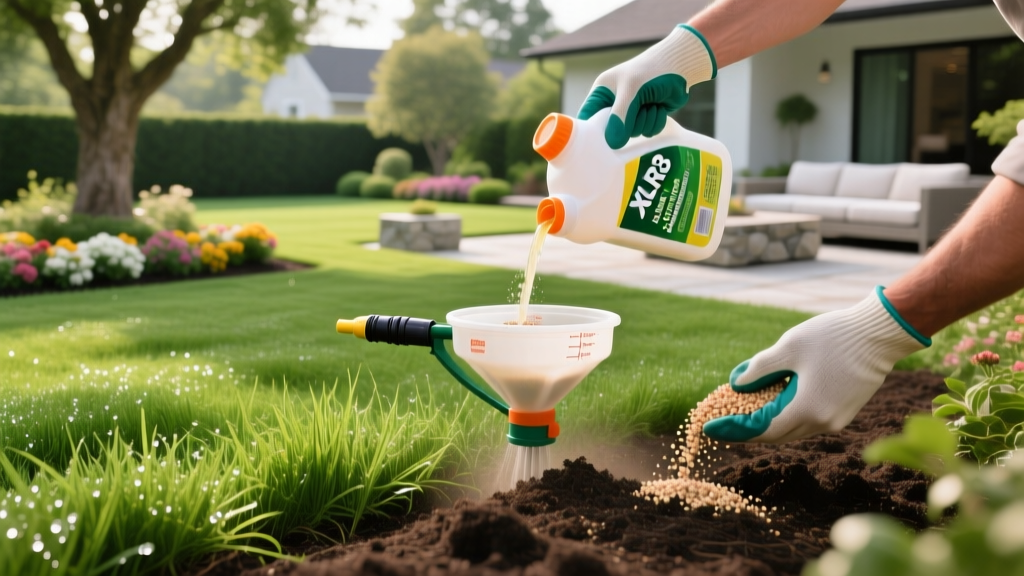
Integrating XLR8 Herbicide With Lawn Fertilizer and Soil Care
Drive XLR8 (quinclorac) remains the industry standard for post-emergent crabgrass and broadleaf weed control in cool-season and select warm-season turfgrasses. However, applying this synthetic auxin herbicide without considering your underlying soil nutrition and fertilizer schedule is a primary cause of turf phytotoxicity and poor weed control. When managing lawn health, herbicide efficacy and soil chemistry are deeply intertwined. Quinclorac's behavior in the soil profile, its interaction with foliar adjuvants, and the turf's metabolic recovery all depend heavily on your fertilization timing and soil pH levels.
This guide provides a precise, agronomic framework for integrating XLR8 herbicide applications into a comprehensive lawn fertilizer and soil nutrition program, ensuring maximum weed mortality while preserving turf canopy density.
The Chemistry of Quinclorac and Soil Nutrients
Quinclorac is highly mobile in the soil and its efficacy is directly dictated by soil pH and organic matter (OM) content. According to turfgrass weed science research published by NC State TurfFiles, soil pH levels above 7.5 cause quinclorac to bind tightly to soil colloids. This binding reduces the active ingredient's availability for root uptake by target weeds, significantly lowering crabgrass control rates. Furthermore, in high-pH soils, the herbicide's half-life extends dramatically, which can cause residual damage to sensitive ornamentals or future grass seedings.
Soil Nutrition Pro-Tip: Before applying XLR8, conduct a soil test. If your pH is above 7.4, apply elemental sulfur at a rate of 1.5 to 2.0 lbs per 1,000 sq ft in the weeks leading up to your herbicide application to gently lower the rhizosphere pH, optimizing quinclorac uptake.
Additionally, soils with very low organic matter (< 2.0%) lack the buffering capacity to hold the herbicide in the root zone, leading to rapid leaching. In these sandy or depleted soils, integrating a liquid humic acid or fulvic acid amendment 14 days prior to XLR8 application can improve soil cation exchange capacity (CEC) and stabilize the herbicide where it is needed most.
The Adjuvant and Liquid Fertilizer Conflict
The most severe turf damage occurs when applicators attempt to tank-mix XLR8 with liquid nitrogen fertilizers (such as UAN 28% or 32%). Drive XLR8 requires the addition of a Methylated Seed Oil (MSO) adjuvant at 0.5% to 1.0% v/v to penetrate the waxy cuticle of mature crabgrass.
MSO is a powerful surfactant that strips the leaf cuticle. If liquid nitrogen is present in the tank mix, the MSO drives the unbuffered nitrogen salts directly into the turfgrass leaf tissue, causing rapid cellular collapse, severe necrosis, and 'burn' that can last for weeks. Always separate liquid nitrogen applications and XLR8 herbicide applications by a minimum of 7 to 10 days. Granular, slow-release nitrogen fertilizers (like methylene urea or sulfur-coated urea) do not pose this foliar risk and can be applied closer to the herbicide window, provided they are watered in immediately.
Step-by-Step Timeline: XLR8 and Fertilizer Integration
To maximize both weed control and turf nutrition, follow this precise 21-day integration schedule. This timeline assumes a standard application rate of 0.75 to 1.5 fl oz of XLR8 per 1,000 sq ft.
- Day -14 (Soil Prep): Apply granular potassium sulfate (0-0-50) at 1.5 lbs per 1,000 sq ft to boost turf cellular turgor and stress tolerance. Water deeply to move potassium into the root zone.
- Day -7 (Pre-Hydration): Ensure the turf is not under drought stress. Apply 0.5 inches of irrigation. Quinclorac translocates poorly in drought-stressed weeds, reducing kill rates.
- Day 0 (XLR8 Application): Apply XLR8 with MSO adjuvant. Do not include any liquid fertilizers, iron, or micronutrients in this tank mix. Keep the spray volume at 1.5 to 2.0 gallons per 1,000 sq ft for optimal coverage.
- Day +2 (Activation): Water the lawn with 0.25 inches of irrigation to activate any quinclorac that reached the soil surface for root absorption by weeds.
- Day +10 (Recovery Nutrition): Apply a balanced, low-nitrogen granular fertilizer (e.g., 15-0-15 or 8-2-12) to feed the desirable turfgrass as the dying crabgrass releases canopy space and sunlight.
Warning for Warm-Season Turf: If you are treating a St. Augustine or Centipede lawn, XLR8 is generally contraindicated due to severe phytotoxicity risks. For Bermuda and Zoysia, do not exceed 1.0 fl oz per 1,000 sq ft, and avoid applications when daytime temperatures exceed 85°F, as heat amplifies synthetic auxin stress.
Application Timing and Nutrient Matrix
The following matrix outlines the compatibility of XLR8 with common soil nutrition inputs. Reference this chart to prevent chemical antagonism and turf injury.
| Nutrient / Input | Compatibility with XLR8 | Required Separation Window | Agronomic Reason |
|---|---|---|---|
| Liquid Nitrogen (UAN) | Do Not Mix | 7-10 Days | MSO adjuvant drives salts into leaf tissue, causing severe necrosis. |
| Granular Slow-Release N | Compatible | Same Day (Water In) | Granular prills do not interact with foliar MSO absorption pathways. |
| Liquid Iron (Fe-EDTA) | Caution | 3-5 Days | Can alter spray solution pH, reducing quinclorac stability in the tank. |
| Humic / Fulvic Acid | Highly Compatible | 14 Days Prior | Increases soil CEC, buffering herbicide and improving root zone health. |
| Gypsum (Calcium Sulfate) | Compatible | Any Time | Improves soil flocculation without altering herbicide efficacy. |
Soil Rehabilitation Post-XLR8 Application
Once the crabgrass and broadleaf weeds begin to desiccate (typically 10 to 14 days post-application), the soil microbiome and turf rhizosphere undergo a shift. The sudden die-off of deep-rooted weeds leaves behind decaying organic matter and temporary localized nitrogen tie-up as soil microbes break down the dead root mass.
Addressing the Quinclorac 'Yellowing' Effect
It is a well-documented phenomenon that XLR8 causes temporary chlorosis (yellowing) in desirable turfgrasses, particularly Bermuda, Zoysia, and Kentucky Bluegrass. This is not necessarily a sign of permanent damage, but rather a metabolic stress response to the synthetic auxin. To mask this yellowing and support rapid canopy recovery without pushing excessive, vulnerable top-growth, apply a chelated iron supplement.
Specifically, use Fe-EDDHA (orthos-ortho isomer) rather than standard Fe-EDTA. Fe-EDDHA remains stable in high-pH soils and is rapidly absorbed by the turf, restoring deep green color within 48 to 72 hours without requiring the plant to expend energy on nitrogen-driven leaf elongation. Apply at a rate of 2.0 oz per 1,000 sq ft diluted in 1.5 gallons of water.
Rebuilding the Rhizosphere
According to soil management guidelines from Penn State Extension, maintaining adequate soil potassium and calcium levels is critical for turfgrass recovery from chemical stress. Following the XLR8 application and subsequent weed dieback, apply a liquid kelp extract (Ascophyllum nodosum) at 1.0 oz per 1,000 sq ft. The cytokinins and betaines present in cold-processed kelp stimulate root hair proliferation, allowing the desirable turf to rapidly colonize the bare soil patches left by the dead weeds before new weed seeds can germinate.
Expert Troubleshooting: When Weed Control Fails
If you followed the integration timeline but still see surviving crabgrass or broadleaf weeds, the issue is rarely the herbicide itself, but rather the soil environment or application mechanics.
- Surviving Mature Crabgrass (5+ tillers): Quinclorac struggles with heavily tillered crabgrass. You must apply a second treatment of XLR8 at 0.75 fl oz per 1,000 sq ft exactly 21 days after the first application. Do not apply fertilizer between these two passes; force the weed to uptake the herbicide instead of flushing it with nitrogen.
- Poor Broadleaf Control (Clover/Dandelion): If broadleaves are curling but not dying, your soil pH is likely too high, or you omitted the MSO adjuvant. Verify your adjuvant rate and consider spot-treating with a different active ingredient (like 2,4-D or Triclopyr) while addressing the soil pH with elemental sulfur for the following season.
- Turf Stunting Lasting > 30 Days: If the desirable grass remains stunted and pale a month after application, you likely overlapped spray passes, resulting in a double-dose of quinclorac. Mitigate this by applying a high-quality compost tea or liquid humate to stimulate microbial degradation of the excess chemical in the soil profile.
By treating XLR8 herbicide not just as a standalone weed killer, but as a variable in your broader soil nutrition equation, you can achieve pristine turf canopies. Always consult the most current PBI Gordon professional label for specific rate restrictions regarding your exact turfgrass cultivar and local environmental regulations.

