
Pest Control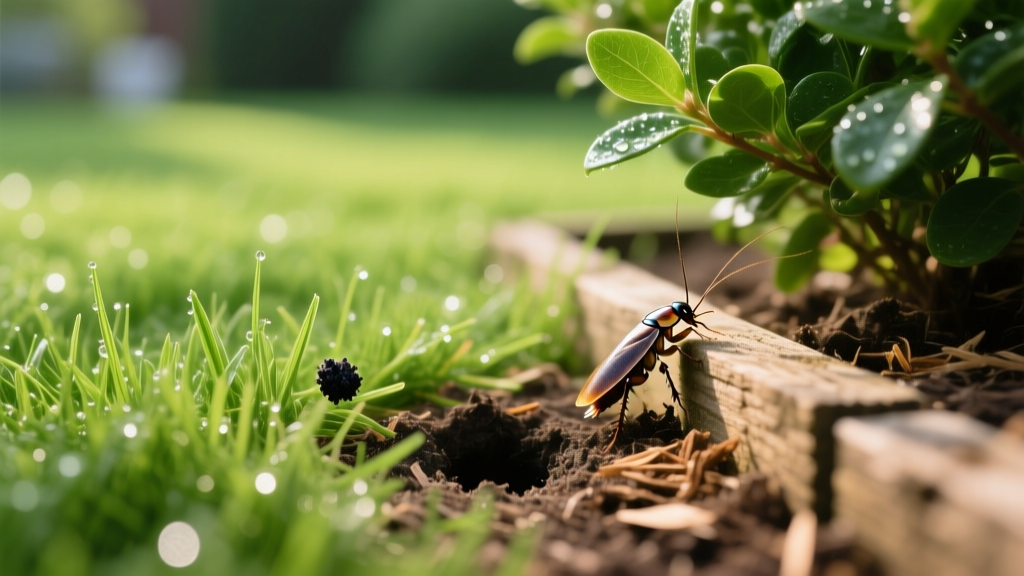
How Do You Get Rid of Cockroach Infestation in Your Yard?
When homeowners ask, "how do you get rid of cockroach infestation?", they usually picture the kitchen pantry. However, the most resilient invasions begin in the yard. Peridomestic cockroaches—species that thrive outdoors but migrate indoors for warmth and moisture—use your landscaping as a staging ground. If you only treat the interior of your home, you are ignoring the breeding colony sitting just inches from your foundation.
Eliminating an outdoor cockroach infestation requires a multi-layered yard defense strategy that combines habitat modification, Insect Growth Regulators (IGRs), and targeted chemical barriers. This guide details the exact products, mixing ratios, and landscaping adjustments required to break the outdoor-to-indoor migration pipeline.
Identify the Outdoor Culprits: Peridomestic Species
Before applying treatments, you must confirm you are dealing with outdoor species. The German cockroach (Blattella germanica) is strictly an indoor pest. If you see roaches in your yard, mulch beds, or near drains, you are likely dealing with one of three peridomestic species. According to entomologists at the University of Florida IFAS, these species require high moisture and decaying organic matter to survive.
| Species | Scientific Name | Size & Appearance | Primary Yard Habitat |
|---|---|---|---|
| American Cockroach | Periplaneta americana | 1.5 - 2 inches; Reddish-brown with a pale yellow shield margin. | Sewer grates, storm drains, damp mulch, woodpiles. |
| Smokybrown Cockroach | Periplaneta fuliginosa | 1.25 - 1.5 inches; Uniform dark mahogany to black. | Tree holes, roof gutters, dense ivy, leaf litter. |
| Oriental Cockroach | Blatta orientalis | 1 - 1.25 inches; Glossy black/dark brown; flightless. | Crawlspaces, foundation perimeter, under debris. |
The 4-Step Perimeter Defense Protocol
To permanently resolve an outdoor infestation, you must attack the colony's reproductive cycle and create an impenetrable barrier. Follow this sequence precisely to avoid chemical conflicts.
Step 1: Habitat Modification and Moisture Control
Cockroaches cannot survive without a consistent water source. Inspect your yard for micro-climates that trap moisture.
- Grade Correction: Ensure soil slopes away from the foundation at a minimum 5% grade (6 inches of drop over the first 10 feet) to prevent water pooling against the siding.
- Debris Removal: Rake out thick leaf litter from garden beds. Smokybrown roaches breed heavily in damp, decaying leaves trapped in roof gutters and ground-level ivy.
- Woodpile Relocation: Move firewood and compost bins at least 30 feet away from the home's exterior. Elevate woodpiles on concrete blocks to eliminate ground-contact harborage.
Step 2: Apply an Insect Growth Regulator (IGR)
IGRs do not kill adult roaches; they mimic juvenile hormones, preventing nymphs from molting into reproductive adults. This breaks the breeding cycle within 30 to 60 days.
Pro Tank-Mix Recipe:
Mix 1 oz of Tekko Pro IGR (active ingredients: Pyriproxyfen and Novaluron) per gallon of water. This single gallon will cover 1,000 square feet. Apply directly to mulch beds, soil, and the lower 2 feet of your foundation. Tekko Pro costs approximately $48 for an 8oz bottle, yielding 8 gallons of mix—enough to treat an average suburban home's perimeter eight separate times.
Mix 1 oz of Tekko Pro IGR (active ingredients: Pyriproxyfen and Novaluron) per gallon of water. This single gallon will cover 1,000 square feet. Apply directly to mulch beds, soil, and the lower 2 feet of your foundation. Tekko Pro costs approximately $48 for an 8oz bottle, yielding 8 gallons of mix—enough to treat an average suburban home's perimeter eight separate times.
Step 3: Deploy Granular Baits in Harborage Zones
Liquid sprays can be washed away by heavy rain, but granular baits remain active in hidden crevices. Use Maxforce FC Granular Insect Bait (active ingredient: Hydramethylnon 2.0%).
Scatter the granules lightly (about 1 to 2 tablespoons per linear foot) deep inside retaining wall gaps, under decks, and around the base of large trees. The hydramethylnon acts as a slow-acting stomach poison, allowing foraging roaches to return to the nest and pass the toxin to others via coprophagy (feces consumption).
Step 4: Establish a Liquid Residual Barrier
Finally, apply a non-repellent or low-repellency liquid barrier to stop migrating adults. Bifen IT (Bifenthrin 7.9%) is the industry standard for outdoor perimeter defense.
- Mixing Ratio: 1 oz of Bifen IT per gallon of water.
- Application Band: Spray a 3-foot wide band on the ground extending outward from the foundation, and a 2-foot high band up the exterior wall.
- Cost: A 16oz bottle of Bifen IT retails for roughly $35 and makes 16 gallons of finished solution, providing over a year's worth of quarterly perimeter treatments for most homes.
Landscaping Adjustments for Long-Term Deterrence
Chemical barriers degrade over time due to UV exposure and soil microbial activity. Modifying your landscaping provides a permanent, passive defense against peridomestic roaches.
Mulch Selection and Placement
Standard hardwood mulch retains moisture and provides an ideal food source for detritivores like the Oriental cockroach. If you live in a high-humidity zone, transition to inorganic mulches like river rock or pea gravel within 24 inches of your foundation. If you prefer organic mulch, switch to cedar or cypress mulch. These woods contain natural oils (thujone) that act as mild insect repellents and decay much slower than pine bark.
Vegetation Pruning
Smokybrown cockroaches are strong fliers and often colonize tree canopies before dropping onto roofs. Maintain a strict 18-inch clearance between any shrubbery and your home's exterior walls. This gap allows sunlight to dry the soil and removes the physical "bridge" roaches use to bypass your chemical foundation barrier.
DIY Yard Defense vs. Professional Pest Control
Understanding the financial and practical trade-offs helps you decide whether to manage the perimeter yourself or hire a licensed operator. The Environmental Protection Agency (EPA) emphasizes that proper identification and targeted application are key to minimizing environmental impact while maximizing efficacy.
| Factor | DIY Perimeter Defense | Professional Pest Control (Quarterly) |
|---|---|---|
| Initial Setup Cost | $110 - $150 (Pump sprayer, Bifen IT, Tekko Pro, Maxforce) | $150 - $300 (Initial inspection and heavy flush-out) |
| Ongoing Cost per Treatment | $2.50 - $4.00 (Cost of chemicals per gallon mixed) | $90 - $150 per quarterly visit |
| Chemical Grade | Professional-grade concentrates (buy online/specialty stores) | Commercial concentrates (often microencapsulated for longer UV life) |
| Labor & Time | 45-60 minutes per application; requires manual pumping and mixing | Zero labor; technician handles mixing, application, and cleanup |
| Best For | Homeowners comfortable handling chemicals and maintaining a strict schedule. | Severe, multi-acre properties, or homes with complex architectural harborage. |
Frequently Asked Questions
Will outdoor bug zappers or ultrasonic repellents keep roaches out of my yard?
No. Bug zappers primarily kill beneficial flying insects and do not deter crawling peridomestic roaches. Ultrasonic pest repellents have been repeatedly debunked by university entomology departments; cockroaches do not possess the auditory anatomy to be deterred by high-frequency sound waves. Rely on chemical barriers and moisture control instead.
How often should I reapply the Bifen IT and Tekko Pro mixture?
For active infestations, apply the mixture every 30 days until the population is visibly eradicated. Once the yard is secure, transition to a maintenance schedule of once every 90 days (quarterly). Bifenthrin binds well to soil and retains residual efficacy for up to 3 months outdoors, provided it is not subjected to daily heavy irrigation or constant direct UV light.
Is Bifen IT safe for my pets and garden plants?
Bifen IT is highly toxic to aquatic life and bees. Never apply it directly to blooming weeds or near koi ponds. However, once the liquid spray has completely dried on the foundation and soil (usually within 1 to 2 hours), the active ingredient is locked into the surface and poses minimal risk to mammals. Keep dogs and cats off the treated lawn until the application is fully dry.

