
Pest Control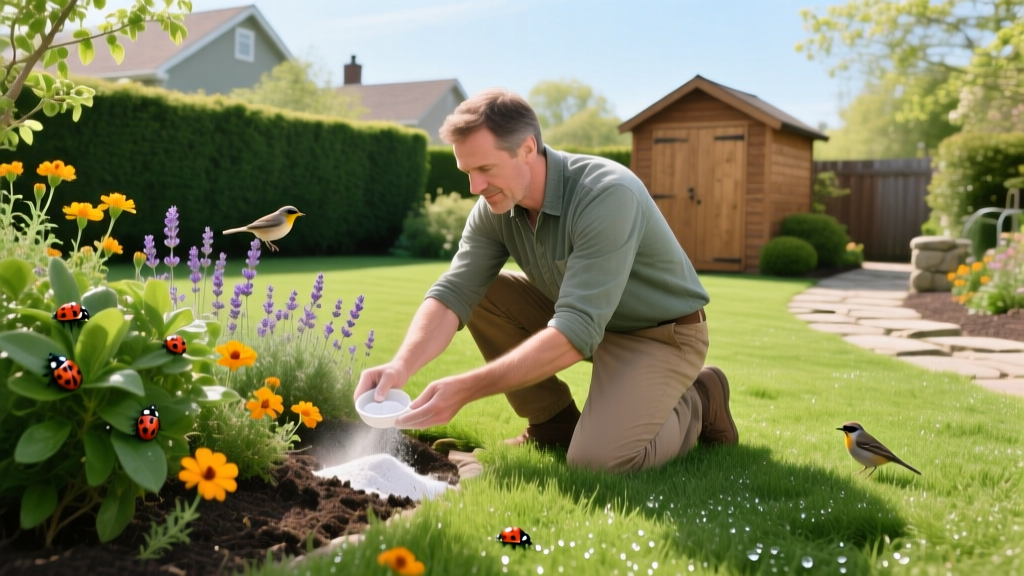
Effective Home Cure for Fleas: A Complete Yard Defense Guide
When homeowners search for a home cure for fleas, the immediate instinct is to treat the pet and vacuum the carpets. However, this approach ignores the biological reality of the flea life cycle. According to the Companion Animal Parasite Council (CAPC), adult fleas living on your dog or cat represent only 5% of the total flea population. The remaining 95%—comprising eggs, larvae, and pupae—are hiding in your yard, waiting to hatch and re-infest your home.
To achieve permanent eradication, your yard defense strategy must target the outdoor environment. While chemical sprays like permethrin or bifenthrin are common, many homeowners seek a safe, natural home cure for fleas that won't harm pets, pollinators, or children. This guide details the three most scientifically validated, non-toxic yard treatments available in 2026, providing exact application rates, costs, and environmental requirements.
Why Popular Indoor 'Home Cures' Fail Outdoors
Before deploying a treatment, it is critical to debunk the DIY myths that waste time and money in an outdoor setting. Many viral home remedies are entirely ineffective when exposed to the elements:
- Apple Cider Vinegar Sprays: While acidic, vinegar evaporates rapidly outdoors and has zero residual effect on flea larvae hiding in soil thatch. It also alters soil pH, potentially damaging your turfgrass.
- Baking Soda and Salt: These desiccants require deep penetration into carpet fibers to work. Outdoors, rain and morning dew instantly dissolve them, rendering them useless while simultaneously salting and killing your lawn.
- Garlic and Brewer's Yeast: Feeding these to pets does not repel fleas, and spraying garlic water on the lawn lacks the concentration required to penetrate the flea's waxy exoskeleton.
The Biological Advantage: A true outdoor home cure for fleas must utilize biological or mechanical disruption. Instead of poisoning the environment, we use microscopic predators and physical desiccants to break the flea life cycle at the larval stage.
Step 1: Entomopathogenic Nematodes (The Ultimate Biological Cure)
Beneficial nematodes are microscopic, unsegmented roundworms that naturally occur in soil. For flea control, the specific species you need is Steinernema carpocapsae (specifically the Hb strain). These nematodes actively seek out flea larvae, enter their bodies, and release bacteria that kill the host within 24 to 48 hours.
Application Specifications and Pricing
As of 2026, a commercial pack containing 1 million S. carpocapsae nematodes typically costs between $35 and $45, which is sufficient to treat 1,000 square feet of lawn. This makes it one of the most cost-effective home cures for fleas on a per-square-foot basis.
- Timing: Apply at dusk or on a heavily overcast day. UV light and high heat will kill the nematodes before they can penetrate the soil.
- Preparation: Water the target area lightly before application to soften the soil crust.
- Mixing: Empty the nematode sponge or powder into a 5-gallon bucket of lukewarm water (between 60°F and 85°F). Stir gently. Do not use chlorinated tap water straight from the hose; let it sit for 24 hours to allow chlorine to off-gas, or use rainwater.
- Application: Use a hose-end sprayer designed for nematodes (with the filter removed) or a watering can. Apply evenly over shaded areas, under decks, and along fence lines where pets rest.
- Post-Application: Water the area immediately after application to wash the nematodes off the grass blades and down into the top 2 inches of soil where flea larvae reside.
Step 2: Food-Grade Diatomaceous Earth (Mechanical Desiccation)
Diatomaceous earth (DE) is a naturally occurring, soft sedimentary rock crumbled into a fine white powder. Under a microscope, DE particles look like shards of glass. When flea larvae and adults crawl over it, the silica shards scratch their waxy outer cuticle, causing them to dehydrate and die within hours.
Selecting and Applying the Right DE
You must use Food-Grade Diatomaceous Earth (typically 80-90% amorphous silicon dioxide). Never use pool-grade DE, which is chemically treated and highly toxic to mammals when inhaled.
Warning: While food-grade DE is safe for pets and humans once settled, the fine dust can cause respiratory irritation during application. Always wear an N95 mask and safety goggles when broadcasting DE in the yard.
Application Rate: Apply approximately 1 pound of DE per 1,000 square feet. Use a hand-crank duster to apply a barely visible, micro-thin layer. If you apply it too thickly, insects will simply walk around it. Focus strictly on dry, shaded areas, dog runs, and the perimeter of your home. DE loses its mechanical effectiveness when wet, so you must reapply after any rainfall exceeding 0.25 inches or after heavy morning dews.
Step 3: Environmental Modification and Cedar Perimeter Defense
No home cure for fleas will succeed if the yard environment remains a perfect incubator. Flea larvae require high humidity (above 70%) and shaded areas to survive; direct sunlight and dry soil kill them rapidly. The University of California Statewide Integrated Pest Management Program (UC IPM) emphasizes that cultural controls are the foundation of long-term flea management.
Yard Preparation Checklist
| Action Item | Target Metric | Why It Works |
|---|---|---|
| Thatch Removal | Reduce thatch to < 0.5 inches | Thatch holds moisture and provides a physical shield for flea pupae against nematodes and sunlight. |
| Mowing Height | Cut to 2.0 - 2.5 inches | Allows UV penetration to the soil surface, drying out the micro-habitat flea larvae need to survive. |
| Tree Canopy Pruning | Open canopy for 4 hrs direct sun | Eliminates the deep, damp shade under trees where wildlife (opossums, raccoons) drop flea eggs. |
| Cedar Mulch Borders | 2-inch depth, 3-foot width | Cedar contains natural thujone and aromatic oils that repel adult fleas from crossing into lounging areas. |
Chemical vs. Biological Home Cures: A 2026 Comparison
When deciding how to treat your lawn, it helps to weigh the biological home cures against traditional synthetic chemicals. While synthetics offer a faster initial knockdown, biological cures provide superior long-term yard defense without ecological collateral damage.
| Feature | Biological (Nematodes + DE) | Synthetic (Bifenthrin/Permethrin) |
|---|---|---|
| Cost per 1,000 sq ft | $35 - $50 | $15 - $25 |
| Pet Re-entry Time | Immediate (Safe once dry/settled) | 12 - 24 hours (Strict adherence required) |
| Impact on Pollinators | Zero negative impact | Highly toxic to bees and aquatic life |
| Pest Resistance | Impossible (Biological/Mechanical action) | High (Fleas develop genetic resistance) |
| Duration of Efficacy | 30-45 days (Nematodes reproduce) | 21-30 days (Degrades in UV light) |
Common Mistakes That Ruin Natural Flea Treatments
Even with the best home cure for fleas, execution errors can lead to treatment failure. Avoid these common pitfalls:
- Applying Nematodes to Hot Soil: If soil temperatures exceed 90°F, S. carpocapsae will die on contact. Always check soil temperature with a digital probe thermometer before application.
- Mixing DE with Water: Some DIY guides suggest mixing DE with water to spray it. This completely ruins the mechanical desiccation properties. DE must be applied dry.
- Ignoring Wildlife Vectors: If opossums, feral cats, or raccoons are sleeping under your deck, they will continuously re-seed your yard with flea eggs. Use humane exclusion methods, such as installing heavy-gauge hardware cloth around the base of decks and sheds, to block wildlife access.
- Overwatering the Lawn: Flea larvae drown in saturated soil, but pupae survive. Overwatering creates the exact humid microclimate that accelerates the hatching process. Adjust your irrigation schedule to provide deep, infrequent watering rather than daily shallow sprinkling.
"The most effective yard defense against fleas doesn't rely on a single silver bullet. It requires integrating biological controls like nematodes with strict environmental management to make the yard inhospitable to the flea life cycle." — U.S. Environmental Protection Agency (EPA) Guidelines on Biological Pest Control
Frequently Asked Questions
How long does it take for nematodes to kill fleas in the yard?
Once applied to moist soil, nematodes begin hunting immediately. You will typically see a 70% to 90% reduction in adult flea populations within 7 to 14 days. Because nematodes reproduce inside their hosts and release new generations into the soil, the treatment continues to work for up to 45 days.
Can I use essential oils like peppermint or eucalyptus as a yard spray?
While concentrated essential oils can repel adult fleas temporarily, they evaporate within hours when exposed to outdoor air and sunlight. Furthermore, spraying large volumes of essential oils like tea tree or peppermint across a lawn can be highly toxic to dogs and cats if they ingest it while grooming their paws. Stick to cedar mulch for a safe, long-lasting aromatic repellent.
Will diatomaceous earth harm my earthworms or beneficial soil insects?
Food-grade DE primarily affects insects with exoskeletons that crawl across the surface. Earthworms, which are annelids with a protective mucus coating and live deeper in the soil profile, are generally unaffected by surface applications of DE. However, it will kill beneficial surface predators like ground beetles, so apply DE only in targeted problem areas rather than broadcasting it across the entire lawn.

