
Pest Control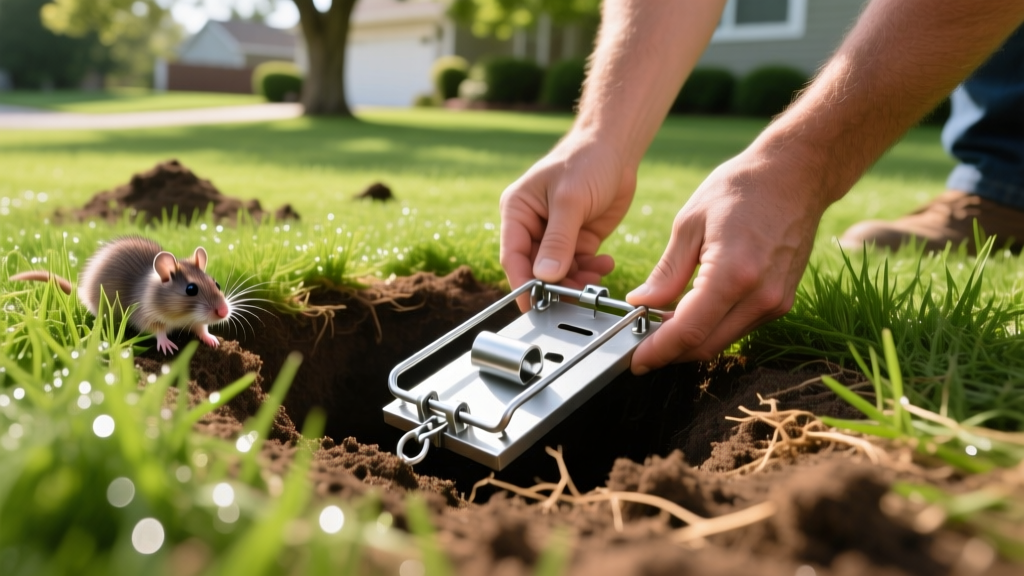
How to Get Rid of Gophers in Your Yard: Traps, Baits & Wire
Pocket gophers (Thomomys spp.) destroy lawns by severing roots, pulling entire plants underground, and chewing through subsurface PVC irrigation lines. A single gopher can move up to 2,250 pounds of soil annually, creating 10 to 30 fan-shaped mounds per month. Before attempting removal, verify the pest: gopher mounds are fan or horseshoe-shaped with a distinct soil plug on one edge, whereas mole mounds are symmetrical, volcano-shaped cones. Once confirmed, eliminating them requires targeting the main runway, not the superficial lateral tunnels.
The Gopher Control Decision Matrix
Choosing the right eradication method depends on your property size, pet safety requirements, and budget. The table below compares the three primary professional-grade control strategies.
| Method | Est. Cost (2026) | Time to Results | Pet/Child Safety | Best Application |
|---|---|---|---|---|
| Trapping | $25 - $60 (gear) | 24 - 72 hours | High (if covered) | Small to medium yards; organic lawns |
| Toxic Baits | $15 - $40 (bait) | 5 - 14 days | Low (secondary risk) | Large properties; agricultural borders |
| Exclusion Wire | $1.50 - $3.00 / sq ft | Immediate (preventative) | High | New lawn installations; raised garden beds |
Step-by-Step Trapping: The Gold Standard
Trapping is the most effective and environmentally sound method for residential gopher control. According to UC Agriculture and Natural Resources, trapping success rates exceed 85% when the main runway is correctly identified and two traps are deployed simultaneously.
1. Locate the Main Runway
Do not set traps in the mound itself or the short lateral tunnels. Use a 5/8-inch diameter, 24-inch fiberglass probe rod. Insert the probe 8 to 12 inches away from the mound's soil plug, pushing straight down. When the probe suddenly drops 6 to 12 inches into a void, you have found the main runway, which typically runs parallel to the surface.
2. Select Professional-Grade Traps
Avoid cheap, stamped-metal traps from big-box stores. Invest in heavy-duty models with high spring tension:
- Gophinator (Stainless Steel): Retails for $28–$34 per pair. The stainless steel construction prevents rust in heavy clay soils, and the wider jaw spread accommodates larger gophers.
- Macabee (Carbon Steel): Retails for $18–$22 per pair. A classic, reliable trap, but requires thorough cleaning and oiling to prevent rust-induced spring failure.
3. Excavate and Set
Dig a T-shaped trench to expose the main runway. Clear loose dirt from the tunnel floor. Secure a 24-inch piece of 16-gauge tie wire to each trap's anchor ring, and stake the wire to a wooden lath driven into the soil outside the trench. This prevents the gopher from dragging the trap deep into the burrow. Place two traps facing opposite directions in the tunnel. Cover the excavation with a piece of plywood or a heavy bucket to block light, which would cause the gopher to push dirt and bury the traps without triggering them.
Chemical Baits: When Trapping is Impractical
For large properties with extensive infestations, toxic baits offer a scalable solution. However, baiting carries risks of secondary poisoning to non-target wildlife, such as barn owls and feral cats, if the gopher dies above ground.
Active Ingredients and Formulations
The Texas A&M AgriLife Extension recommends using baits formulated specifically for subterranean application. Look for these active ingredients:
- Diphacinone (0.005% - 0.5%): An anticoagulant requiring multiple feedings. Products like Amdro Gopher Bait ($22 for 4 lbs) use oat or grain carriers. It is safer for secondary scavengers but takes 5 to 10 days to kill.
- Zinc Phosphide (2%): A single-feed acute toxicant. It works within 24 hours but produces phosphine gas in the stomach, which can be hazardous if a pet digs up and consumes the carcass.
- Strychnine (0.25% - 0.5%): Highly effective single-feed bait, but heavily restricted. In most states, 0.5% strychnine formulations are restricted-use pesticides (RUP) requiring a commercial applicator license.
⚠️ WARNING: Bait Application Protocol
Never scatter bait on the surface. Always use a specialized bait dispenser (like the Wilco Gopher Bait Applicator, ~$45) to drop 1 to 2 tablespoons of bait deep into the main runway via the probe hole. Immediately plug the probe hole with a rock and cover it with dirt to prevent birds or pets from accessing the tunnel.
Permanent Exclusion: Gopher Wire Installation
If you are installing a new lawn, laying sod, or building raised garden beds, physical exclusion is the only 100% permanent solution to gopher damage. Standard chicken wire is useless; gophers will easily chew through thin, welded wire fencing.
Material Specifications
You must use 20-gauge galvanized hardware cloth with a 3/4-inch hexagonal mesh. The 20-gauge thickness prevents the gopher's incisors from bending the wire, while the 3/4-inch opening is small enough to block their heads but large enough to allow earthworms and drainage.
The 'L-Flange' Trenching Method
To prevent gophers from tunneling under the barrier, do not simply lay the wire flat. For perimeter fencing or raised beds, dig a trench 24 inches deep. Place the wire vertically, but bend the bottom 6 inches outward at a 90-degree angle (an 'L' shape) facing away from the protected area. When a gopher digs down and hits the vertical wire, it will attempt to dig deeper, hitting the horizontal flange, and eventually abandon the effort.
Debunking Ineffective 'Natural' Deterrents
The internet is saturated with anecdotal gopher remedies that lack scientific backing. Save your time and money by avoiding these proven failures:
- Ultrasonic Spikes: Gophers quickly habituate to the high-frequency vibrations. University trials show zero reduction in tunneling activity after 14 days of continuous use.
- Castor Oil Repellents: While castor oil makes the soil taste unpleasant, gophers will simply dig a new tunnel six inches to the left to bypass the treated zone. It requires constant, expensive reapplication after every rainstorm.
- Exhaust Fumes / Carbon Monoxide: Pumping car exhaust into a tunnel fails because the extensive gopher burrow system (which can span 2,000 square feet) dissipates the gas long before it reaches lethal concentrations. The gopher simply plugs the offending tunnel with dirt.
- Chewing Gum: The myth that bubble gum causes intestinal blockages is entirely false. Gophers are strict herbivores and will ignore synthetic, non-plant materials.
Effective gopher management requires a proactive, mechanical approach. By combining precise runway probing with high-tension stainless steel traps, or investing in 20-gauge exclusion wire during landscape renovations, you can permanently reclaim your yard from subterranean destruction.

