
Pest Control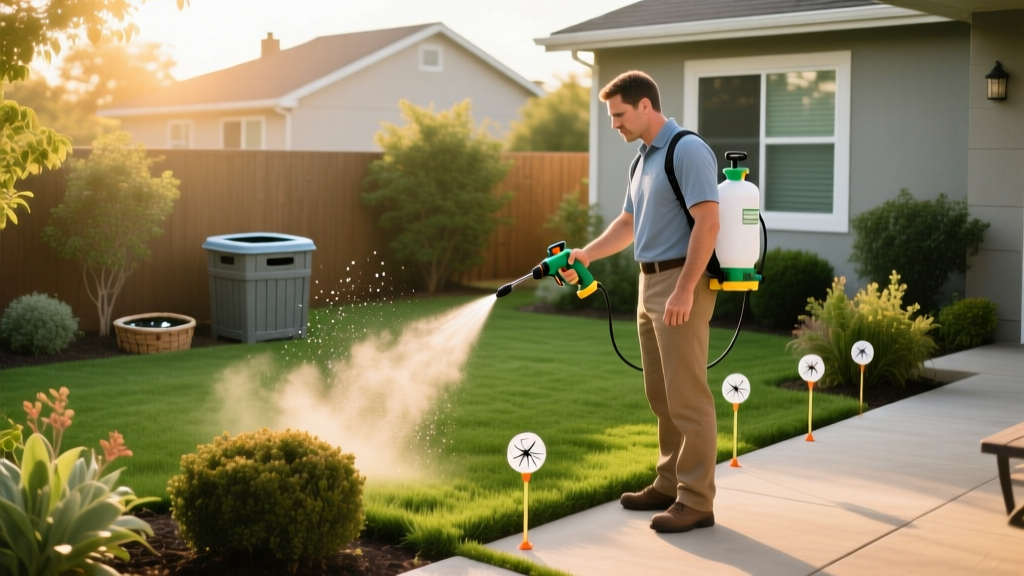
Controlling Mosquitoes Outdoors: Source Reduction and Barrier Sprays
Most homeowners fail at controlling mosquitoes because they target the symptom (biting adults) while ignoring the source (larval breeding grounds). Lighting citronella candles or relying on ultrasonic plug-ins yields negligible results against aggressive species like the Asian tiger mosquito (Aedes albopictus). A successful yard defense strategy requires a layered Integrated Pest Management (IPM) approach that disrupts the mosquito life cycle at both the aquatic larval stage and the terrestrial adult stage.
The Biology of the Bite: Know Your Enemy
Effective control begins with identifying which species are invading your yard. In North America, two primary genera dictate your treatment strategy:
- Culex pipiens (Northern House Mosquito): Primarily nighttime biters. They breed in large, stagnant bodies of water like retention ponds, ditches, and neglected swimming pools. They are the primary vectors for West Nile Virus.
- Aedes aegypti & Aedes albopictus (Tiger Mosquitoes): Aggressive daytime biters. They are 'container breeders,' meaning they lay eggs in as little as a bottle cap of water. They are notorious for hiding in dense, shaded vegetation during the heat of the day.
Understanding this distinction is critical. If you are getting bitten at 2:00 PM while gardening, treating a nearby pond will not solve your problem; you must hunt for micro-containers and treat shaded perimeter foliage.
Phase 1: Source Reduction and Larval Control
The foundation of controlling mosquitoes is eliminating standing water. However, 'tipping and tossing' is rarely enough, as Aedes eggs can survive desiccation for up to eight months, hatching within hours of being submerged.
Hidden Breeding Ground Alert: The most commonly overlooked breeding site in modern homes is the corrugated downspout extension. The ridges inside these flexible plastic pipes hold exactly enough water to support hundreds of larvae. Replace them with smooth-walled PVC or aluminum extensions, or drill a 1/4-inch weep hole at the lowest ridge of your existing corrugated pipes.
Deploying Bti (Bacillus thuringiensis israelensis)
For water features, rain barrels, or drainage swales that cannot be drained, Bti biological control is the gold standard. Bti is a naturally occurring soil bacterium that produces crystalline proteins (Cry and Cyt toxins). When mosquito larvae ingest Bti, the alkaline environment of their midgut dissolves the crystal, releasing toxins that rupture the gut lining, killing the larva within 24 to 48 hours.
Product Specifics & Application:
- Mosquito Dunks (Summit Responsible Solutions): Contains 10.31% Bti. One dunk treats 100 square feet of surface water for 30 days. Cost: ~$12 for a 6-pack. Break them into quarters for small container gardens or birdbaths.
- Mosquito Bits: Granular Bti formulation. Ideal for treating the soil of potted plants where fungus gnats and mosquitoes overlap, or for sprinkling into marshy areas where dunks cannot float. Apply 1 tablespoon per 25 square feet.
Crucially, Bti is highly targeted. According to the EPA guidelines on mosquito pest control, Bti does not harm honeybees, butterflies, fish, birds, or mammals, making it safe for use in koi ponds and pollinator gardens.
Phase 2: Adult Mosquito Barrier Sprays
While Bti stops the next generation, barrier sprays provide immediate relief by killing adults resting on your foliage. Mosquitoes are weak fliers and typically rest on the underside of leaves in shaded, wind-protected areas during the day. By treating these resting sites, you create a lethal perimeter.
Chemical vs. Botanical Active Ingredients
| Active Ingredient | Product Example | Residual Life | Cost per 1,000 sq ft | Pollinator Impact |
|---|---|---|---|---|
| Bifenthrin (7.9%) | Talstar P Professional | 30 - 45 Days | ~$1.50 | High (Toxic to bees if sprayed directly) |
| Permethrin (10%) | Martins Permethrin 10% | 21 - 30 Days | ~$2.00 | High (Highly toxic to aquatic life) |
| Clove & Peppermint Oil | EcoSmart Mosquito Control | 3 - 7 Days | ~$8.00 | Low (Repels, but short efficacy) |
Application Warning: Synthetic pyrethroids like Bifenthrin are highly toxic to bees. To minimize non-target impact, NEVER spray blooming weeds (like clover or dandelions) or flowering ornamentals. Apply barrier treatments at dusk when honeybees have returned to their hives and the product has time to dry on the leaf cuticle before morning pollinator activity resumes.
Mixing and Application Rates: For a standard pump sprayer, mix 1 fluid ounce of Bifenthrin 7.9% concentrate per gallon of water. This single gallon will treat approximately 1,000 square feet. Focus the spray on the underside of leaves in privacy hedges, hostas, and dense shrubbery up to 6 feet high. Avoid spraying the open lawn; mosquitoes do not rest on sun-baked grass blades.
Phase 3: Spatial Repellents and Misting Systems
For homeowners who cannot or will not apply liquid barrier sprays, spatial repellents and automated misting offer alternative defense perimeters.
Thermacell E55 (Metofluthrin Technology)
Unlike older butane-powered models, the 2026 standard for patio defense is the Thermacell E55. It uses a lithium-ion battery to heat a metofluthrin-impregnated cartridge, creating a 20-foot invisible dome of protection. Metofluthrin is a highly volatile pyrethroid that disrupts the mosquito's olfactory receptors. It is highly effective for localized, temporary relief (e.g., dining on a patio) but does not treat the yard at large.
Automated Misting Systems
Permanent misting systems consist of a 30- to 50-gallon reservoir connected to a network of 1/4-inch nylon tubing and brass nozzles routed through your landscaping. The system is programmed to release a fine mist of pyrethrin or synthetic pyrethroids 2 to 3 times a day (typically dawn and dusk).
- Installation Cost: $2,500 to $4,500 for a standard 30-nozzle residential setup.
- Maintenance: Requires refilling the insecticide concentrate every 4 to 8 weeks and winterizing the lines to prevent freeze-cracking.
- The Drawback: Wind drift can carry the mist into neighboring properties or onto vegetable gardens. Furthermore, continuous daily exposure to low-dose pyrethroids accelerates genetic resistance in local mosquito populations.
Decision Matrix: Which Strategy Fits Your Yard?
Use this framework to build your customized mosquito control protocol:
- If you have a koi pond, rain barrels, or poor drainage: Rely heavily on Bti dunks and bits. Do not use chemical barrier sprays near the water's edge, as runoff will decimate aquatic ecosystems.
- If you have a heavily wooded, shaded lot with dense ivy or hedges: Implement a Bifenthrin barrier spray every 30 days from May through September, combined with aggressive pruning to increase sunlight and airflow to the soil.
- If you have a small, sunny urban courtyard with no standing water: Skip the sprays. Rely on a high-velocity oscillating fan (mosquitoes cannot fly in winds exceeding 10 mph) and a Thermacell spatial repellent for evening gatherings.
- If you live near a salt marsh or large municipal retention pond: Source reduction on your property will not be enough, as adults will migrate from off-site. You must invest in professional-grade barrier sprays or an automated misting system to intercept migrating adults at your property line.
Application Timing and Weather Constraints
The efficacy of your barrier spray is entirely dependent on weather conditions during application. Apply treatments when wind speeds are below 5 mph to prevent drift. Ensure no rainfall is forecast for at least 24 hours post-application; Bifenthrin requires roughly 4 hours to bind to the leaf cuticle, after which it becomes rainfast. If a heavy downpour occurs within 2 hours of spraying, the treatment will wash off into the soil and require reapplication.

