
Pest Control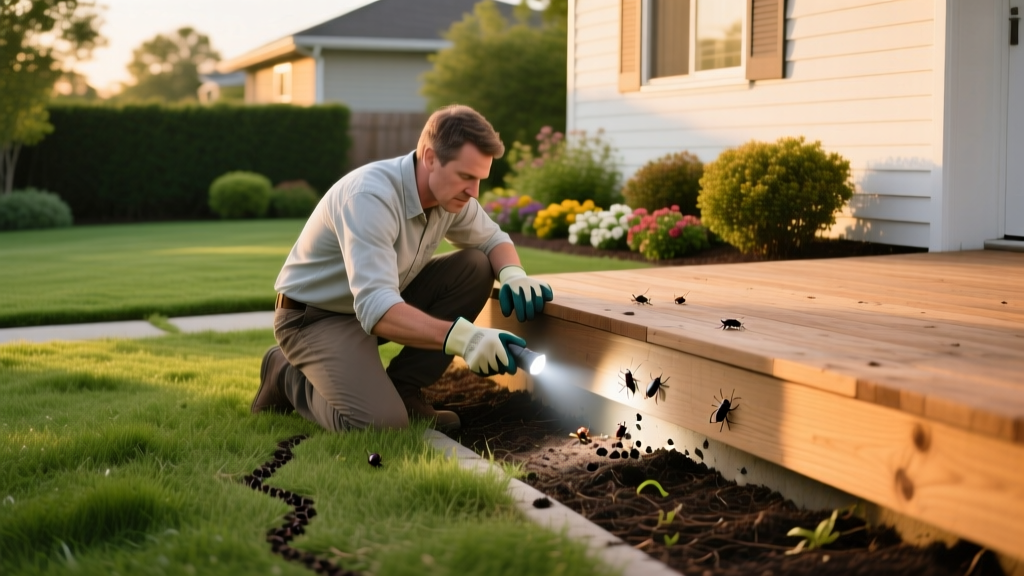
How to Deal With Cockroaches: Yard Perimeter Defense Guide
The Outdoor-Invasion Pipeline: Why Yard Defense Matters
When homeowners ask how to deal with cockroaches, they usually focus on kitchen cabinets and bathroom drains. However, treating the interior without securing the exterior is a tactical failure. Peridomestic cockroaches—species that thrive outdoors but readily invade structures—use your yard as a staging ground. According to the Environmental Protection Agency (EPA), outdoor pest management requires a fundamentally different approach than indoor treatments, focusing on perimeter barriers, moisture reduction, and harborage elimination rather than broad-spectrum indoor fogging.
⚠️ Critical Warning: Never use outdoor foggers or 'bug bombs' in your yard. They fail to penetrate the deep mulch and soil cracks where roaches harbor, while simultaneously killing beneficial predatory insects and contaminating nearby storm drains.
Identifying the Culprits: Outdoor Cockroach Species
Before deploying treatments, you must identify which species is exploiting your landscape. The German cockroach is strictly an indoor pest, but the following three species are the primary drivers of yard-to-home invasions.
| Species | Size & Color | Preferred Yard Habitat | Invasion Trigger |
|---|---|---|---|
| American Cockroach | 1.5 - 2 inches; Reddish-brown with yellowish figure-8 on head | Sewer lines, mulch beds, damp crawlspaces, palm trees | Heavy rainfall flooding sewer systems or extreme summer heat |
| Smokybrown Cockroach | 1.25 - 1.5 inches; Uniform dark mahogany to black | Tree holes, woodpiles, roof gutters, dense ivy | Attraction to exterior porch lights and attic ventilation gaps |
| Oriental Cockroach | 1 - 1.25 inches; Glossy black to dark brown | Under patio stones, leaf litter, damp soil, water meter boxes | Seeking moisture during dry spells or cool autumn temperatures |
For a deeper biological breakdown of the American cockroach's life cycle and regional distribution, the University of Florida IFAS Extension provides exhaustive entomological data that highlights their reliance on high-humidity microclimates found in suburban landscaping.
Step-by-Step Perimeter Defense Protocol
Effective yard defense relies on the '3x3 Rule': treating 3 feet up the foundation and 3 feet out into the soil. This creates a continuous chemical and physical barrier that intercepts foraging roaches before they reach weep holes and door sweeps.
Phase 1: Harborage Elimination & Moisture Audits
Cockroaches require three things: food, shelter, and water. In a yard, water is usually the limiting factor. If you eliminate moisture, the population will collapse or migrate.
- Irrigation Audits: Inspect drip lines and sprinkler heads for micro-leaks. A single dripping hose bib can produce enough localized humidity to support a colony of hundreds of Oriental cockroaches.
- Mulch Management: Limit organic mulch depth to a maximum of 2 inches. Keep mulch at least 6 inches away from the physical foundation of the home to expose the soil and create a dry, uninviting buffer zone.
- Woodpile Relocation: Store firewood and lumber at least 18 inches off the ground using metal racks, and keep them a minimum of 10 feet away from the house exterior.
- Gutter & Downspout Clearing: Smokybrown roaches breed in the decaying leaf matter trapped in clogged gutters. Install metal mesh gutter guards and ensure downspouts discharge at least 4 feet away from the foundation.
Phase 2: Targeted Chemical & Bait Applications
When cultural controls are insufficient, targeted chemical interventions are necessary. The most common mistake homeowners make is using repellent sprays (like Bifenthrin or Permethrin) around the perimeter. These chemicals act as a repulsive shield, causing roaches to scatter and often driving them deeper into the walls or indoors.
Instead, utilize non-repellent transfer chemicals and granular baits.
Pro-Tip: The Transfer Effect
Non-repellent active ingredients like Dinotefuran (Alpine WSG) do not kill on immediate contact. The roach walks through the treated zone, picks up the microscopic residue, and returns to the harborage, transferring the lethal dose to nymphs and other adults through grooming and coprophagy.
Non-repellent active ingredients like Dinotefuran (Alpine WSG) do not kill on immediate contact. The roach walks through the treated zone, picks up the microscopic residue, and returns to the harborage, transferring the lethal dose to nymphs and other adults through grooming and coprophagy.
Treatment Matrix: Choosing the Right Product
Selecting the correct formulation depends on the specific terrain of your yard and the severity of the infestation. Below is a comparison of professional-grade products accessible to homeowners.
| Product / Active Ingredient | Formulation | Best Application Zone | Estimated Cost (2026) |
|---|---|---|---|
| Alpine WSG (Dinotefuran) | Water Soluble Granule (Liquid Spray) | Foundation perimeter, window frames, door thresholds | $35 - $45 (Box of 5 x 0.71oz packets) |
| Niban FG (Boric Acid) | Fine Granular Bait | Deep inside mulch beds, under decks, crawl space entrances | $50 - $60 (4 lb shaker bottle) |
| Advion Cockroach (Indoxacarb) | Gel Bait | Exterior cracks, weep holes, soffit gaps, utility penetrations | $25 - $30 (Box of 4 x 30g tubes) |
| Maxforce FC Magnum (Fipronil) | Gel Bait | Heavy infestations in outdoor trash enclosures and compost bins | $30 - $35 (Box of 4 x 30g tubes) |
Application Protocol & Dilution Rates
For a standard 2,000 sq. ft. home perimeter using Alpine WSG:
- Dissolve one 0.71 oz packet into 1 gallon of water in a pump sprayer.
- Agitate thoroughly until the granules are completely dissolved.
- Apply using a flat-fan nozzle, spraying a continuous band 3 feet up the siding (avoiding windows) and 3 feet out onto the soil/mulch.
- One gallon covers approximately 1,000 linear square feet. You will need 2 gallons for a complete perimeter.
- Reapply every 60 to 90 days, or immediately following heavy, prolonged rainfall.
Landscaping Adjustments to Repel Roaches
Your plant choices directly impact pest pressure. Dense, ground-hugging vegetation creates a permanent microclimate of high humidity and shade—the exact parameters peridomestic roaches require to survive extreme weather.
"The most effective pesticide you can buy is a pair of pruning shears. Opening up the canopy at the base of your shrubs to allow UV light and airflow to hit the soil will desiccate roach egg cases (oothecae) faster than any chemical spray."
— Urban Entomology Field Note
Plants to Prune or Remove
- English Ivy & Asiatic Jasmine: These dense groundcovers are notorious harborage zones for Smokybrown roaches. Thin them aggressively or replace them with gravel or low-moisture creeping thyme near the foundation.
- Palmetto Trees: The deep, overlapping fronds and hollows of palm trunks hold water and organic debris. Regularly skirt (trim) the lower dead fronds and avoid planting palms within 5 feet of the roofline.
- Overgrown Foundation Shrubs: Trim all bushes so that the lowest branches are at least 6 inches above the soil, and ensure there is a 2-foot gap between the outermost leaves and the home's siding.
Common Failure Modes: Why DIY Treatments Fail
Even with professional-grade products, homeowners frequently sabotage their own efforts through chemical incompatibility and poor timing.
🚫 The Repellent/Bait Conflict:
Never apply a liquid residual spray (like Tempo SC Ultra or Talstar P) over an area where you have placed granular bait (like Niban FG) or gel bait. The repellent nature of the pyrethroid liquid will coat the bait, rendering it unpalatable to the roaches and completely neutralizing your baiting strategy.
Never apply a liquid residual spray (like Tempo SC Ultra or Talstar P) over an area where you have placed granular bait (like Niban FG) or gel bait. The repellent nature of the pyrethroid liquid will coat the bait, rendering it unpalatable to the roaches and completely neutralizing your baiting strategy.
Additionally, applying liquid barrier treatments to hot, dry, sun-baked concrete or soil causes the active ingredient to degrade rapidly via UV radiation and alkaline hydrolysis. Always apply liquid residuals in the early morning or late evening when surfaces are cool, and ensure no rain is forecasted for at least 24 hours to allow the chemical to bind to the substrate.
When to Call a Professional Exterminator
While a dedicated homeowner can manage 90% of outdoor cockroach pressures, certain scenarios require commercial equipment and licensed expertise. Consider hiring a licensed pest control operator if:
- You discover roaches emerging from deep underground sewer cleanouts or municipal utility vaults on your property.
- The infestation has penetrated deep into a sub-slab gravel bed or a heavily encapsulated crawlspace where DIY access is restricted.
- You have exhausted the 3x3 perimeter protocol and granular baiting for 60 days with zero reduction in indoor trap counts.
By shifting your focus from reactive indoor spraying to proactive, biologically driven yard defense, you sever the invasion pipeline at its source, keeping your home's interior permanently secure.

