
Pest Control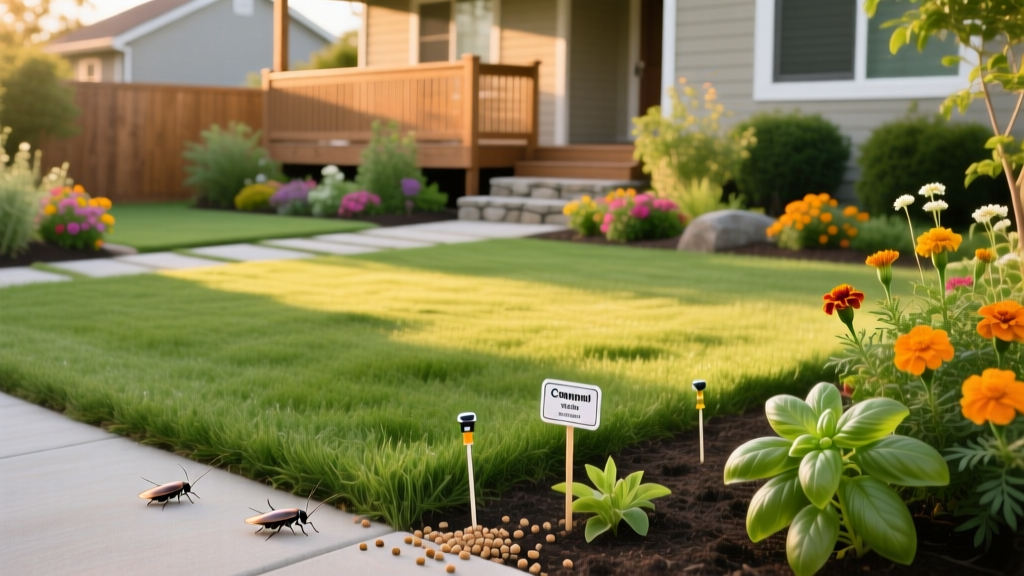
How to Keep Cockroaches Away From Your Yard and Home Perimeter
Most homeowners fight cockroaches inside the kitchen or bathroom, but the battle is already lost if the yard and exterior perimeter are ignored. Large species like the American, Smokybrown, and Oriental cockroaches are primarily outdoor insects. They breed in exterior mulch, leaf litter, sewer lines, and woodpiles before migrating indoors to escape extreme temperatures or seek water. Understanding how to keep cockroaches away from your property requires treating the yard as your primary defensive line.
This guide details the exact chemical barriers, landscaping modifications, and structural exclusion tactics required to break the outdoor cockroach life cycle and prevent perimeter breaches.
The Perimeter Protocol: Mapping Cockroach Entry Vectors
Cockroaches do not randomly invade homes; they follow moisture gradients and pheromone trails along physical edges. The 'Perimeter Protocol' focuses on the 3-foot band immediately surrounding your home's foundation. This transitional zone between soil and structure is where 90% of outdoor-to-indoor migrations occur.
⚠️ The Wood Mulch Trap: Standard hardwood and pine bark mulches retain moisture and provide cellulose, creating an ideal incubator for Smokybrown cockroach egg cases (oothecae). If you have a history of perimeter infestations, all organic mulch within 24 inches of the foundation must be removed and replaced with inorganic alternatives.
Identifying High-Risk Exterior Zones
- AC Condensate Lines: Constant dripping creates localized soil saturation, attracting moisture-dependent Oriental cockroaches.
- Gutter Downspouts: Splashing water erodes soil and exposes foundation cracks, creating damp entryways.
- Overgrown Vegetation: Ivy, creeping fig, and dense shrubbery touching the siding provide a 'highway' that bypasses ground-level chemical barriers.
- Sewer Cleanouts and Lateral Lines: American cockroaches (often called 'palmetto bugs') thrive in municipal sewer systems and migrate up private lateral lines into yard drains.
Exterior Chemical and Organic Barrier Treatments
To effectively manage outdoor populations, you must combine a repellent barrier with non-repellent transfer agents and targeted baits. Relying on a single chemistry leads to rapid resistance and population rebound.
| Product Category | Active Ingredient | Mechanism of Action | Application Rate & Target | Est. Cost (2026) |
|---|---|---|---|---|
| Non-Repellent Spray (e.g., Alpine WSG) | Dinotefuran | Undetectable; roaches walk through it and transfer the toxin to the colony via grooming. | 10g per gallon of water. Apply to a 3-ft wide band around the foundation. | $45 - $55 (Box of 5x10g packets) |
| Granular Bait (e.g., Advion Insect Granular) | Indoxacarb | Highly attractive food matrix; activates only after ingestion by the insect's digestive enzymes. | Broadcast 1.1 to 4.4 lbs per 1,000 sq ft in mulch beds and heavy ground cover. | $40 - $50 (25 lb bag) |
| Insecticidal Dust (e.g., Tempo Dust or CimeXa) | Cyfluthrin / Amorphous Silica | Desiccation and nervous system disruption. Excellent for dry, void areas. | Lightly puff into weep holes, soffit vents, and utility penetrations using a bellows duster. | $20 - $30 (10 oz bottle) |
According to the University of California Statewide IPM Program, combining baits with crack-and-crevice treatments yields significantly higher long-term suppression rates than broadcast spraying alone, which often repels roaches deeper into wall voids or neighboring properties.
Landscaping Adjustments for Roach Exclusion
Chemical treatments will wash away or degrade if the physical environment remains conducive to cockroach harborage. Altering your landscape design is a permanent, low-maintenance way to keep cockroaches away.
The 18-Inch Vegetation Clearance Rule
All shrubs, ornamental grasses, and tree branches must be pruned to maintain a minimum 18-inch gap between the foliage and the home's exterior walls. This gap serves two purposes:
- Airflow: Allows UV light and wind to dry out the foundation soil, removing the high-humidity microclimate roaches require.
- Barrier Integrity: Prevents roaches from using branches as a bridge to bypass your ground-level chemical treatments and access roof soffits or second-story weep holes.
Hardscaping and Drainage Corrections
Replace organic mulch in the 24-inch foundation zone with 3/4-inch crushed gravel or river rock. Gravel drains rapidly and provides no nutritional value to pests. Furthermore, ensure your yard grading slopes away from the foundation at a minimum drop of 6 inches over the first 10 feet. If you have persistent puddling near the foundation, install a French drain with a corrugated pipe terminating at least 15 feet away from the structure.
Sewer and Drain Line Defense
American cockroaches frequently emerge from yard drains, sewer cleanouts, and municipal manholes. Standard yard sprays do not reach these subterranean networks.
💡 Pro-Tip: Drain Flap Valves
Install inline backwater valves (flap valves) on your exterior yard drains and downspout extensions. These one-way PVC flaps allow water to exit but physically block large insects and rodents from crawling up the pipe. For standard 3-inch or 4-inch PVC cleanouts, ensure the cap is threaded and sealed with Teflon tape, rather than just friction-fit.
Install inline backwater valves (flap valves) on your exterior yard drains and downspout extensions. These one-way PVC flaps allow water to exit but physically block large insects and rodents from crawling up the pipe. For standard 3-inch or 4-inch PVC cleanouts, ensure the cap is threaded and sealed with Teflon tape, rather than just friction-fit.
To treat lateral sewer lines without harming the environment or municipal water systems, use enzymatic drain foams (like Bio-Clean or Zep Commercial Drain Care) quarterly. These break down the organic sludge and grease that American cockroaches feed on inside the pipes, effectively starving the population at the source. The U.S. Environmental Protection Agency (EPA) strongly advises against pouring liquid insecticides down drains, as this contaminates groundwater and violates federal pesticide label laws.
Seasonal Maintenance Calendar
Cockroach pressure fluctuates with the seasons. Adjust your yard defense strategy accordingly to maintain an unbroken perimeter.
- Spring (March - May): Clear winter leaf litter. Apply granular bait (Advion) to mulch beds as soil temperatures cross 60°F and egg cases begin to hatch. Trim back spring growth to enforce the 18-inch clearance rule.
- Summer (June - August): Peak migration season due to heat and irrigation. Apply Alpine WSG liquid barrier every 45-60 days (UV degradation is faster in summer). Check AC condensate lines weekly for blockages.
- Fall (September - November): Roaches seek warmth as temperatures drop. Switch focus to exclusion. Seal foundation cracks wider than 1/16 inch with copper mesh and silicone caulk. Apply CimeXa dust into weep holes and soffit vents before they move indoors for winter.
- Winter (December - February): Minimal outdoor activity. Use this time to repair grading issues, install French drains, and replace degraded wood mulch with gravel.
Frequently Asked Questions
Will outdoor bug zappers help reduce cockroach populations?
No. Cockroaches are not strongly attracted to UV light like moths or mosquitoes. Bug zappers will kill beneficial predatory insects (like ground beetles and centipedes) that actually hunt cockroach nymphs in your yard, inadvertently worsening your roach problem.
Can I use diatomaceous earth (DE) in my yard beds?
Food-grade DE is highly effective indoors, but it is virtually useless in outdoor landscaping. DE works by desiccating the insect's exoskeleton, but it loses all efficacy the moment it gets wet from rain, dew, or irrigation. For outdoor dust applications in dry voids (like behind electrical boxes or under deck stairs), amorphous silica gel (CimeXa) is far superior as it retains some efficacy in humid conditions.
Do cedar wood chips actually repel cockroaches?
Cedar contains natural oils (thujone) that have mild insect-repellent properties, but the effect is short-lived and highly localized. While cedar chips are slightly better than pine bark for moisture retention, they should not be relied upon as a standalone extermination method. They must be combined with targeted baits and physical exclusion.

