
Pest Control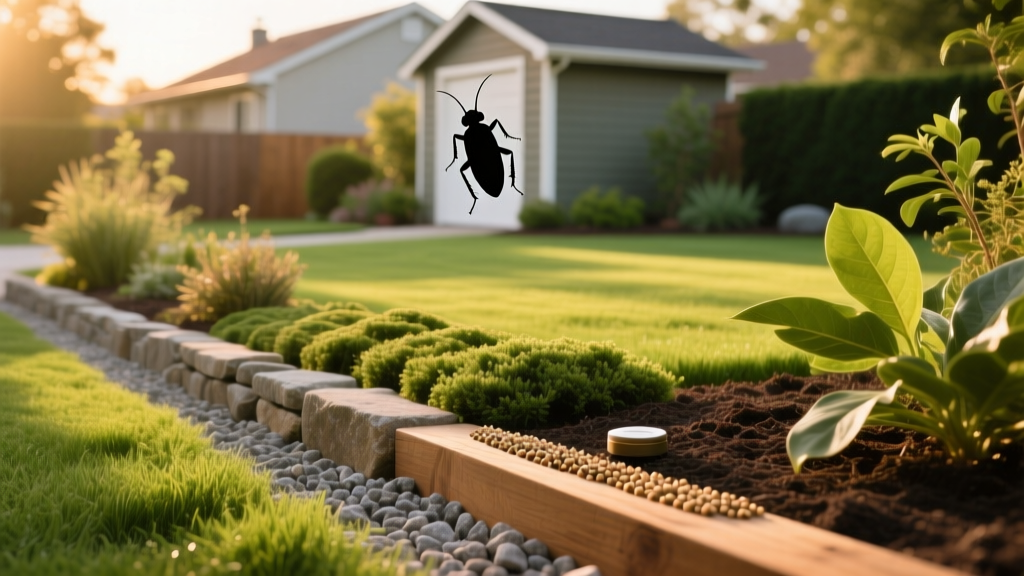
How to Avoid Cockroaches in Home Using Yard Perimeter Defense
Why Yard Defense is the Key to Indoor Roach Prevention
When homeowners research how to avoid cockroaches in home settings, the immediate instinct is to buy indoor foggers or gel baits. However, this approach treats the symptom, not the source. The largest and most intrusive species—specifically the American cockroach (Periplaneta americana), Smokybrown cockroach, and Oriental cockroach—are peridomestic. They breed in your yard's mulch beds, leaf litter, and sewer lines, migrating indoors only when exterior conditions become inhospitable.
According to the University of Georgia Extension, peridomestic cockroaches are driven inside by two primary triggers: extreme temperature fluctuations (typically when outdoor temperatures drop below 50°F or exceed 95°F) and severe drought conditions that force them to seek humid microclimates under your siding, in crawlspace vents, and around plumbing penetrations. True prevention requires establishing a hostile 30-foot perimeter around your property.
The 3-Foot 'Dry Zone' Perimeter Strategy
Cockroaches require three things to thrive: food, shelter, and moisture. Your home's foundation provides all three if the landscaping is poorly managed. The most effective physical deterrent is establishing a 3-foot 'dry zone' directly against your foundation.
Landscaping Corrections
- Remove Wood Mulch: Wood mulch retains moisture and provides an ideal breeding ground. Replace it within 3 feet of the foundation with 3/4-inch crushed gravel or river rock, which drains rapidly and offers no nutritional value to pests.
- Trim Vegetation: Shrub branches and groundcover must be pruned back at least 18 inches from the siding. This eliminates 'bridges' that allow roaches to bypass ground-level chemical barriers and increases UV exposure, which dries out the soil.
- Clear Organic Debris: Rake out fallen leaves, pine straw, and dead grass clippings weekly. A single cubic foot of damp leaf litter can harbor hundreds of nymphs.
⚠️ Critical Mulch Mistake: Never spray liquid insecticides directly on top of thick pine straw or wood chips. The organic matter binds to the active chemical ingredients, rendering the treatment completely useless. If you must use liquid treatments, rake the mulch back to expose the bare soil, apply the spray, and then replace the mulch. Alternatively, use granular formulations that can be watered down through the mulch layer.
Exterior Chemical and Organic Barrier Matrix
Creating a chemical barrier requires selecting the right formulation for your specific yard conditions. Liquid residual sprays provide immediate knockdown and long-term repellency, while granular baits target the colony directly. Below is a comparison of professional-grade products available to homeowners for perimeter defense.
| Product Model | Active Ingredient | Application Rate | Cost per 1,000 sq. ft. | Rainfastness |
|---|---|---|---|---|
| Cyzmic CS | Lambda-cyhalothrin (9.7%) | 0.8 fl oz per gallon | ~$5.50 | 1 Hour |
| Alpine WSG | Dinotefuran (40%) | 10g packet per gallon | ~$7.00 | 1 Hour |
| Talstar PL Granules | Bifenthrin (0.2%) | 2.3 lbs per 1,000 sq ft | ~$4.00 | Requires Watering |
| Niban FG Bait | Orthoboric Acid (5%) | 1-2 lbs per 1,000 sq ft | ~$8.50 | Fails in Heavy Rain |
For a comprehensive defense, apply a liquid residual like Cyzmic CS in a 3-foot band up the foundation wall and 3 feet out onto the soil. Follow this by broadcasting Niban FG granular bait in the mulch beds to kill roaches that forage at night. Always consult the EPA's Safe Pest Control guidelines before applying chemicals near water sources or edible gardens.
Sealing the Structural Envelope
Even with a pristine yard and chemical barriers, structural vulnerabilities will allow roaches inside. The Penn State Extension emphasizes that exclusion is the most permanent form of pest control. You must seal the physical envelope of your home using materials that cockroaches cannot chew through or bypass.
- Weep Holes: Brick veneer homes have weep holes (typically 2.5 x 0.5 inches) to allow moisture to escape. Never seal these with caulk or solid foam. Instead, stuff them tightly with Xfast 1/2-inch copper mesh. Copper does not rust or stain brick like steel wool, and roaches cannot navigate the dense wire matrix.
- Plumbing Penetrations: Check where AC refrigerant lines, gas pipes, and water mains enter the exterior walls. Fill these gaps with Loctite Tite Foam Big Gaps (polyurethane expanding foam). Once cured, trim it flush and cover it with a bead of silicone caulk to prevent UV degradation.
- Crawlspace Vents: Replace damaged 1/4-inch hardware cloth over crawlspace vents. Ensure the mesh is securely fastened with galvanized screws, as roaches can easily slip through loose edges.
- Door Sweeps: Install heavy-duty rubber or bristle door sweeps on all exterior doors. The gap between the door and the threshold must be less than 1/16 of an inch.
Moisture and Grading Corrections
Moisture is the primary magnet for Oriental and Smokybrown cockroaches. If your yard retains water near the foundation, chemical barriers will wash away, and roaches will congregate in massive numbers.
Expert Insight: A standard 1,000 square foot roof sheds roughly 600 gallons of water during a 1-inch rainstorm. If your downspouts terminate right at the foundation, you are creating an artificial swamp that guarantees cockroach proliferation.
To correct this, install rigid downspout extenders that discharge water at least 4 feet away from the foundation. If the yard slopes toward the house (negative grading), you will need to regrade the soil to achieve a minimum 5% slope (a 6-inch drop over the first 10 feet) away from the structure. For persistent low spots, consider installing a French drain system utilizing 4-inch perforated PVC pipe wrapped in landscaping fabric, buried 18 inches deep, to intercept groundwater before it reaches the foundation.
Frequently Asked Questions
Do ultrasonic pest repellers work for outdoor perimeter defense?
No. Independent entomological studies consistently show that ultrasonic devices have zero efficacy against cockroaches. Cockroaches do not rely on high-frequency audio for navigation or communication in a way that these devices disrupt. Relying on them leaves your perimeter completely vulnerable.
How often should I reapply exterior chemical barriers?
Liquid residuals like Cyzmic CS degrade under UV light and heavy rainfall. During peak summer migration seasons, reapply every 30 to 45 days. Granular baits like Niban FG should be replenished every 60 days or immediately after a heavy rain event that dissolves the boric acid core.
I live in a townhouse with shared walls. Can I still use yard defense?
Yes, but you must focus heavily on the front and back perimeters, as well as sealing interior shared-wall plumbing penetrations. Roaches in multi-family dwellings migrate through shared utility chases. Seal all gaps around your interior sinks and toilets with expanding foam and copper mesh to block neighbors' pests from entering your unit.

