
Pest Control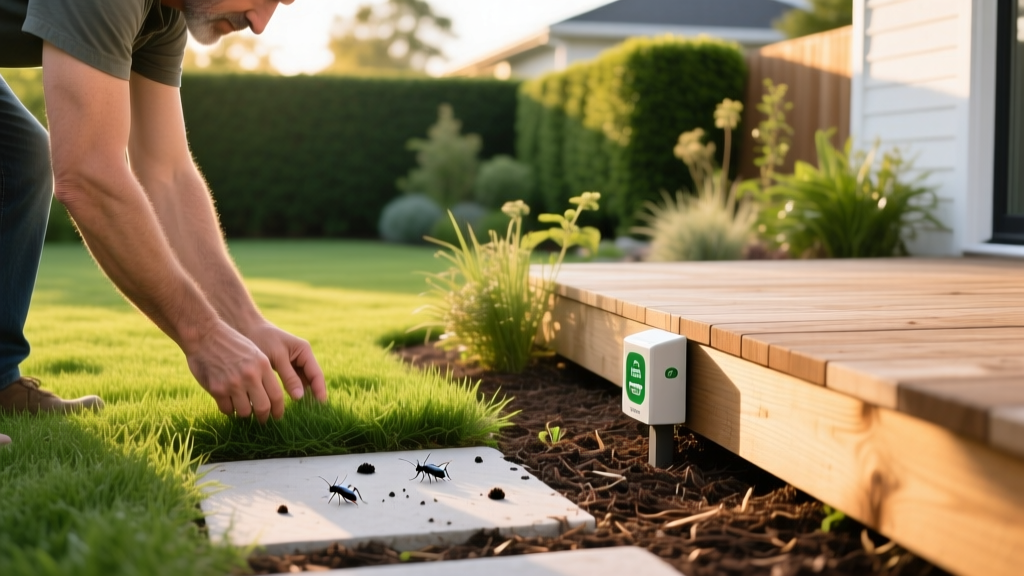
How to Get Rid of Roaches for Good: The Ultimate Yard Defense Guide
The Outdoor-First Strategy: Why Yard Defense Matters
Most homeowners treat roaches only after they breach the kitchen baseboards. This reactive approach guarantees recurring infestations. To understand how to get rid of roaches for good, you must target the source: the outdoor perimeter. Species like the American, Smokybrown, and Oriental cockroach breed in yard debris, mulch beds, and sewer lines, migrating indoors only when outdoor conditions dry up or temperatures drop.
The 80/20 Perimeter Rule: Pest management professionals estimate that 80% of outdoor-dwelling roach populations can be eliminated by treating the first 3 feet of soil and foundation wall, reducing indoor incursions by over 90%.
According to North Carolina State Extension, perimeter harborage reduction combined with non-repellent chemical barriers is the most effective long-term strategy for structural defense. Below is a comprehensive, multi-phase protocol to fortify your yard and eliminate exterior breeding grounds.
Species Identification: Know Your Yard Invaders
Accurate identification dictates your bait and spray selection. While German cockroaches are strictly indoor pests, the following three species dominate the yard-to-home pipeline.
| Species | Size & Color | Primary Yard Harborage | Key Behavioral Trait |
|---|---|---|---|
| American (Palmetto Bug) | 1.5 - 2 in, Reddish-brown | Mulch beds, sewer grates, firewood | Strong fliers; attracted to porch lights |
| Smokybrown | 1.5 in, Uniform dark brown | Tree holes, roof eaves, woodpiles | Highly mobile; enters via attic vents |
| Oriental | 1 in, Shiny black/dark brown | Damp soil, leaf litter, crawlspaces | Cannot fly; strictly ground-level crawler |
Phase 1: Habitat Modification & Exclusion
Chemicals fail if the yard provides unlimited food and water. You must alter the microclimate around your foundation to make it inhospitable.
The 12-Inch Mulch-Free Zone
Thick mulch retains the moisture roaches require to survive. Pull all organic mulch (pine bark, hardwood, straw) back exactly 12 inches from the foundation. Replace this gap with inorganic gravel or crushed stone. If you must use mulch elsewhere in the yard, limit the depth to a maximum of 2 inches to prevent the lower layers from remaining perpetually damp.
Vegetation and Canopy Management
- Branch Trimming: Cut back all tree and shrub branches so they are at least 3 feet away from the roofline and exterior walls. Smokybrown roaches use overlapping branches as aerial highways to bypass ground-level chemical barriers.
- Ground Cover: Remove dense, low-lying ground covers like ivy or pachysandra within 5 feet of the house. These plants trap humidity and harbor Oriental cockroaches.
- Debris Removal: Clear leaf litter weekly during autumn. Store firewood on elevated metal racks at least 20 feet from the home, never directly on the soil.
Phase 2: Chemical Perimeter Defense
Once the habitat is modified, deploy a dual-action chemical barrier. The Environmental Protection Agency (EPA) emphasizes using targeted, low-toxicity outdoor applications rather than broad-spectrum broadcast sprays that harm beneficial insects.
Step 1: Non-Repellent Liquid Barrier
Do not use repellent sprays (like bifenthrin or permethrin) for roaches. Repellents cause roaches to scatter and find untreated entry points. Instead, use a non-repellent transfer insecticide like Alpine WSG (Active ingredient: Dinotefuran).
Mixing & Application Protocol:
Mix 50 grams of Alpine WSG per gallon of water. Using a 1-gallon pump sprayer, apply a continuous band 3 feet up the foundation wall and 3 feet out onto the soil. Focus heavily on door frames, window sills, and utility penetrations. As of 2026, a 250g bottle retails for approximately $45 and yields 5 gallons of finished solution, enough to treat the perimeter of an average 2,500 sq ft home twice.
Mix 50 grams of Alpine WSG per gallon of water. Using a 1-gallon pump sprayer, apply a continuous band 3 feet up the foundation wall and 3 feet out onto the soil. Focus heavily on door frames, window sills, and utility penetrations. As of 2026, a 250g bottle retails for approximately $45 and yields 5 gallons of finished solution, enough to treat the perimeter of an average 2,500 sq ft home twice.
Step 2: Insect Growth Regulator (IGR)
Mix an IGR like Gentrol (Active ingredient: Hydroprene) into your Alpine WSG tank. IGRs do not kill adults; they mutate the nymphs, preventing them from reaching reproductive maturity. This breaks the breeding cycle in the yard.
Step 3: Exterior Gel Baiting
Place Advion Roach Gel Bait (Active ingredient: Indoxacarb) in exterior bait stations. Never apply gel bait directly to outdoor soil or exposed surfaces, as UV light and rain degrade it, and ants will steal it. Use weatherproof stations like the Aegis RP20. Place stations every 10 feet along the foundation, particularly near HVAC condensate lines and exterior faucets. A 4-tube pack of Advion costs around $35 and lasts an entire season when used in protected stations.
Phase 3: Structural Sealing & Moisture Control
Even with a pristine yard and chemical barrier, physical entry points will compromise your defense.
The Copper Mesh & Sealant Technique
Expanding foam alone is insufficient; roaches can chew through cured polyurethane foam. For gaps around plumbing penetrations, gas lines, and cable wires, stuff the cavity tightly with copper mesh (which roaches cannot chew or digest), then cap it with a high-quality silicone or polyurethane sealant.
Moisture Elimination
Roaches can survive a month without food but only a week without water. Inspect your yard for hydrological failures:
1. AC Condensate Lines: Route them into a French drain or extend them at least 5 feet away from the foundation.
2. Gutter Downspouts: Ensure they discharge into solid PVC extenders, not just splash blocks, which create muddy, roach-friendly puddles.
3. Grading: Verify the soil slopes away from the house at a minimum drop of 6 inches over the first 10 feet.
Troubleshooting Matrix: Persistent Yard Infestations
If you still spot roaches outdoors after 14 days of implementing this protocol, consult this diagnostic matrix to identify the failure point.
| Symptom | Probable Cause | Corrective Action |
|---|---|---|
| Bait stations are empty but roaches remain | Ants are stealing the gel bait | Switch to Intice Pro10 Granular Bait (boric acid based) which is less attractive to ants. |
| Large roaches dropping from roofline | Smokybrown nesting in tree holes or gutters | Clean gutters; apply Alpine WSG directly into tree cavities and under roof flashing. |
| Roaches emerging from driveway cracks | Sub-slab nesting in expansion joints | Apply DeltaDust (deltamethrin) into cracks using a bellows duster; seal with polyurethane caulk. |
Expert Insight: Seasonal shifts dictate roach movement. In late autumn, as soil temperatures drop below 60°F, American and Oriental roaches will aggressively seek the thermal envelope of your home. Your perimeter chemical barrier must be refreshed in early September to intercept this migration wave before they reach the foundation.
Maintenance Schedule for Long-Term Defense
Getting rid of roaches for good is not a one-time event; it is a managed perimeter protocol. Reapply Alpine WSG and Gentrol every 60 to 90 days during the active season (April through October). Inspect bait stations monthly, replacing any gel that has dried out or molded. By maintaining the 12-inch mulch-free zone and keeping vegetation trimmed, you remove the biological incentives for roaches to colonize your property, effectively breaking the cycle of indoor infestation at its source.

