
Pest Control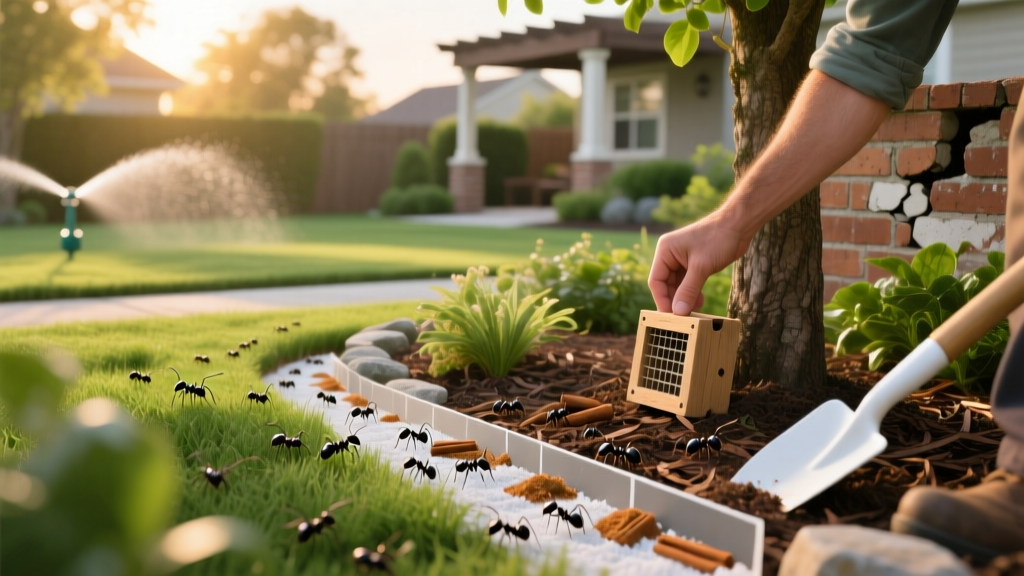
How to Keep Ants Out of House: Yard Perimeter Defense Guide
Most homeowners attempt to fight ant invasions by spraying baseboards and kitchen counters with over-the-counter repellent aerosols. This approach is fundamentally flawed. Repellent sprays containing pyrethroids (like bifenthrin or permethrin) only kill the visible foraging workers and trigger a survival mechanism called 'budding,' where the colony splits and creates multiple new satellite nests. To permanently solve the problem, you must intercept the colony before it reaches your foundation. Understanding how to keep ants out of house interiors requires shifting your focus from the kitchen floor to the exterior yard perimeter.
By establishing a comprehensive 30-foot exterior defense zone, you can eliminate foraging trails, destroy the primary colony through transfer effects, and remove the environmental conditions that attract pests in the first place.
The 30-Foot Perimeter Rule: Mapping Your Defense Zone
Ant colonies rarely nest directly inside your walls unless there is severe, chronic moisture damage. Most species—such as Argentine ants, odorous house ants, and pavement ants—nest in the soil of your yard and send out foraging trails up to 300 feet in search of food and water. The '30-Foot Perimeter Rule' dictates that your primary pest control efforts should concentrate on a 30-foot radius extending outward from your home's foundation.
Warning: The Mulch Trap
Organic mulch piled against siding or brick is the single most common structural flaw that invites ant nesting. Mulch retains moisture and regulates soil temperature, creating an ideal incubator for ant larvae. Always maintain a strict barrier between your mulch beds and your home.
Organic mulch piled against siding or brick is the single most common structural flaw that invites ant nesting. Mulch retains moisture and regulates soil temperature, creating an ideal incubator for ant larvae. Always maintain a strict barrier between your mulch beds and your home.
Exterior Baiting vs. Barrier Sprays: A Decision Matrix
Choosing the right chemical intervention depends entirely on the ant species, the season, and the severity of the trail. Below is a professional-grade decision matrix comparing the three primary exterior treatment methodologies used by licensed exterminators.
| Treatment Type | Active Ingredient | Mechanism of Action | Avg. Cost (2026) | Best Use Case |
|---|---|---|---|---|
| Non-Repellent Liquid | Fipronil (9.1%) | Undetectable; workers track it back to the nest, causing secondary kill via transfer effect. | $75 / 20 oz bottle | Heavy perimeter trails; soil trenching. |
| Exterior Granular Bait | Imidacloprid / Hydramethylnon | Foragers carry toxic food matrix back to the queen; colony starves/collapses in 7-14 days. | $45 / 2 lb tub | Dry, sunny yards; pavement ant mounds. |
| Non-Repellent Spray | Dinotefuran | Water-dispersible granule; excellent for foliar spraying on trees to stop honeydew farming. | $42 / 10x10g packets | Aphid-induced ant trails on landscaping. |
| Repellent Barrier (Avoid) | Bifenthrin | Kills on contact; creates a chemical wall. Causes colony budding and long-term resistance. | $35 / gallon | None for ants (reserve for ticks/fleas). |
According to the University of Kentucky Entomology Department, utilizing non-repellent termiticides like Fipronil for ant control is highly effective precisely because the insects do not recognize the chemical boundary, allowing them to freely cross the treated zone and spread the active ingredient throughout the colony's social network.
Landscaping Modifications That Starve and Block Colonies
Chemical treatments will fail if your yard's physical layout continuously invites pests. Implementing these structural landscaping changes removes the biological incentives for ants to approach your home.
1. The 18-Inch Mulch-Free Foundation Gap
Pull all organic mulch, pine straw, and leaf litter back at least 18 inches from your foundation. Replace this gap with inorganic materials like crushed gravel, river rock, or bare, compacted soil. Gravel does not retain the moisture required for ant larvae survival and creates a physical barrier that is difficult for foraging trails to navigate. Ensure the soil in this 18-inch gap slopes away from the house at a minimum grade of 5% to prevent water pooling, which attracts moisture-loving species like carpenter ants.
2. Eradicating the Aphid-Ant Symbiosis
Many homeowners are unaware that ants actively 'farm' sap-sucking insects like aphids, scale, and whiteflies on ornamental shrubs and trees. These insects excrete a sugary substance called honeydew, which serves as a primary carbohydrate source for ant colonies. If you see heavy ant traffic moving up and down the trunks of your trees or shrubs, you likely have a honeydew infestation.
- The Fix: Apply a systemic soil drench containing Imidacloprid (e.g., Bayer Advanced 12 Month Tree & Shrub Protect & Feed) to the root zone of affected plants in early spring. The plant absorbs the chemical, killing the aphids and cutting off the ants' food supply.
- Physical Barrier: Wrap tree trunks with a 4-inch band of duct tape and apply a sticky resin like Tanglefoot to physically trap foraging workers attempting to climb.
Step-by-Step Trenching and Liquid Barrier Application
For severe, recurring infestations, a liquid soil trench using a non-repellent active ingredient provides up to 6 months of continuous protection. Follow this exact protocol for maximum efficacy.
- Dig the Trench: Using a trenching shovel, dig a continuous trench 6 inches wide and 6 inches deep directly against the home's foundation, spanning the entire perimeter where ant activity is noted.
- Mix the Solution: Using a 1-gallon or 2-gallon pressurized pump sprayer, mix a Fipronil-based concentrate (like Termidor SC) at the precise ratio of 0.8 fluid ounces per gallon of water. Agitate the tank thoroughly.
- Apply to the Trench: Apply exactly 4 gallons of the finished solution for every 10 linear feet of trench. Pour the liquid evenly along the soil wall of the trench, ensuring deep saturation.
- Treat the Foundation Wall: Spray the exposed foundation wall up to 1 foot above the soil grade, applying 1 gallon per 1,000 square feet of surface area.
- Backfill: Shovel the excavated soil back into the trench, mixing it lightly with the treated topsoil to create a continuous, treated subterranean barrier.
Expert Insight on Transfer Effects:
'The delayed mortality of Fipronil is its greatest asset. A single worker ant crossing a treated trench can transfer lethal doses to 40 to 50 other nest members through trophallaxis (food sharing) and physical grooming before the original worker dies. This is why you must never mix Fipronil with fast-acting repellent sprays; killing the forager instantly halts the transfer mechanism.'
Seasonal Exterior Maintenance Schedule
Ant pressure fluctuates with temperature and rainfall. Adhering to a seasonal exterior maintenance schedule ensures your perimeter defenses remain intact when colonies are most active.
- Early Spring (Soil Temps Reach 55°F): Apply exterior granular baits (Maxforce Complete) in broadcast patterns across the yard, focusing on tree bases and fence lines. Colonies are actively seeking protein and carbohydrates to rear spring broods.
- Late Spring / Early Summer: Execute the 6x6 liquid trenching protocol described above. This establishes a chemical barrier before peak summer foraging begins.
- Mid-Summer: Inspect the 18-inch mulch-free gap. Clear away any wind-blown organic debris or creeping groundcovers (like ivy) that have bridged the gap to the foundation.
- Autumn: As temperatures drop, ants seek overwintering sites, often moving indoors. Re-apply a non-repellent spray (Alpine WSG) to exterior window frames, door thresholds, and utility penetrations where pipes enter the siding.
By integrating physical landscaping barriers with targeted, non-repellent chemical interventions, you dismantle the ant colony's ability to sustain itself near your home. This proactive yard defense strategy eliminates the need for toxic indoor sprays and provides long-term structural protection against invasive pests.
For further guidance on safe exterior pesticide application and environmental protection, always consult the EPA's Safe Pest Control guidelines before handling concentrated chemicals.

