
Pest Control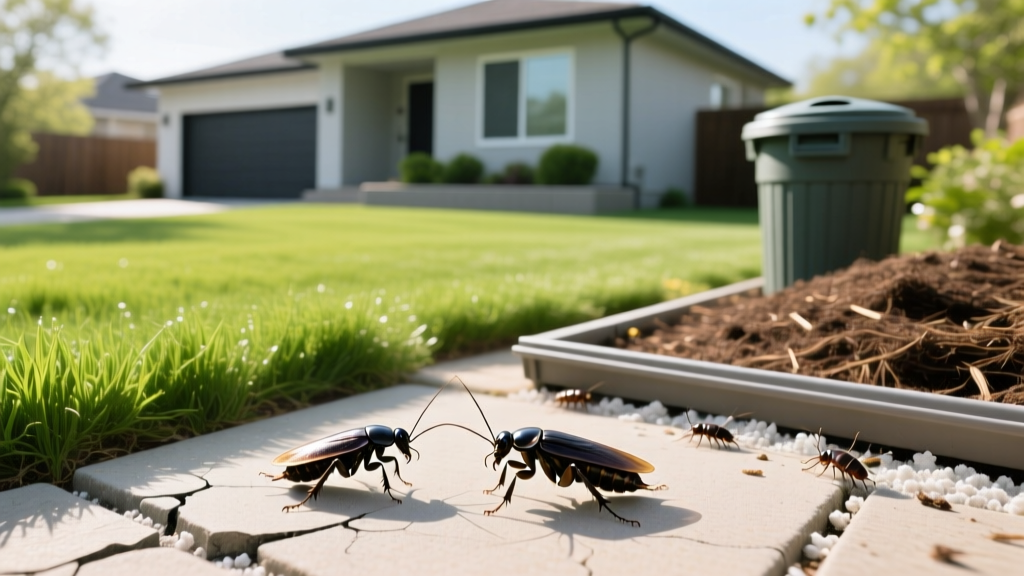
How to Keep Roaches Away From Your Yard and Home Perimeter
When homeowners ask how to keep roaches away, they are often reacting to an indoor sighting. However, the most effective defense begins in the yard. The species that invade homes from the outside—known as peridomestic cockroaches—thrive in exterior harborages before migrating indoors to escape temperature extremes or seek water. German cockroaches are strictly indoor pests, but American, Smokybrown, Oriental, and Asian cockroaches live in your landscaping, mulch beds, and tree canopies. To stop them from breaching your home, you must engineer a hostile exterior environment.
The Peridomestic Threat Matrix
Identifying which yard roach you are dealing with dictates your treatment strategy. According to Penn State Extension, different species exploit distinct microclimates in your yard. Use this matrix to identify your primary target:
| Species | Primary Yard Habitat | Peak Invasion Trigger | Targeted Control Method |
|---|---|---|---|
| American Cockroach | Wood mulch, sewer grates, leaf litter | Heavy rainfall flooding sewers | Liquid residual barrier & granular bait |
| Smokybrown Cockroach | Tree canopies, gutters, woodpiles | Late summer heat & drought | Tree trunk banding & canopy treatment |
| Oriental Cockroach | Damp soil, crawl spaces, foundation gaps | Spring thaw and high humidity | Moisture remediation & exclusion |
| Asian Cockroach | Shaded lawn areas, dense groundcover | Attracted to bright outdoor lights at night | LED light modification & broadcast bait |
Step 1: Eliminating Yard Moisture and Harborages
Peridomestic roaches require high humidity to survive. If your yard retains excess moisture, it acts as a breeding ground. The Centers for Disease Control and Prevention (CDC) emphasizes that source reduction is the cornerstone of integrated pest management (IPM).
Landscaping Modifications
- The 18-Inch Gravel Rule: Remove wood mulch within 18 inches of your foundation. Wood mulch retains moisture and provides cellulose. Replace it with a 2-inch layer of 3/4-inch crushed gravel or river rock, which drains rapidly and offers no food value.
- Canopy Thinning: Smokybrown roaches live in trees. Trim back tree branches so they are at least 3 feet away from your roofline and siding. Thin dense shrubbery to allow sunlight to penetrate and dry the soil beneath.
- Leaf Litter Removal: American roaches breed in decaying organic matter. Maintain a strict weekly schedule for clearing fallen leaves, especially in shaded corner beds.
Water Management
Ensure your gutter downspouts discharge water at least 4 feet away from the foundation using solid PVC extensions. If you have poor yard grading that causes pooling near the house, install a French drain or a dry well to redirect subsurface water away from the structure.
Step 2: Applying Chemical and Botanical Barriers
Once the habitat is modified, establish a chemical perimeter to intercept roaches before they reach the foundation. The gold standard for outdoor roach defense is a microencapsulated or suspended concentrate liquid residual.
Liquid Residual Application
Products containing Bifenthrin (7.9%), such as Talstar P Professional Insecticide, provide up to 90 days of outdoor residual control.
- Mixing Rate: 1 fluid ounce per gallon of water.
- Application Zone: Spray a continuous band 3 feet up the foundation wall and 3 feet out onto the adjacent soil, mulch, or gravel.
- Cost Efficiency: A 3/4 gallon jug costs approximately $45 in 2026 and yields up to 96 gallons of finished spray, making it vastly more economical than hardware store ready-to-use sprays.
⚠️ Environmental Warning: Bifenthrin is highly toxic to aquatic life and bees. Never spray near storm drains, ditches, or directly onto blooming flowers. Apply in the early morning or late evening when pollinators are inactive, and allow the spray to dry completely before allowing pets or children into the yard.
Botanical Alternatives
If you prefer an organic approach, Diatomaceous Earth (DE) (food grade) or Botanical Pyrethrin sprays (like EcoSmart) can be used. However, DE loses its efficacy when wet, making it unreliable for damp yard environments unless applied under covered porches or inside crawl space vents.
Step 3: Securing the Foundation and Entry Points
Chemical barriers kill roaches, but physical exclusion prevents them from trying. The Environmental Protection Agency (EPA) recommends sealing all exterior penetrations as a primary defense mechanism.
Exclusion Materials and Specifications
- Weep Holes: Brick veneer homes have weep holes at the base to allow moisture to escape. Never seal these with caulk. Instead, stuff them with Stuf-Fit Copper Mesh or 1/4-inch stainless steel mesh. Roaches cannot chew through copper, and the mesh allows air and water to pass.
- Foundation Cracks: Use a polyurethane-based sealant like Loctite PL S30 for gaps larger than 1/16 inch. Polyurethane expands, adheres to wet masonry, and remains flexible through freeze-thaw cycles, unlike cheap acrylic latex caulks that crack after one season.
- Pipe Penetrations: Where HVAC lines, water spigots, and gas lines enter the home, seal the annular space with expanding foam (like Great Stuff Pro Pestblock, which contains a bitterant to deter rodents that might otherwise chew through the foam).
Step 4: Outdoor Baiting Strategies for Heavy Infestations
If your yard borders a wooded area or a neighboring property with poor sanitation, a liquid barrier alone may not suffice. You must deploy outdoor baits to reduce the overall population.
💡 Pro Tip: Avoid Cross-Contamination
Never apply granular baits directly on top of a liquid residual spray. The bitter taste of the liquid repellent will contaminate the bait, causing roaches to avoid it entirely. Apply liquid barriers to the foundation wall and gravel, and place baits deeper inside the mulch beds or tree lines.
Never apply granular baits directly on top of a liquid residual spray. The bitter taste of the liquid repellent will contaminate the bait, causing roaches to avoid it entirely. Apply liquid barriers to the foundation wall and gravel, and place baits deeper inside the mulch beds or tree lines.
Recommended Outdoor Baits
For peridomestic species, granular baits outperform gel baits, which dry out rapidly in outdoor heat.
- Advion Insect Granular Bait: Contains Indoxacarb (0.25%). The active ingredient requires activation by the roach's digestive enzymes, meaning it is highly lethal to the target pest but possesses a low toxicity profile for mammals. Apply at a rate of 1.5 to 2 lbs per 1,000 square feet in heavy mulch areas.
- Maxforce Complete Granular Bait: Contains Hydramethylnon (1.0%). This is a slower-acting metabolic inhibitor that allows foraging roaches to return to their harborages and spread the toxin via coprophagy (feces consumption) and emetophagy (vomit consumption), triggering a domino effect in the colony.
Seasonal Perimeter Maintenance Checklist
Keeping roaches away is an ongoing cycle. Follow this seasonal schedule to maintain your yard defense:
- Early Spring (March-April): Clear winter leaf litter. Inspect and replace damaged copper mesh in weep holes. Apply the first liquid residual barrier as soil temperatures exceed 55°F.
- Early Summer (June): Reapply liquid barrier (Bifenthrin degrades faster under high UV exposure). Thin out dense groundcovers like ivy or hostas. Ensure AC condensate lines are draining away from the foundation.
- Early Autumn (September): This is peak migration time as temperatures drop. Broadcast granular bait in mulch beds. Seal all newly discovered foundation cracks before the first freeze forces roaches indoors.
- Winter (December-February): Store firewood on elevated metal racks at least 20 feet from the home. Never stack wood directly on the soil or against the siding, as it provides an insulated winter haven for American and Smokybrown roaches.
By combining strict moisture management, physical exclusion, and targeted chemical interventions, you create an impenetrable perimeter. Understanding the specific biology of peridomestic roaches allows you to disrupt their life cycle in the yard, ensuring they never become an indoor problem.

