
Pest Control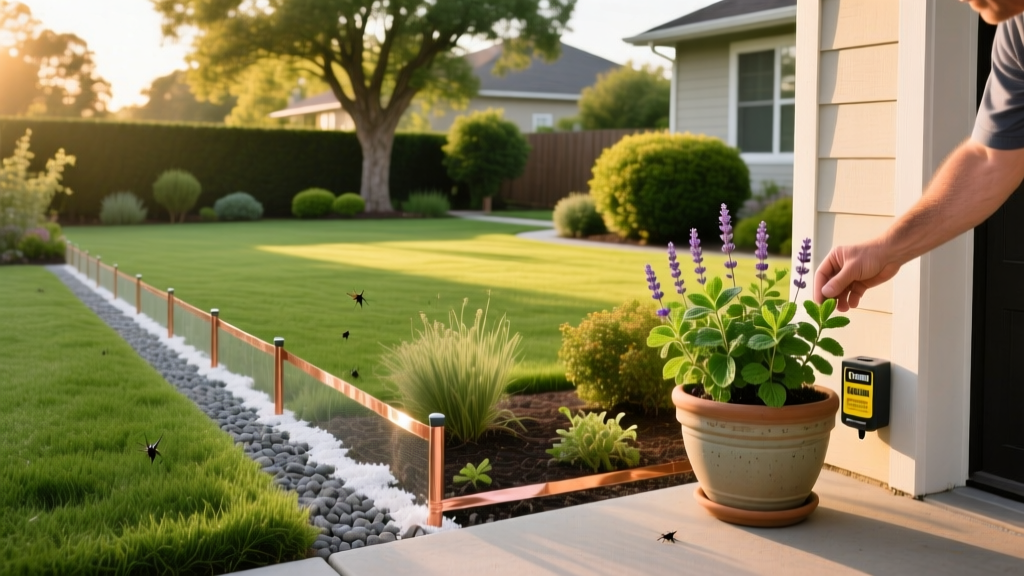
How to Keep Roaches Out of Your House: Yard & Perimeter Defense
The Perimeter Threat: Identifying Yard-Breeding Roaches
When homeowners research how to keep roaches out of your house, the instinct is to deploy indoor baits, sticky traps, and foggers. However, if you are dealing with American (Periplaneta americana), Smokybrown (Periplaneta fuliginosa), or Oriental (Blatta orientalis) cockroaches, the battle is actually lost in the yard. Unlike the German cockroach, which is strictly an indoor pest, these larger species thrive in exterior harborage sites and migrate indoors only when environmental conditions shift or populations explode.
Species Migration Data
American Cockroaches: Prefer warm, moist areas like sewer systems and leaf litter. They typically invade ground-floor kitchens and bathrooms via plumbing penetrations.
Smokybrown Cockroaches: Strong fliers attracted to exterior lighting. They breed in tree holes, gutters, and dense ivy, entering homes through attic vents and roofline gaps.
Oriental Cockroaches: Often called 'water bugs,' they thrive in cool, damp soil and enter via basement cracks and threshold gaps.
According to the University of Florida IFAS, Smokybrown cockroaches require high-moisture environments and will readily move from saturated yard debris into the climate-controlled envelope of your home during dry spells or heavy rains. Effective defense requires treating the landscape as the primary barrier.
Landscaping Modifications: The 18-Inch Defense Zone
Roaches require three things to establish a yard colony: moisture, shelter, and organic food. Standard landscaping practices often inadvertently provide all three. To disrupt this cycle, you must implement a strict vegetation-free perimeter.
The Gravel and Mulch Protocol
Establish a minimum 18-inch bare zone between your foundation and any vegetation or mulch. Mulch retains moisture and provides ideal harborage. If you must use groundcover near the house, switch from moisture-retaining pine bark or shredded hardwood to inorganic materials like crushed gravel, river rock, or cedar mulch. Cedar contains natural oils (thujone) that act as a mild deterrent to many insects, though it is not a standalone solution. Keep any organic mulch depth under 2 inches to prevent the lower layers from remaining perpetually damp.
Vegetation and Canopy Management
Trim all shrubs, bushes, and tree branches so they maintain at least a 12-inch gap from the exterior siding. Branches touching the roofline or siding act as physical bridges, allowing Smokybrown roaches to bypass ground-level chemical barriers and access soffits and attic vents directly.
Moisture Eradication and Grading Protocols
Moisture is the primary driver of exterior roach populations. The Environmental Protection Agency (EPA) emphasizes that reducing moisture sources is a critical component of integrated pest management (IPM) for cockroaches. Addressing yard hydrology is non-negotiable.
- Downspout Extensions: Ensure all gutter downspouts discharge water at least 4 feet away from the foundation. Splash blocks alone are insufficient; use corrugated or PVC extensions.
- Positive Grading: The soil should slope away from the foundation at a minimum grade of 6 inches of drop over the first 10 feet. Negative grading pools water against the slab, creating a permanent roach breeding ground.
- AC Condensate Lines: Route HVAC condensate drain lines into a dedicated dry well or French drain rather than letting them dump directly onto the soil near the foundation.
- French Drains: For persistently damp yards, install a perforated pipe French drain wrapped in landscape fabric and topped with washed gravel to intercept subsurface water before it reaches the foundation.
Exterior Chemical and Organic Barrier Treatments
Once the physical environment is modified, applying a perimeter barrier provides the secondary line of defense. The goal is to create a treated band that roaches must cross to reach the house.
| Treatment Type | Active Ingredient / Product | Application Rate & Cost | Longevity & Notes |
|---|---|---|---|
| Liquid Residual | Bifenthrin 7.9% (e.g., Talstar P) | 1 oz per gallon / ~$45/gal | 60-90 days. Broad-spectrum. Apply 2 feet up the foundation and 3 feet out on the soil. |
| Non-Repellent | Dinotefuran (e.g., Alpine WSG) | 10-20g per 50 gal / ~$85/pack | 90+ days. Roaches cannot detect it, allowing them to carry the toxin back to the yard colony. |
| Desiccant Dust | Amorphous Silica / DE (e.g., Harris DE) | Light dusting / ~$15/4lb | Indefinite if dry. Use in dry, protected areas like under porches or inside weep holes. Ineffective when wet. |
| Granular Bait | Indoxacarb (e.g., Advion Insect Granule) | 1.15 lbs per 1,000 sq ft / ~$40/bag | 30-60 days. Broadcast in mulch beds and leaf litter to target foraging nymphs. |
Pro Tip: Do not spray liquid residuals directly over granular baits or desiccant dusts. The liquid will ruin the bait's palatability and cause dusts to clump, rendering both ineffective. Apply baits in mulch beds and liquid residuals on bare soil and hardscapes.
Structural Exclusion: Sealing the Building Envelope
Chemical barriers degrade over time, making physical exclusion the most permanent solution for keeping yard roaches outside. Roaches can flatten their bodies to squeeze through gaps as small as 1/16 of an inch.
Weep Holes and Vents
Brick veneer homes feature weep holes at the base of the masonry to allow moisture to escape. Never seal these with caulk or mortar, as this will trap water and rot your wall framing. Instead, insert 100% pure copper mesh (such as Storz copper mesh, approx. $15 for 50 feet) into the weep holes. Unlike steel wool, copper will not rust or stain the brick, and its rough texture deters roaches from crawling through while maintaining vital airflow.
Pipe and Wire Penetrations
Inspect the exterior where HVAC refrigerant lines, gas pipes, and electrical conduits enter the home. Seal the annular space around these penetrations using a high-quality, paintable silicone-acrylic caulk or expanding polyurethane foam (like Great Stuff Pestblock, which contains a bittering agent to deter rodents that might otherwise chew through standard foam).
Yard Waste and Compost Management
Decaying organic matter is a primary food source for outdoor roaches. Manage your yard waste to eliminate these feeding stations.
- Compost Bin Placement: Locate compost bins at least 20 feet away from the home's foundation. Use enclosed, tumbling composters rather than open ground piles, which generate the exact heat and moisture profile roaches prefer.
- Leaf Litter: Rake and bag fallen leaves weekly during autumn. Do not allow leaves to accumulate in garden beds near the house, as the decomposing layer creates a microclimate that sustains roach populations through the winter.
- Firewood Storage: Store firewood on elevated metal racks at least 5 feet from the exterior walls. Inspect logs before bringing them indoors, as roaches frequently hitchhike inside hidden within the bark crevices.
By integrating these landscaping, moisture, chemical, and exclusion protocols, you shift the defensive perimeter away from your interior living spaces and into the yard, effectively neutralizing the threat before it reaches your doors.

