
Pest Control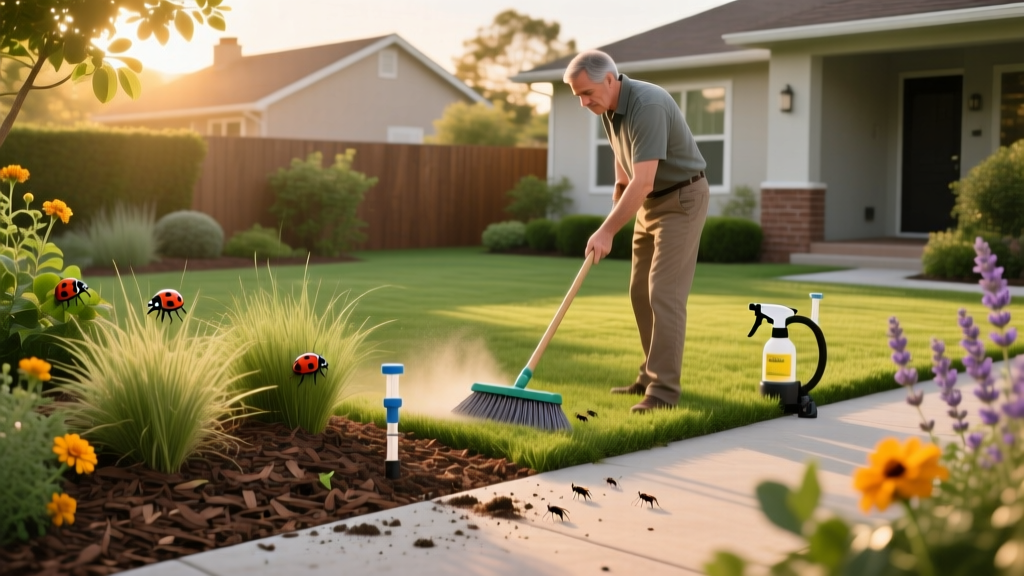
Yard Defense: Choosing the Best Flea Deterrent for House Perimeters
The Biology of Yard Fleas: Why Perimeter Defense Matters
When homeowners search for a flea deterrent for house interiors, they often overlook the origin of the infestation. The cat flea (Ctenocephalides felis) accounts for over 95% of flea complaints in North America. These pests do not thrive in open, sunlit lawns; they require shaded, humid microclimates with organic debris to complete their life cycle. The perimeter of your house—specifically foundation plantings, shaded mulch beds, and crawl space vents—acts as a primary breeding ground and a direct highway into your home.
According to the University of California Integrated Pest Management (UC IPM) program, flea pupae can remain dormant in soil and leaf litter for up to five months, waiting for the vibrational and thermal cues of a passing host. Applying a targeted flea deterrent for house perimeters disrupts this cycle before the pests can hitch a ride on pets or human clothing.
The 3-Zone Perimeter Strategy
Effective yard defense requires treating three distinct zones: Zone 1 (the immediate 3-foot foundation perimeter), Zone 2 (shaded transition areas under trees and along fences), and Zone 3 (pet resting areas and kennels). Treating only the open lawn wastes product and fails to address the actual breeding sites.
Top Chemical and Organic Flea Deterrents for House Perimeters
Selecting the right product depends on your yard's ecology, the severity of the infestation, and your tolerance for synthetic chemicals. Below is a comparison matrix of the most effective perimeter treatments available in 2026.
| Product Category | Specific Product Example | Active Ingredient | Target Life Stage | Cost per 1,000 sq. ft. |
|---|---|---|---|---|
| Synthetic Pyrethroid + IGR | Bifen IT + Tekko Pro | Bifenthrin (7.9%) + Pyriproxyfen | Adults, Larvae, Eggs | $0.08 |
| Botanical Essential Oil | Cedarcide Original | Cedarwood Oil (10%) | Adults, Larvae | $0.35 |
| Biological Control | Arbico NemaShield | Steinernema carpocapsae | Larvae, Pupae | $0.15 |
The Conventional Gold Standard: Bifenthrin + Pyriproxyfen
For severe infestations, a tank mix of Bifen IT (a synthetic pyrethroid) and Tekko Pro IGR (an insect growth regulator) provides the most reliable perimeter defense. Bifenthrin acts as a fast-acting neurotoxin that knocks down adult fleas on contact. However, killing adults is insufficient; you must break the reproductive cycle.
Tekko Pro contains Pyriproxyfen, which mimics the juvenile hormone in insects. When flea larvae ingest or absorb Pyriproxyfen, they are prevented from molting into reproductive adults. According to Texas A&M AgriLife Extension, combining an adulticide with an IGR is the only proven method to achieve long-term eradication in heavily infested outdoor zones.
Mixing Ratio: 1 fl. oz. Bifen IT + 1 fl. oz. Tekko Pro per 1 gallon of water, applied to 1,000 square feet of foundation perimeter.
The Organic Alternative: Cedarwood Oil
If you maintain a pollinator-friendly yard or have free-roaming livestock, synthetic pyrethroids are contraindicated due to their high toxicity to bees and aquatic life. Cedarwood oil (specifically formulations containing high levels of octanol and cedrol) works by blocking octopamine receptors in the flea's nervous system, causing rapid dehydration and death. Products like Cedarcide Original must be applied every 7 to 14 days, as UV radiation and rainfall degrade the botanical oils much faster than synthetic chemicals.
Biological Warfare: Beneficial Nematodes
Beneficial nematodes (Steinernema carpocapsae) are microscopic, soil-dwelling roundworms that actively seek out and parasitize flea larvae and pupae. As noted by the University of Florida IFAS Entomology Department, these organisms release symbiotic bacteria that kill the host insect within 48 hours.
Critical Application Constraint: Nematodes require a soil moisture level of 20-30% and temperatures between 60°F and 85°F to survive. You must water the perimeter zone immediately before and after application. Never combine nematodes with chemical flea deterrents for house perimeters, as the fungicidal or insecticidal properties of the chemicals will kill the nematodes.
Step-by-Step Application: Creating an Impeccable Flea Barrier
Applying a flea deterrent for house exteriors requires precision. Follow this protocol to maximize residual efficacy:
- Clear the Perimeter: Rake back mulch, dead leaves, and pine straw at least 12 inches away from the foundation. Fleas thrive in this organic layer; exposing the bare soil to sunlight naturally desiccates pupae.
- Mow and Edge: Cut the grass along the foundation to a height of 2 inches. This removes the humid canopy fleas use to hide from UV rays and allows your spray to penetrate directly to the soil surface.
- Calibrate the Sprayer: Use a 1-gallon or 2-gallon pump sprayer fitted with a fan nozzle, not a pin-stream nozzle. A fan nozzle ensures an even, 4-inch wide band of coverage against the foundation and the adjacent soil.
- Apply the Treatment: Spray the foundation wall from the ground up to a height of 18 inches, and extend the spray 3 feet outward into the soil. Pay special attention to crawl space vents, AC condenser pads, and areas where utility lines enter the home.
- Allow to Dry: Keep pets and children off the treated perimeter until the liquid has completely dried (typically 2 to 4 hours). Once dry, pyrethroid treatments are generally safe and highly resistant to light rainfall.
Common Application Mistakes That Cause Treatment Failure
Even the most expensive flea deterrent for house perimeters will fail if applied incorrectly. Avoid these frequent errors:
- Ignoring the Sub-Structure: Many homeowners spray the outside wall but forget that fleas breed heavily in the damp soil beneath crawl spaces and deck lattices. If you have a raised foundation, treat the soil underneath the perimeter skirt.
- Overwatering Post-Application: While IGRs and pyrethroids bind well to soil particles once dry, turning on your sprinkler system the morning after treatment will dilute the active ingredients and push them past the root zone where fleas reside.
- Treating During Peak Heat: Applying botanical oils or certain liquid concentrates when ambient temperatures exceed 85°F can cause rapid evaporation of the carrier solvents, leading to uneven distribution and potential phytotoxicity (leaf burn) on foundation shrubs.
Expert Insight: Flea pupae are encased in a sticky, protective cocoon that renders them virtually immune to all chemical sprays and IGRs. This is why a single application of a flea deterrent for house perimeters is never enough. You must re-apply treatments every 21 to 28 days to catch the newly emerged adults before they can mate and lay the next generation of eggs.
Frequently Asked Questions
Can I use indoor flea foggers on my outdoor perimeter?
No. Total-release aerosol foggers are designed for enclosed, unventilated spaces. Using them outdoors is ineffective because the active ingredient dissipates instantly in the wind, and it is a violation of federal EPA label instructions to use indoor-only products in outdoor environments.
Will gravel or rock landscaping deter fleas?
While gravel does not provide the organic matter fleas need to feed larvae, the spaces between rocks can trap moisture and debris, creating viable micro-habitats. If you have a rock perimeter, you must still treat the soil beneath the gravel with a liquid perimeter spray or apply diatomaceous earth (food grade) into the rock crevices during dry weather.
How long does a perimeter flea barrier last?
A high-quality synthetic pyrethroid mixed with an IGR (like Bifen IT and Tekko Pro) will provide an effective residual barrier on outdoor foundations for 30 to 45 days. Organic cedar oil sprays degrade faster and require reapplication every 7 to 14 days, especially during periods of heavy rainfall or intense summer UV exposure.

