
Pest Control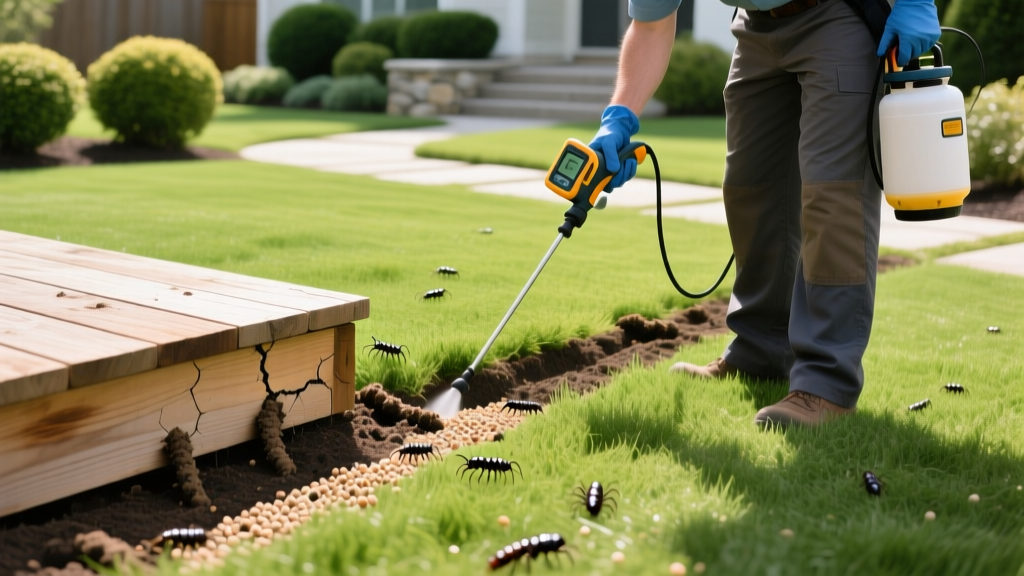
Effective Treatment for Termites: Yard Perimeter Defense Strategies
Subterranean termites cause billions of dollars in structural damage annually, and their foraging networks begin deep within your yard soil. Waiting for mud tubes to appear on your foundation means the colony is already actively feeding on your home. An effective treatment for termites requires a proactive yard perimeter defense strategy that intercepts foraging workers before they reach the structure. By establishing a continuous chemical barrier or deploying strategic bait matrices, you can collapse the colony's ability to exploit your property.
The Biology of Yard Foraging
Subterranean termites (Reticulitermes and Coptotermes species) require constant contact with soil moisture to survive. They construct elaborate subterranean galleries radiating outward from the primary nest, often located near buried cellulose sources like decaying tree stumps or woodpiles. According to University of Kentucky Entomology, worker termites can forage up to 150 feet from the central colony. When a worker discovers a structural vulnerability, it lays down a pheromone trail that recruits thousands of nestmates. Yard defense targets this transit corridor, turning the soil surrounding your home into a lethal or inhibiting zone.
Liquid Soil Barriers vs. In-Ground Bait Stations
Selecting the right treatment for termites depends on your soil composition, landscaping layout, and desire for colony elimination versus immediate structural protection. Below is a technical comparison of the two primary perimeter defense methodologies.
| Feature | Liquid Soil Barrier (e.g., Termidor SC) | In-Ground Bait Stations (e.g., Trelona ATBS) |
|---|---|---|
| Active Ingredient | Fipronil (9.1%) - Phenylpyrazole class | Novaluron - Insect Growth Regulator (IGR) |
| Mechanism of Action | Non-repellent transfer effect; workers pass lethal dose to nestmates via grooming and trophallaxis. | Chitin synthesis inhibitor; prevents molting, leading to gradual colony collapse. |
| Speed of Control | Rapid protection (days); colony elimination in 30-90 days. | Slower onset (months); relies on termites finding and consuming the bait matrix. |
| Soil Disruption | Requires extensive trenching and rodding (high labor). | Minimal disruption; small augered holes for station insertion. |
| Longevity | 5 to 10 years in undisturbed soil. | Requires annual monitoring and bait replacement as needed. |
Step-by-Step: Applying a Liquid Trenching Treatment
Applying a liquid termiticide like Termidor SC requires precise measurements to ensure the chemical barrier is continuous and deep enough to intercept foraging galleries. A standard application requires 4 gallons of finished solution per 10 linear feet of foundation per foot of depth.
Warning: Fipronil is highly toxic to bees and aquatic invertebrates. Never apply liquid termiticides near ponds, streams, or active pollinator habitats. Allow the treated soil to dry completely before allowing pets or children back into the yard.
- Clear the Perimeter: Remove all mulch, leaf litter, and debris within 2 feet of the foundation to expose bare soil.
- Dig the Trench: Using a flat spade, dig a continuous trench exactly 6 inches wide and 6 inches deep immediately against the foundation wall. If you have a basement or crawl space, the trench must reach the top of the footer.
- Prepare the Solution: Mix 0.8 fluid ounces of Termidor SC per gallon of water to achieve a 0.06% finished concentration. Use a 2-gallon or 5-gallon pump sprayer for consistent agitation.
- Apply the Termiticide: Pour or spray the solution into the trench at the rate of 4 gallons per 10 linear feet. For deeper foundations, use a soil rodding tool to inject the chemical down to the footer level, spacing injections every 12 inches.
- Backfill and Cap: Push the excavated soil back into the trench and tamp it down firmly to create a sloped grade that directs surface water away from the foundation, preventing the chemical barrier from washing out.
Strategic Installation of In-Ground Bait Stations
If your property features extensive hardscaping, concrete patios, or sensitive garden beds where trenching is impossible, bait stations like the Trelona Advanced Termite Bait System (ATBS) or Sentricon provide a highly effective alternative. These systems utilize a compressed cellulose matrix laced with an IGR that disrupts the termite's ability to molt.
According to Penn State Extension, proper placement is critical for intercepting foraging scouts. Install stations 18 to 24 inches away from the foundation to avoid dripping rooflines and concrete overhangs. Space the stations 10 to 20 feet apart around the entire perimeter. Use a specialized 2.5-inch auger to drill the hole, insert the station housing, and cap it flush with the turf to prevent tripping hazards and lawnmower damage. Begin with a monitoring base containing untreated wood; once termite activity is confirmed, swap the monitor for the active Novaluron bait cartridge.
Landscaping Modifications to Eliminate Termite Magnets
Chemical and bait treatments will fail if your yard continues to provide alternative food sources and excessive moisture. Implement these strict landscaping rules to support your perimeter defense:
- The 6-Inch Mulch Rule: Maintain a strict 6-inch gap between any wood mulch and the home's siding or brick weep holes. Mulch retains moisture and provides a hidden bridge over your chemical barrier.
- Eradicate Buried Cellulose: Dig up and remove all decaying tree stumps, buried construction lumber, and railroad ties within 50 feet of the structure. These act as satellite feeding stations that sustain massive colonies.
- Correct Grading and Drainage: Termites thrive in saturated soils. Extend downspouts at least 6 feet away from the foundation and regrade soil to ensure a 5% slope away from the house.
- Elevate Firewood: Store firewood on elevated metal racks at least 20 feet from the home. Never stack wood directly on the soil, as this invites immediate subterranean colonization.
Cost Analysis: Professional vs. DIY Yard Defense
Understanding the financial commitment helps homeowners decide between DIY application and hiring a licensed pest management professional (PMP). Note that DIY liquid treatments are restricted in some states, requiring a commercial applicator license to purchase professional-grade Fipronil concentrates.
| Treatment Method | DIY Estimated Cost | Professional Estimated Cost | Maintenance Requirements |
|---|---|---|---|
| Liquid Soil Barrier (2,500 sq ft home) | $150 - $250 (Chemicals only) | $1,200 - $2,200 | Annual visual inspection; retreat every 7-10 years. |
| Bait Station System (15-20 stations) | $150 - $300 (Hardware + initial bait) | $800 - $1,400 | Quarterly monitoring; annual renewal fees ($250-$400/yr). |
Frequently Asked Questions
Can I apply a treatment for termites if I have a well on my property?
Yes, but strict setback distances apply. The EPA mandates that liquid termiticides cannot be applied within 5 feet of a well or cistern to prevent groundwater contamination. If the foundation is closer than 5 feet to the well, you must use an alternative method, such as bait stations or localized foam treatments, rather than a continuous liquid trench.
Do nematodes work as a yard treatment for termites?
Beneficial nematodes (Steinernema carpocapsae) are frequently marketed for organic pest control and can infect subterranean termites in laboratory settings. However, in real-world yard environments, nematodes fail to provide reliable structural protection. They degrade rapidly under UV light, require constant soil moisture to survive, and cannot penetrate the deep galleries where the primary colony resides. Relying on nematodes instead of proven termiticides leaves your home vulnerable to severe damage.
How do I know if the bait stations are actually working?
Active stations will show distinct signs of consumption. The compressed cellulose matrix will exhibit scalloped feeding grooves, and you may see mud packed into the station's crevices. During quarterly inspections, weigh the bait cartridge; a significant drop in weight indicates active feeding. Once the colony consumes a lethal threshold of the IGR, you will notice a sharp decline in worker populations and the eventual absence of foraging activity in the monitors.

