
Pest Control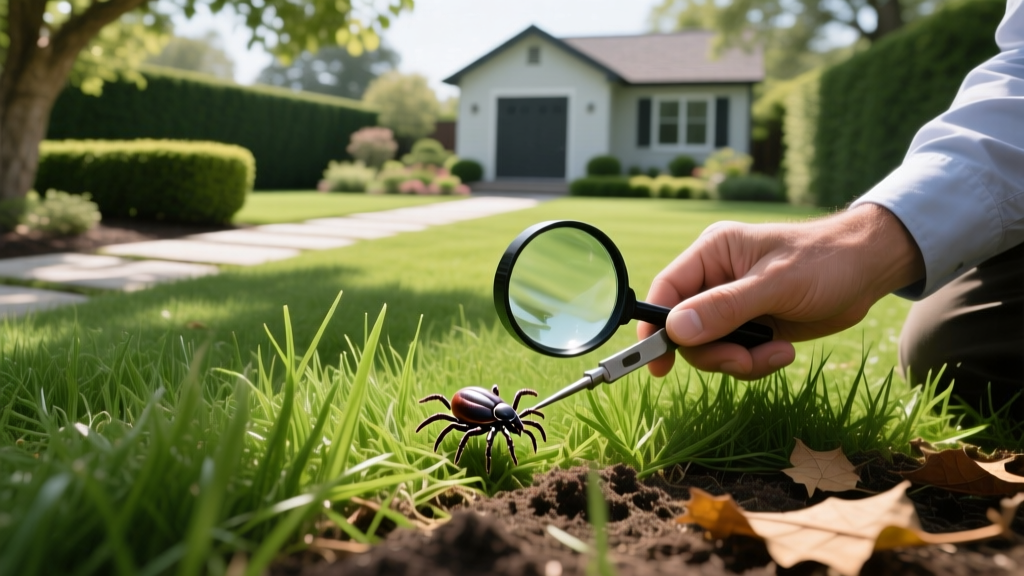
How Do You Get Rid of Ticks From Your Yard? A Pro Playbook
When homeowners ask how do you get rid of ticks from your yard, the answer requires moving beyond simple bug sprays and adopting a multi-layered perimeter defense. Ticks—specifically the black-legged deer tick (Ixodes scapularis) and the American dog tick (Dermacentor variabilis)—do not fly or drop from trees. They quest from the tips of tall grasses, shrubs, and leaf litter, waiting for a host to brush past. Eradicating them requires a combination of micro-climate disruption, physical barriers, and targeted chemical or organic applications.
This playbook outlines the exact protocols used by commercial turf managers to reduce tick populations by up to 90%, including specific product dilutions, landscaping dimensions, and cost-benefit analyses for DIY versus professional application.
Tick Species and Habitat Mapping
Before mixing any chemicals, you must map the micro-habitats in your yard. Ticks require high humidity (above 80%) to survive off-host. According to the Centers for Disease Control and Prevention (CDC), over 80% of a yard's tick population resides within the first 9 feet of the perimeter, where manicured turf meets wooded areas, stone walls, or dense brush.
- The Transition Zone: The border where sunlight meets shade. This is the primary questing zone.
- Leaf Litter & Mulch Beds: Retains moisture and provides cover for rodents, which act as primary hosts for larval ticks.
- Tall Ornamental Grasses: Often overlooked by homeowners, these provide the exact vertical structure ticks need to latch onto passing pets or humans.
The 3-Foot Wood Chip Perimeter Strategy
Chemical treatments fail if the underlying habitat remains untouched. The most effective non-chemical intervention is the installation of a dry barrier. Ticks are highly susceptible to desiccation (drying out). By creating a physical barrier that they cannot cross without dying, you effectively quarantine the manicured lawn.
Installation Specifications
- Width: Exactly 3 feet wide. Research from UMass Amherst Extension confirms that a 3-foot width prevents ticks from crawling across to the turf side.
- Depth: 3 to 4 inches of material.
- Material: Cedar or hardwood wood chips. Avoid pine straw or shredded bark mulch, which retains too much moisture and actually harbors ticks.
- Maintenance: Rake the chips annually to prevent soil and leaf litter from accumulating on top, which would create a moisture bridge for the ticks.
Chemical vs. Organic Treatment Matrix
Choosing the right active ingredient depends on your property size, proximity to water sources, and tolerance for synthetic pesticides. Below is a direct comparison of the most effective active ingredients available to homeowners in 2026.
| Active Ingredient | Product Example | Target Efficacy | Residual Lifespan | Aquatic/Polinator Risk |
|---|---|---|---|---|
| Bifenthrin (7.9%) | Talstar P Professional | 90-95% Knockdown | 30-45 Days | High (Toxic to fish/bees when wet) |
| Permethrin (36.8%) | Tengard SFR | 85-90% Knockdown | 21-30 Days | High (Highly toxic to cats when wet) |
| Cedarwood Oil | Wondercide Yard Spray | 60-75% Knockdown | 10-14 Days | Low (Safe near water/pets once dry) |
| Metarhizium brunneum | Met52 (Fungal Biopesticide) | 70-80% Mortality | 14-21 Days | None (Target-specific fungus) |
⚠️ Pollinator Protection Warning: Bifenthrin and Permethrin are highly toxic to bees. Never apply these synthetic pyrethroids to blooming weeds, clover patches, or flowering ornamentals. Mow the perimeter down to the soil level before spraying to eliminate foraging attractants.
DIY Bifenthrin Application Protocol
For maximum efficacy on standard suburban lots (up to 1/2 acre), Bifenthrin remains the gold standard due to its long residual life and low cost per square foot. Here is the exact mixing and application protocol used by turf professionals.
Equipment & Mixing
- Sprayer: 1-gallon or 2-gallon pump sprayer (minimum 40 PSI pressure). Hose-end sprayers do not provide the necessary penetration into the thatch and soil surface.
- Dilution Rate: 1 fluid ounce of Bifenthrin 7.9% per 1 gallon of water. This mix rate treats exactly 1,000 square feet.
- Adjuvant (Optional but recommended): Add 1/2 ounce of a non-ionic surfactant (like Dawn dish soap or a dedicated spreader-sticker) per gallon. This breaks the surface tension of the water, allowing the chemical to coat the waxy cuticle of the tick's exoskeleton.
Application Technique
- Timing: Apply in the early morning or late evening when temperatures are below 85°F and wind speeds are under 5 mph. This prevents rapid evaporation and chemical drift.
- Spray Pattern: Use a coarse fan nozzle, not a mist. You want heavy droplets that penetrate the top 1 inch of the canopy and thatch layer.
- Target Zones: Spray the 3-foot wood chip barrier, the base of all stone walls, the perimeter of sheds, and the lower 2 feet of any dense shrubbery.
- Re-entry Interval (REI): Keep all children and pets off the treated surfaces until the spray has completely dried (typically 2 to 4 hours). Once dry, Bifenthrin binds to the soil and plant matter and poses minimal risk to mammals.
Cost Breakdown: DIY vs. Professional Tick Control
Understanding the economics of tick control helps you decide whether to invest your weekend or hire a licensed applicator. Prices below reflect 2026 national averages for a standard 1/4 acre treatable yard (approx. 5,000 sq ft of perimeter and transition zones).
The DIY Route
- Chemicals: A 3/4 gallon jug of Talstar P costs roughly $55 and yields enough diluted mixture to treat over 90,000 square feet. For a 5,000 sq ft yard, the chemical cost per application is $3.05.
- Equipment: A high-quality 2-gallon Chapin pump sprayer costs $45 (one-time purchase).
- Wood Chips: 3 cubic yards of cedar mulch at $40/yard = $120 (one-time purchase, lasts 2-3 years).
- Total First-Year Cost: ~$168 for the entire season (assuming 4 applications).
The Professional Route
- Per-Application Cost: Pest control companies typically charge $125 to $175 per visit for a 1/4 acre lot.
- Seasonal Program: A 5-application seasonal package (April through October) averages $600 to $850.
- Advantage: Professionals use commercial-grade backpack mist blowers that penetrate dense brush far better than homeowner pump sprayers, and they carry the liability insurance for chemical drift.
Expert Insight: If your property borders a dense, untamed forest or wetlands, DIY pump sprayers often fail to reach deep into the underbrush where the primary tick breeding grounds exist. In these edge-case scenarios, hiring a professional with a motorized mist blower for the first spring application, followed by DIY maintenance sprays, offers the highest ROI.
Maintenance and Re-application Intervals
Tick control is not a 'spray once and forget' scenario. The residual efficacy of any chemical is degraded by UV sunlight, heavy rainfall, and microbial breakdown in the soil.
- Bifenthrin/Permethrin: Reapply every 30 days during peak season (May through September). If your area receives more than 2 inches of rain within a week of application, shorten the interval to 21 days.
- Organic Cedar Oil: Reapply every 10 to 14 days, or immediately following any significant rain event. Organic treatments rely on direct contact and strong olfactory disruption, which dissipates quickly outdoors.
- Lawn Mowing: Maintain your turf at a height of 2.5 to 3 inches. While this is standard for grass health, it also ensures the micro-climate at the soil surface remains too dry and exposed to sunlight for ticks to comfortably quest.
Frequently Asked Questions
Do tick tubes actually work for yard control?
Tick tubes (cardboard tubes stuffed with permethrin-treated cotton) target the white-footed mouse, a primary carrier of Lyme disease. Mice take the cotton to their nests, killing the larval ticks feeding on them. While highly effective at reducing the disease-carrying tick population over a 2-year period, they do not provide immediate knockdown of adult ticks currently questing in your yard. Use them as a supplemental, long-term biological control alongside perimeter spraying.
Can I use guinea fowl or chickens to eat ticks?
While poultry will consume ticks they stumble upon, studies show they do not actively hunt them down in dense brush where the highest concentrations live. Relying solely on poultry for tick control yields inconsistent results and introduces new landscaping challenges, as chickens will aggressively scratch and destroy your wood chip barriers and turf edges.

