
Pest Control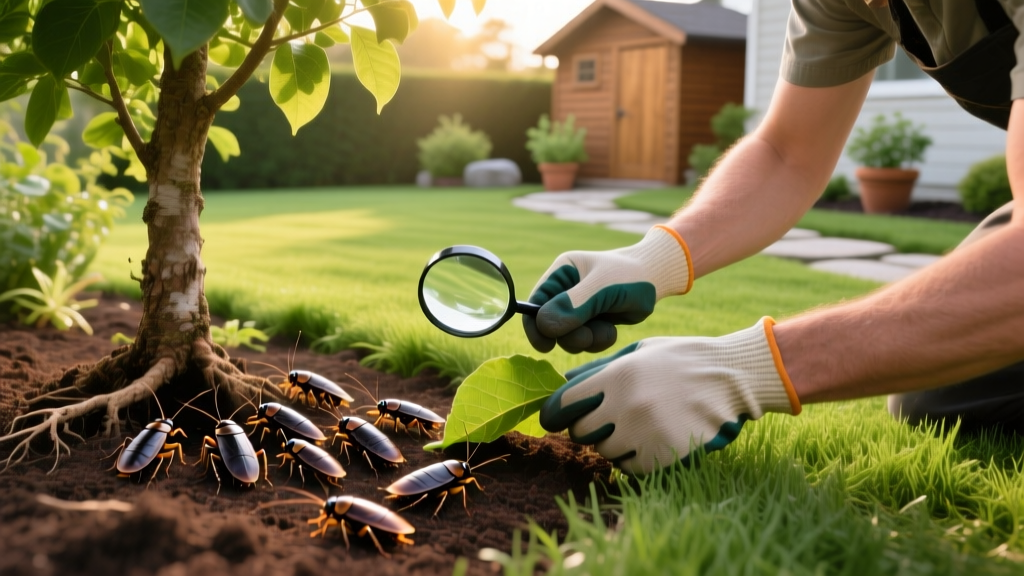
How to Get Rid of Roach Infestation: Yard-to-Home Defense
When homeowners discover roaches in their kitchen or bathroom, the immediate instinct is to attack the interior. However, if you are dealing with large, peridomestic species, the true source of the infestation is likely 20 feet away in your yard. Learning how to get rid of roach infestation permanently requires an outside-in strategy. Roaches breed in damp mulch, leaf litter, and woodpiles, migrating indoors only when outdoor temperatures drop or moisture dries up.
This comprehensive yard-to-home defense guide breaks down the exact identification, habitat disruption, and chemical protocols required to break the reproductive cycle and seal your property.
Identify the Yard-Breeding Roach Species
Not all roaches live outdoors. The German cockroach (Blattella germanica) is strictly an indoor pest. If you are seeing large roaches (1.5 to 3 inches) invading from the yard, you are likely dealing with one of three peridomestic species. Identifying the exact species dictates your moisture and treatment strategy.
| Species | Scientific Name | Primary Yard Habitat | Key Identifying Feature |
|---|---|---|---|
| American Cockroach | Periplaneta americana | Sewer grates, damp mulch, palm trees | Reddish-brown with a pale yellow figure-8 on the pronotum |
| Smokybrown Cockroach | Periplaneta fuliginosa | Tree holes, roof gutters, dense ivy | Uniform dark mahogany/black; wings extend past the abdomen |
| Oriental Cockroach | Blatta orientalis | Crawlspaces, leaf litter, damp soil | Glossy black/dark brown; males have short wings, females are wingless |
According to the University of Florida IFAS, Smokybrown cockroaches are highly susceptible to dehydration, meaning they will aggressively target homes with leaky outdoor spigots or poor gutter drainage.
Phase 1: Eliminate Outdoor Harborage Zones
Chemical sprays will fail if the yard provides unlimited shelter and moisture. You must alter the microclimate around your home's perimeter to make it inhospitable.
The 2-Inch Mulch Rule
Thick mulch acts as a moisture trap and a physical bunker for roaches. Pull all mulch back at least 12 inches from the home's foundation. Limit mulch depth to a maximum of 2 inches. If you currently use hardwood or cypress mulch, consider replacing the first 2 feet of perimeter mulch with inorganic gravel or crushed stone, which drains rapidly and offers zero nutritional value to pests.
⚠️ WARNING: Firewood Storage Mistakes
Never stack firewood directly against the house or on bare soil. Roaches harbor under the bark. Store firewood at least 20 feet from the home, elevated a minimum of 6 inches off the ground on metal racks or concrete blocks. Only bring in as much wood as you will burn immediately.
Vegetation and Canopy Management
Smokybrown roaches are strong fliers and often live in tree canopies. Trim all tree branches and shrubs so they are at least 3 feet away from the roofline and siding. This removes the 'highway' roaches use to bypass ground-level chemical barriers and access attic vents.
Phase 2: Chemical and Organic Perimeter Treatments
Once the yard is cleaned, establish a chemical barrier. The goal is not to kill every roach in the neighborhood, but to create a lethal zone immediately adjacent to the home's foundation.
Conventional Liquid and Granular Barriers
For heavy infestations, a liquid residual insecticide is the fastest knockdown method. Bifen IT (active ingredient: Bifenthrin 7.9%) remains an industry standard for peridomestic roaches. Mixing 1 ounce of Bifen IT per gallon of water and applying it in a 3-foot band up the foundation and 3 feet out into the soil provides up to 90 days of residual control. A 16-ounce bottle typically costs around $45 and treats multiple acres.
However, spraying the surface of thick mulch is a common failure mode; the liquid evaporates before reaching the soil where roaches hide. For mulched areas, use a granular bait like Syngenta Advion Insect Granule (Indoxacarb). Roaches consume the granules, return to the harborage, and die, passing the lethal dose to others via coprophagy.
Organic and Biological Controls
For homeowners preferring organic yard defense, apply Beneficial Nematodes (Steinernema carpocapsae) to the soil. These microscopic worms actively seek out and parasitize roach nymphs in the top layers of soil. Apply them via a hose-end sprayer in the early evening when UV light is low, and water the soil immediately to help them penetrate. A package treating 2,000 square feet costs roughly $35.
Phase 3: Sealing the Home Envelope
The Environmental Protection Agency (EPA) emphasizes that exclusion is the most critical long-term step in pest management. Roaches can flatten their bodies to squeeze through gaps as small as 1/16 of an inch.
- Weep Holes: Do not seal brick weep holes with caulk; this traps moisture and causes structural rot. Instead, stuff them with Stuf-Fit Copper Mesh, which blocks roaches while allowing airflow and resisting rust.
- Pipe Penetrations: Use a high-quality silicone or polyurethane sealant (like Loctite PL Roof and Flashing) around AC refrigerant lines, hose bibbs, and gas lines.
- Door Sweeps: Install heavy-duty rubber or bristle door sweeps on all exterior doors. If you can see light under the door at night, a Smokybrown roach can easily walk underneath it.
Phase 4: Interior Eradication (If They've Breached)
If roaches have already established an indoor satellite colony, perimeter spraying alone will not solve the problem. You must deploy interior baits and Insect Growth Regulators (IGRs).
💡 PRO TIP: The Gel Bait + IGR Combo
Combine Advion Cockroach Gel Bait (~$28 for a 4-tube box) with Gentrol Point Source IGR (~$35 for 10 discs). Advion kills the active population, while Gentrol (Hydroprene) emits a vapor that twists the wings of nymphs and prevents them from reaching reproductive maturity. This dual approach breaks the 60-day breeding cycle.
Place pea-sized drops of Advion gel near hinges, behind appliances, and under sinks. Never spray liquid insecticides near gel baits; the repellent nature of the spray will deter roaches from eating the bait.
'The biggest mistake homeowners make is using total-release foggers, or "bug bombs," for large outdoor roaches. The pyrethrins in foggers do not penetrate wall voids; they only irritate the roaches, causing them to scatter deeper into the home's insulation and attic spaces, making professional remediation much more difficult and expensive.' — Structural Pest Control Industry Guidelines
Common Yard-to-Home Roach Mistakes to Avoid
- Overwatering Foundation Plants: Drip irrigation lines that run too close to the house create a permanent moisture oasis for Oriental cockroaches. Adjust emitters to direct water away from the foundation.
- Ignoring AC Condensate Lines: Your air conditioner's PVC drain line dumps gallons of water near the foundation daily. Extend the line at least 5 feet away from the house using a flexible hose attachment.
- Leaving Pet Food Outdoors: Outdoor cat or dog food bowls are a primary food source for American roaches. Feed pets indoors, or remove bowls immediately after they finish eating.
Frequently Asked Questions
How long does it take to eliminate a yard-based roach infestation?
With a combined approach of habitat modification, perimeter spraying, and interior IGRs, you should see a 90% reduction in indoor sightings within 14 to 21 days. Complete eradication of the outdoor satellite colonies may take 45 to 60 days as the IGR disrupts the final generation of nymphs.
Will diatomaceous earth (DE) work in the yard?
Food-grade Diatomaceous Earth is highly effective indoors in dry, hidden areas. However, in the yard, DE is practically useless. The moment it gets wet from rain, dew, or irrigation, it clumps and loses its abrasive, desiccating properties. Stick to weather-resistant granular baits or liquid residuals for outdoor applications.
Do outdoor roaches carry diseases?
Yes. Peridomestic roaches frequently crawl through sewer lines, animal feces, and decaying organic matter. According to Texas A&M AgriLife Extension, they can mechanically transmit pathogens like Salmonella and E. coli to indoor food preparation surfaces, making swift eradication a critical health priority.

