
Pest Control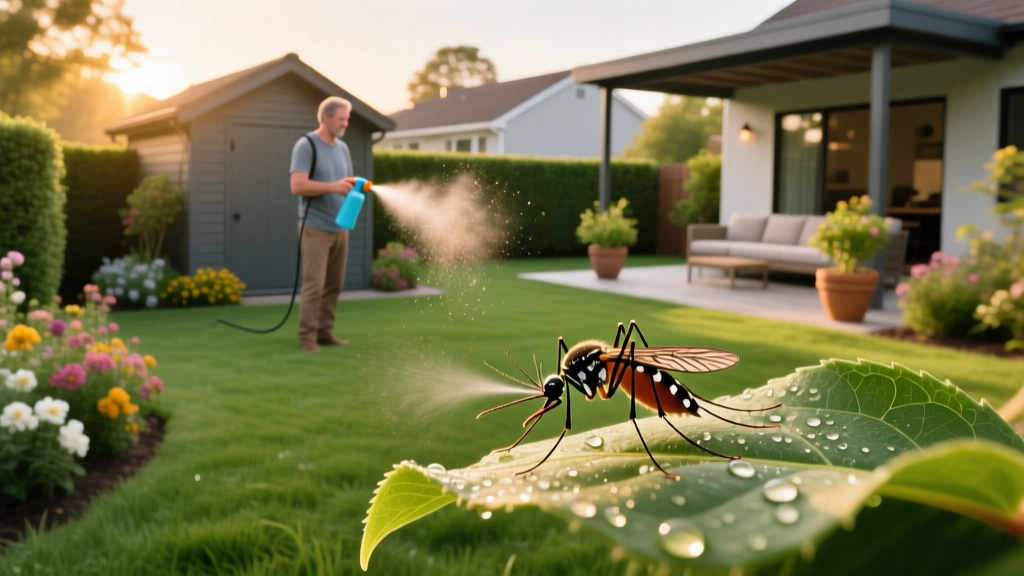
How to Get Rid of Mosquitoes in Your Home: Yard-to-Indoor Defense
The Perimeter Breach: Why Yard Defense is Step One
When homeowners ask how to get rid of mosquitoes in your home, the instinct is to look indoors for the solution. However, 95% of indoor mosquito invasions originate from compromised yard perimeters. Mosquitoes do not randomly appear inside; they are drawn to the microclimates immediately surrounding your house and slip through microscopic gaps. To eliminate indoor mosquitoes, you must first dismantle the outdoor staging grounds that allow them to thrive within a 300-foot flight radius of your doors and windows.
The most aggressive home-invading species, Aedes aegypti (the yellow fever mosquito) and Aedes albopictus (the Asian tiger mosquito), are daylight biters that prefer breeding in small, artificial containers and resting in dense, shaded foliage. According to the Centers for Disease Control and Prevention (CDC), source reduction combined with targeted barrier treatments is the most effective method for breaking the mosquito life cycle before they reach your front door.
⚠️ The 3-Foot Vegetation Rule: Mosquitoes rest on the undersides of leaves during the heat of the day. If shrubs, ornamental grasses, or ivy touch your home's siding, they create a physical bridge. Trim all vegetation at least 3 feet away from your foundation to eliminate this resting zone and expose the perimeter to sunlight, which naturally deters moisture-loving insects.
Phase 1: Larval Source Reduction in the Yard
Before applying adulticides, you must stop the next generation from hatching. Aedes mosquitoes can breed in as little as a bottle cap of water. Inspect your yard for hidden aquatic habitats: corrugated downspout extensions, clogged gutters, tarps with sagging centers, and saucers beneath potted plants.
For water features that cannot be drained (birdbaths, rain barrels, koi ponds), deploy Bti (Bacillus thuringiensis israelensis). Bti is a naturally occurring bacterium that produces proteins toxic only to mosquito and black fly larvae, leaving pets, fish, and beneficial insects unharmed. The Environmental Protection Agency (EPA) endorses Bti as a primary biological control agent.
- Mosquito Dunks ($8–$12 per 6-pack): Ideal for standing water. One dunk treats 100 square feet of surface water for 30 days. Break them into quarters for smaller containers.
- Mosquito Bits ($15–$20 per 20oz bag): Ideal for soil and gutters. Sprinkle directly into the soil of overwatered potted plants or mix with water and pour into downspouts to kill fungus gnat and mosquito larvae in hidden drainage pipes.
Phase 2: Adulticiding the Perimeter (Barrier Treatments)
Once larvae are controlled, target the adult mosquitoes resting in your yard's foliage. A residual barrier spray creates an invisible chemical fence around your home. Professional services typically charge $350 to $500 per season for bi-weekly treatments, but DIY application yields identical results for a fraction of the cost.
DIY vs. Professional Barrier Sprays
| Feature | DIY Bifenthrin Application | Professional Service |
|---|---|---|
| Active Ingredient | Bifenthrin 7.9% (e.g., Talstar P) | Bifenthrin or Lambda-cyhalothrin |
| Cost per Treatment | $3.00 - $5.00 | $75.00 - $125.00 |
| Residual Duration | 21 to 30 days | 21 days |
| Application Target | Underside of foliage, shaded foundations | Broad foliar and perimeter spray |
Mixing and Application Protocol: Mix 1 ounce of Talstar P (Bifenthrin 7.9%) per gallon of water in a pump sprayer. Apply specifically to the undersides of leaves on shrubs, tall grasses, and the lower 3 feet of your home's exterior siding. Apply in the early morning or late evening when beneficial pollinators like bees are not actively foraging. Bifenthrin is highly toxic to aquatic life; never apply near ponds or storm drains.
Phase 3: Sealing the Envelope (Exclusion Tactics)
If the yard is treated but the house remains vulnerable, mosquitoes will simply follow the carbon dioxide plume you exhale right through your defenses. Exclusion requires upgrading your physical barriers.
- Upgrade to 20x20 Mesh Screens: Standard window screens use an 18x16 mesh weave. While this stops houseflies, the tiny Aedes aegypti (measuring just 4-7mm) can squeeze through. Replace high-traffic window screens with 20x20 mesh fiberglass (often sold as 'No-See-Um' screening). A 100-square-foot roll costs approximately $45.
- Install Door Sweeps with Fin Seals: The gap beneath a standard exterior door is a primary entry point. Install a heavy-duty aluminum door sweep featuring a rubber fin seal. Ensure the fin compresses tightly against the threshold without leaving a daylight gap.
- Weatherstrip Weep Holes and Vents: Attic and foundation vents are necessary for airflow but act as mosquito highways. Cover them with 1/16-inch aluminum hardware cloth, secured with exterior-grade silicone adhesive. Do not use standard window screen material here, as rodents will chew through it.
Phase 4: Indoor Elimination and Trapping
Despite your best perimeter and exclusion efforts, some mosquitoes will breach the interior. Indoor elimination relies on disrupting their host-seeking behavior using light, heat, and chemical spatial repellents.
Trap Comparison: UV/CO2 vs. Spatial Repellents
Continuous Trapping (DynaTrap DT1260)
Mechanism: Uses UV light and a titanium dioxide-coated funnel to produce trace amounts of CO2, mimicking human breath. A whisper-quiet fan vacuums the mosquito into a retention cage where it dehydrates.
Cost: ~$135 upfront + $15/year for replacement bulbs.
Placement: 3 to 5 feet off the ground, in a dark corner away from competing light sources and human seating areas. Run 24/7.
Spatial Repellent (Thermacell E55)
Mechanism: Heats a mat or liquid cartridge containing metofluthrin or allethrin, creating a 20-foot invisible dome of vapor that disrupts mosquito olfactory receptors.
Cost: ~$30 device + $25 for 12-hour refills.
Placement: Place on a table near your immediate seating area or bedside. Requires active operation; does not reduce the overall indoor population, only protects the immediate zone.
The Indoor Breeding Threat: Houseplants and Hidden Water
If you are consistently finding mosquitoes indoors despite sealed windows and treated yards, you likely have an indoor breeding population. The American Mosquito Control Association (AMCA) warns that Aedes eggs can survive desiccation for months, hatching the moment they are submerged.
Common Indoor Culprits:
- Self-Watering Planters: The bottom reservoir is a prime breeding ground. Empty and scrub the reservoir monthly, or add a quarter of a Mosquito Dunk to the water fill tube.
- Bromeliads and Orchids: These plants naturally hold water in their central cups. Flush the cups with fresh water weekly to drown larvae, or treat the water with a diluted Bti solution.
- Pet Water Bowls: Stagnant pet bowls left in quiet corners can hatch a generation in 7 to 10 days during summer months. Change water daily.
Frequently Asked Questions
Do indoor bug zappers actually work for mosquitoes?
No. Standard UV bug zappers are highly ineffective against mosquitoes. Mosquitoes are not strongly attracted to UV light; they track carbon dioxide, body heat, and lactic acid. Zappers predominantly kill harmless moths, beetles, and beneficial parasitic wasps, while failing to attract host-seeking female mosquitoes.
Can essential oils like citronella or eucalyptus clear a room of mosquitoes?
Essential oils act as mild, short-term masking agents, not eliminators. While lemon eucalyptus oil (PMD) is an EPA-registered topical repellent, diffusing it in a room does not achieve the vapor concentration required to repel or kill mosquitoes effectively. For indoor spatial protection, synthetic vaporizers like metofluthrin (found in Thermacell or Off! Clip-on devices) are exponentially more reliable.
How fast can a mosquito population rebound after a barrier spray?
If the barrier spray is washed away by heavy, sustained rainfall (more than 1 inch within 24 hours of application), the residual chemical layer degrades. Furthermore, if neighboring properties are untreated, new adults will migrate into your yard within 48 to 72 hours. Reapply Bifenthrin if heavy rain occurs within 24 hours of the initial treatment, then resume a 21-day schedule.

