
Pest Control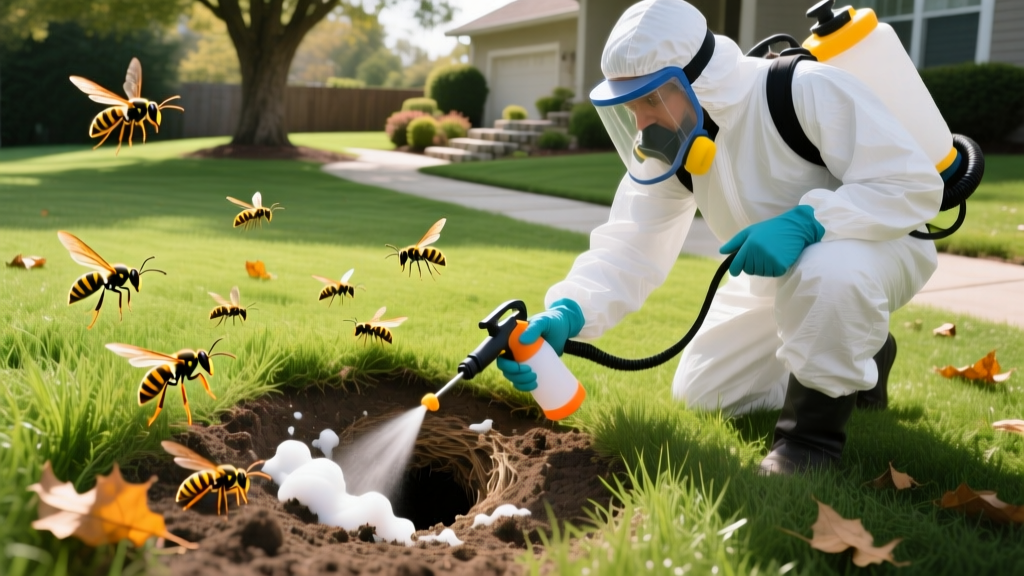
Yellow Jacket Poison: Rescue Fixes for Aggressive Ground Nests
Diagnosing the Threat: Is It a Ground Nest?
Before deploying any yellow jacket poison, accurate symptom diagnosis is critical. Ground-nesting yellow jackets (primarily Vespula species) behave vastly differently from aerial-nesting hornets or bald-faced hornets (Dolichovespula). Misidentifying the nest location or species leads to ineffective treatments and severe stinging incidents. According to the University of Minnesota Extension, ground nests are often mistaken for rodent burrows because they utilize abandoned mouse or vole holes in dry, undisturbed soil.
Diagnostic Symptom Checklist:
- Traffic Pattern: You observe a high volume of insects entering and exiting a single, dime-sized hole in the soil, particularly during late summer (August to October).
- Aggression Radius: The insects become defensive and swarm when a lawnmower or string trimmer passes within 3 to 5 feet of the hole.
- Insect Morphology: The insects feature stark, bright yellow and black banding with minimal hair, distinguishing them from the fuzzy, golden-brown honeybees or the larger, duller European hornets.
If your lawn exhibits these symptoms, you are dealing with a subterranean colony that can house anywhere from 1,000 to 4,000 workers by late season. This requires a specialized rescue approach.
Why Standard Aerosol Sprays Fail on Ground Nests
The most common failure mode in DIY pest control is using an over-the-counter aerosol wasp freeze (like standard Spectracide or Raid Wasp & Hornet) on a ground nest. These products rely on a petroleum distillate base and a rapid-knockdown active ingredient like Tetramethrin. When blasted into a soil cavity, the liquid saturates the top two inches of dirt, effectively plugging the primary entrance.
Because ground nests feature extensive subterranean galleries that can extend up to three feet deep and branch out laterally, the aerosol never reaches the queen or the deep brood chambers. The surviving colony panics, digs secondary exit holes 3 to 5 feet away from the original entrance, and emerges the next morning highly agitated and aggressive. To execute a proper rescue fix, you must abandon liquid aerosols and switch to insecticidal dusts or specialized soil injections.
The Rescue Protocol: Selecting the Right Yellow Jacket Poison
Selecting the correct formulation dictates your success rate. The Penn State Extension recommends dust formulations for subterranean nests because returning foragers track the toxic powder deep into the colony on their legs and bodies, effectively poisoning the entire hive from the inside out.
| Product Type | Active Ingredient | Brand Example | Avg. Cost (2026) | Best Scenario | Common Failure Mode |
|---|---|---|---|---|---|
| Insecticidal Dust | Cyfluthrin (1%) | Tempo Dust | $28 - $35 / lb | Deep, dry ground nests | Clumping in damp soil |
| Waterproof Dust | Deltamethrin (0.05%) | Delta Dust | $32 - $42 / lb | Damp soil or high humidity areas | Over-application blocking the hole |
| Liquid Concentrate | Lambda-Cyhalothrin | Onslaught FastCap | $55 - $70 / 16oz | Large perimeter barrier treatments | Fails to penetrate deep galleries |
For immediate rescue fixes on active ground nests, Tempo Dust or Delta Dust are the industry standards. Delta Dust is uniquely waterproofed, making it the superior choice if the nest is located in an irrigated lawn zone or if rain is in the forecast.
Step-by-Step Nighttime Eradication Guide
Timing and technique are non-negotiable when treating ground nests. Yellow jackets are diurnal; foragers return to the nest at dusk, and the colony's metabolic activity drops significantly at night.
Step 1: Preparation and PPE
Do not attempt this in shorts and a t-shirt. Wear a full-length, light-colored bee suit with a fencing veil. Yellow jackets are attracted to dark colors and the carbon dioxide from human breath. Wear thick leather work gloves, and use duct tape to seal the gap between your gloves and your suit sleeves. Keep a can of aerosol wasp freeze on your belt strictly as an emergency defensive measure, not as the primary treatment.
Step 2: The Red Light Technique
Yellow jackets lack photoreceptors for the red light spectrum. Tape a piece of red cellophane over the lens of a heavy-duty LED flashlight. This allows you to illuminate the nest entrance clearly without triggering the colony's alarm pheromones or causing them to fly toward the beam.
Step 3: Precision Dust Application
Use a dedicated bulb duster (such as a JT Eaton or Getz duster). Fill the duster only one-third full with your chosen yellow jacket poison; this empty space allows the dust to aerate into a fine, penetrative cloud rather than clumping. Approach the nest from the side, not directly over the hole. Insert the duster nozzle near the entrance and puff 2 to 3 times. Do not plug the hole with dirt or a rock. Leaving the entrance open ensures that late-returning foragers walk through the dust and carry it down to the queen.
"The most common mistake homeowners make is treating a ground nest at noon and immediately covering the hole with a heavy rock. This traps the agitated colony inside, forcing them to excavate a new exit directly under your lawn's high-traffic walking paths."
Post-Treatment Rescue: Dealing with Secondary Exits
Monitor the area from a safe distance the following afternoon. If you see no activity, the treatment was successful. The Environmental Protection Agency (EPA) advises waiting at least 48 hours before filling the hole to ensure all deep-gallery workers have contacted the residual dust. Once confirmed dead, fill the void with topsoil and overseed with a fast-germinating perennial ryegrass to prevent future rodents from claiming the burrow.
If you still observe activity 48 hours later, the colony likely utilized a secondary lateral exit. Reapply the dust to any newly discovered holes using the exact same nighttime protocol. Avoid using liquid soil drenches as a secondary rescue fix, as the soil is likely already saturated and will repel the liquid treatment.
Frequently Asked Questions
Can I use soapy water as a yellow jacket poison?
While a heavy drench of dish soap and water can kill individual insects by breaking their exoskeleton's surface tension, it is entirely ineffective for ground nests. The volume required to flood a 3-foot-deep gallery will saturate your lawn, kill your grass roots, and only aggravate the colony without reaching the queen.
How long does Tempo Dust remain active in the soil?
Cyfluthrin dust remains active in dry, undisturbed soil cavities for up to 8 months. However, UV light and heavy soil moisture degrade it rapidly on the surface. Always apply it deep into the burrow where environmental factors cannot break down the active ingredient.

