
Pest Control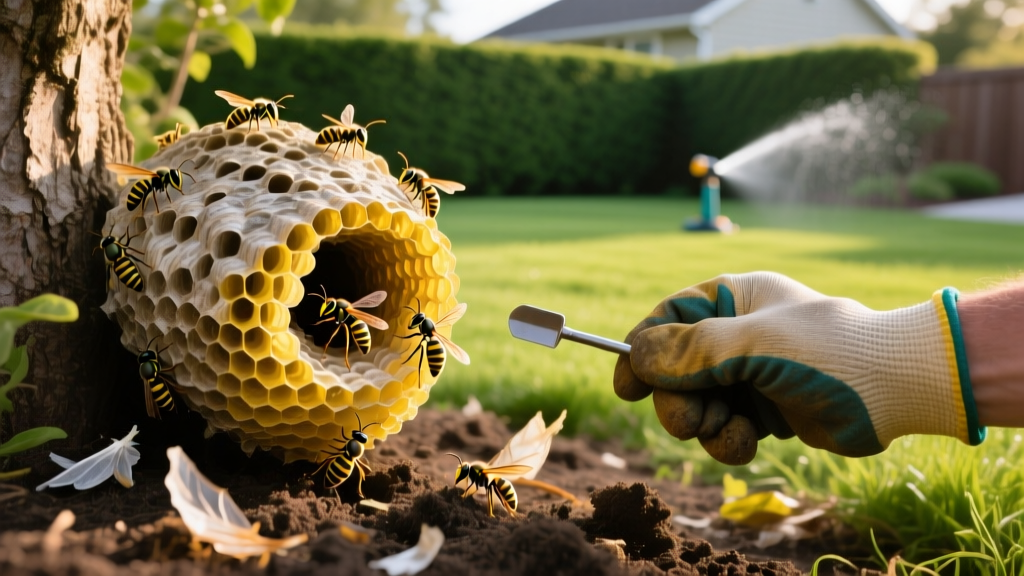
Diagnosing and Eliminating the Yellow Jackets Pest in Your Yard
When late summer arrives, the yellow jackets pest (Vespula and Dolichovespula species) transitions from a beneficial garden predator into an aggressive scavenger. Unlike honeybees that die after a single sting, yellow jackets possess smooth stingers capable of delivering multiple, venomous strikes. Misdiagnosing their nest type or applying the wrong chemical formulation can trigger a massive swarm response, turning a routine yard chore into a medical emergency. This guide provides precise symptom diagnosis, threat assessment, and rescue fixes to safely eradicate ground and aerial colonies.
Symptom Diagnosis: Confirming the Yellow Jackets Pest
Before deploying insecticides, you must confirm you are dealing with yellow jackets rather than paper wasps, bald-faced hornets, or native bees. Misidentification leads to incorrect treatment timing and chemical selection. Yellow jackets are characterized by their vivid, contrasting yellow and black bands, lack of body hair, and distinct anchor-shaped marking on the face.
Nest architecture is the most reliable diagnostic symptom. While paper wasps build open, umbrella-shaped combs under eaves, yellow jackets construct enclosed, multi-layered paper envelopes. Crucially, the most dangerous strains are subterranean, utilizing abandoned rodent burrows with a single, highly guarded entry hole.
| Diagnostic Feature | Yellow Jackets | Paper Wasps | Honeybees |
|---|---|---|---|
| Body Texture | Smooth, hairless, bright yellow/black | Smooth, varied colors (brown/black/orange) | Fuzzy, golden-brown with black stripes |
| Nest Location | Underground, wall voids, dense shrubs | Exposed eaves, porch ceilings, railings | Tree cavities, managed wooden hives |
| Nest Structure | Enclosed paper envelope, single hole | Open, umbrella-shaped, visible cells | Wax combs, enclosed in cavity/hive |
| Behavioral Symptom | Highly aggressive, scavenges human food | Defensive only when nest is touched | Docile, focused on foraging nectar/pollen |
Assessing the Threat Level and Lifecycle Timing
The urgency of your rescue fix depends entirely on the colony's lifecycle stage. In spring and early summer, colonies are small (50-100 workers) and focused on protein foraging to feed larvae. By late August through October, the queen ceases egg-laying, and the colony population peaks at 2,000 to 5,000 workers. Without larvae to produce sugary secretions, workers become hyper-aggressive and scavenge for human carbohydrates (soda, fruit, trash).
WARNING: The Mower Path Hazard
Subterranean yellow jackets pest nests located near high-traffic mowing paths or playgrounds require immediate intervention. The vibration from lawn equipment mimics the footsteps of large predators, triggering a defensive swarm that can pursue targets for up to 50 yards.
Subterranean yellow jackets pest nests located near high-traffic mowing paths or playgrounds require immediate intervention. The vibration from lawn equipment mimics the footsteps of large predators, triggering a defensive swarm that can pursue targets for up to 50 yards.
Rescue Fixes: Targeted Eradication Protocols
Eradicating a yellow jackets pest colony requires matching the insecticide formulation to the nest architecture. The most common failure mode in DIY pest control is using liquid aerosol sprays on underground nests. Liquid sprays pool in the soil, fail to reach the deep combs, and immediately agitate the guards, resulting in a surface-level swarm.
Scenario A: Subterranean and Wall Void Nests
For ground burrows and structural voids, you must use an insecticidal dust. Dust particles cling to the wasps' legs and bodies as they enter and exit the hole. Through natural grooming behaviors, they carry the active ingredient deep into the nest, distributing it to the queen and the brood chamber.
- Recommended Product: Tempo 1% Dust (Active ingredient: Cyfluthrin). Price range: $22 - $28 per 10 oz bottle.
- Alternative: Drione Dust (Silica gel + Pyrethrins). Excellent for dry wall voids, but degrades in damp soil.
- Application Tool: A hand-crank duster (e.g., JT Eaton Hand Bellow Duster, ~$25) to puff the dust 3 to 4 inches directly into the entrance hole.
Scenario B: Aerial and Exposed Eaves Nests
For hanging nests where you cannot safely approach within 3 feet, use a rapid-knockdown jet aerosol. These products shoot a concentrated stream of solvent-heavy insecticide that instantly paralyzes the wasps' nervous systems before they can take flight.
- Recommended Product: Wasp Freeze by Pratt (Active ingredient: 11% Cypermethrin). Price: $12 - $15. Shoots up to 20 feet and freezes wasps on contact.
- Budget Alternative: Spectracide Wasp & Hornet Killer (Deltamethrin). Price: $5 - $7. Effective up to 15 feet, but requires slightly more saturation.
The Nighttime Application Protocol
Never treat a yellow jackets pest nest during daylight hours. Wait until 2 to 3 hours after sunset when temperatures drop below 65°F (18°C) and all foragers have returned to the nest.
- Lighting: Use a headlamp equipped with a red light filter. Yellow jackets cannot perceive red wavelengths, whereas white LED light will instantly draw guards to your face.
- Apparel: Wear thick denim, a heavy hooded sweatshirt, leather gloves, and tuck your pants into your socks. Avoid dark, fuzzy clothing, which mimics their natural predators (bears and skunks).
- Application: Approach from the side, not directly in front of the flight path. Puff the dust or spray the aerosol directly into the hole or onto the nest envelope for 5 to 10 seconds.
- Retreat: Leave the area immediately. Do not linger to observe the reaction.
- Follow-up: Inspect the site 48 hours later. If you see zero flight activity, the colony is dead. For ground nests, fill the hole with soil to prevent secondary pests from moving in.
Expert Troubleshooting: Why Your Treatment Failed
If you are still observing high traffic 72 hours post-treatment, review these common diagnostic and application errors:
The 'Plugged Hole' Mistake: Never plug the entrance hole with dirt, rocks, or steel wool immediately after applying insecticide. Trapping the wasps inside forces them to chew through drywall or siding into your living space, or dig secondary exit holes closer to your foundation.
- Symptom: Wasps are swarming the treated area angrily.
Diagnosis: You used a liquid spray on a ground nest, or treated too early in the evening while foragers were still returning. The solvent repelled them, and they are now excavating a new exit tunnel. - Symptom: Activity stopped, but resumed a week later.
Diagnosis: You treated a secondary foraging entrance. Subterranean colonies often have 2 or 3 exit holes spaced several feet apart. Dust all visible holes within a 5-foot radius of the main flight path. - Symptom: Wasps are emerging inside the house.
Diagnosis: The nest is located in a wall void, and you sprayed a liquid repellent into the exterior crack. The wasps retreated inward and found gaps in the interior drywall. Fix: You must use a non-repellent dust like Tempo or Drione applied via a crack-and-crevice straw, allowing them to track it inside without triggering a retreat.
Post-Eradication Cleanup and Prevention
Once the colony is confirmed dead, physical removal of the nest prevents secondary issues. For aerial nests, scrape the paper envelope into a sealed trash bag. The pheromones left on the wood can attract next year's scouting queens. Scrub the attachment point with a solution of 1 part bleach to 4 parts water to neutralize the chemical markers.
According to entomologists at Clemson University Extension, preventing future ground nests involves eliminating the habitats they seek. Yellow jackets prefer abandoned rodent burrows in dry, well-drained soil. Maintaining dense turfgrass, keeping soil consistently moist through deep irrigation, and implementing a proactive vole and mouse control program will drastically reduce the number of viable nesting cavities in your lawn.
Furthermore, manage late-summer attractants. Ensure outdoor trash cans feature tight-fitting, gasket-sealed lids, and pick up fallen fruit from ornamental trees weekly. By combining precise symptom diagnosis with the correct chemical formulation, you can neutralize the yellow jackets pest safely and effectively without risking envenomation.
For comprehensive safety data regarding the handling of pyrethroid-based insecticides near residential water sources and pollinator habitats, always consult the University of Minnesota Extension guidelines on stinging insects before initiating large-scale perimeter treatments.

