
Pest Control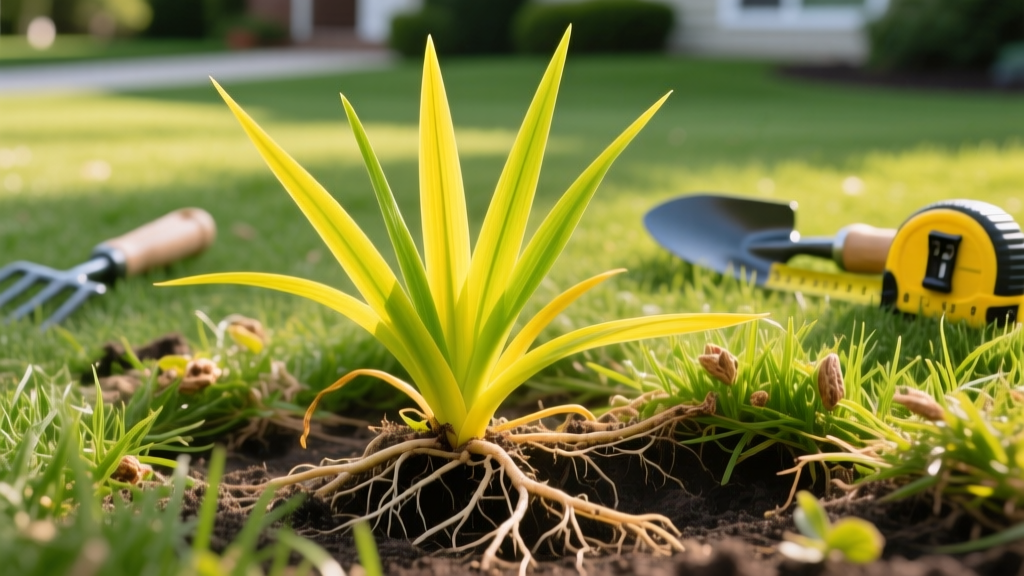
Yellow Nutsedge Herbicide Rescue: Diagnosis and Lawn Fixes
Yellow nutsedge (Cyperus esculentus) is notoriously one of the most aggressive and difficult-to-control weeds in residential turf. Unlike standard broadleaf weeds or annual grasses, nutsedge is a sedge. It thrives in compacted, poorly drained soils and rapidly outcompetes desirable turfgrass during the heat of summer. When an infestation breaches your lawn's canopy, mechanical removal is rarely enough. Deploying a targeted yellow nutsedge herbicide is the most effective rescue strategy, provided you correctly identify the weed, select the appropriate active ingredient, and time the application to disrupt its reproductive cycle.
Symptom Diagnosis: Is It Grass or Yellow Nutsedge?
Misidentifying nutsedge as a coarse grass (like crabgrass or dallisgrass) leads to ineffective treatment. Standard post-emergent grassy weed killers (like Quinclorac or Fenoxaprop) will not kill sedges. Before purchasing a yellow nutsedge herbicide, confirm the infestation using these diagnostic markers:
- Stem Geometry: Roll the stem between your thumb and index finger. Grass stems are round or flat; nutsedge stems are distinctly triangular (V-shaped). Remember the botanical rule: "Sedges have edges."
- Leaf Arrangement: Nutsedge leaves emerge in sets of three (rank-3) from the base of the plant, whereas grass leaves emerge in sets of two (rank-2).
- Growth Rate: During peak summer temperatures (85°F to 95°F), yellow nutsedge grows significantly faster than surrounding turf. You will notice bright green, spiky patches towering above your mowing line just two days after a haircut.
- Seed Heads: Mature plants produce a distinct, star-shaped, golden-brown inflorescence at the top of the stem.
According to turf pathology data from Penn State Extension, yellow nutsedge can produce over 90,000 seeds per plant in a single season, though its primary survival mechanism relies on its underground tubers.
The Tuber Problem: Why Mechanical Rescue Fails
Homeowners often attempt to pull yellow nutsedge by hand as a rescue fix. This is a critical mistake. The plant reproduces primarily via underground rhizomes that form small, brown tubers (nutlets). A single mature plant can produce hundreds of these tubers in the top 6 inches of soil.
When you pull the visible stem, the rhizome snaps. The apical dominance of the top tuber is broken, which chemically signals the dormant tubers deeper in the soil to sprout. Pulling one stem frequently results in three or four new stems emerging weeks later. To break this cycle, a systemic yellow nutsedge herbicide must be absorbed through the foliage and translocated down into the root zone to destroy the tuber chain.
Active Ingredient Matrix: Choosing Your Herbicide
Not all sedges respond to the same chemistry. As of 2026, the professional turf market relies on three primary active ingredients for nutsedge rescue. Selecting the right one depends on your turfgrass species and your desired speed of control.
| Active Ingredient | Common Brand Names | Speed of Kill | Turf Safety | Avg. Cost (2026) |
|---|---|---|---|---|
| Halosulfuron-methyl | SedgeHammer+, Sandea | Slow (14-21 days) | Safe on almost all warm & cool-season grasses | $25 (13.5g pkt) / $85 (5 oz) |
| Sulfentrazone | Dismiss, Blindside, Echelon | Fast (3-7 days) | Safe on most grasses; can temporarily stunt Kentucky Bluegrass | $60 (8 oz bottle) |
| Imazaquin | Image for Southern Lawns | Very Slow (21-30 days) | Restricted to warm-season grasses (Bermuda, Zoysia, St. Augustine) | $22 (8 oz bottle) |
Expert Selection Tip: If you are managing a cool-season lawn (Fescue, Bluegrass, Ryegrass), Halosulfuron-methyl (SedgeHammer) is the safest and most effective rescue option. If you have a warm-season lawn and need rapid visual results before a landscape event, Sulfentrazone (Dismiss) provides the fastest foliar burn-down while still translocating to the tubers.
Step-by-Step Rescue Application Protocol
Applying a yellow nutsedge herbicide requires precise timing and mixing. The optimal rescue window is late spring to early summer (when soil temperatures consistently reach 65°F to 70°F), targeting the weed when it has between 3 and 5 leaves. At this stage, the plant is actively translocating nutrients (and herbicides) down to the developing tubers.
1. Calculate and Mix the Solution
For Halosulfuron-methyl, the standard residential rate is 0.5 to 0.66 ounces per 1,000 square feet, mixed in 1 to 2 gallons of water. Always use a dedicated pump sprayer to avoid cross-contamination with broadleaf herbicides.
2. Add the Correct Surfactant
Nutsedge leaves are coated in a thick, waxy cuticle that repels water-based sprays. A surfactant is non-negotiable for systemic absorption.
- Non-Ionic Surfactant (NIS): Required for Halosulfuron-methyl. Add at a rate of 0.25% v/v (roughly 1/2 teaspoon per gallon of water).
- Methylated Seed Oil (MSO): Preferred for Sulfentrazone and Imazaquin, as MSO penetrates the waxy cuticle more aggressively under high-heat conditions.
- Note: Formulations like SedgeHammer+ include a built-in surfactant in the packet. Do not add extra NIS if using a "+" branded product.
3. Application and Watering Rules
Spray the foliage until visibly wet, but avoid heavy runoff. Do not mow for 48 hours before or 48 hours after application to maximize leaf surface area. Do not irrigate or expect rainfall for at least 24 hours post-application. Watering too soon washes the herbicide off the waxy leaves before it can penetrate the plant tissue.
Warning: The Second Flush. Even with a perfect application, a second flush of nutsedge may emerge 3 to 4 weeks later from deeper, dormant tubers that were not connected to the original plant. Plan for a mandatory follow-up spot treatment using the same herbicide at the same rate to achieve total eradication.
Post-Treatment Cultural Fixes
Chemical rescue is only a temporary fix if the underlying environmental conditions that favor nutsedge are not corrected. Yellow nutsedge is an indicator weed for specific soil deficiencies and compaction issues. Research published by NC State Extension highlights that improving soil drainage drastically reduces sedge pressure.
- Core Aeration: Nutsedge thrives in anaerobic, compacted soils. Perform deep core aeration in the fall (for cool-season grasses) or late spring (for warm-season grasses) to relieve compaction and allow water to infiltrate rather than pool near the surface.
- Correct Irrigation Habits: Transition from frequent, shallow watering (e.g., 10 minutes daily) to deep, infrequent watering (e.g., 45 minutes twice a week). This encourages deep turfgrass roots while drying out the top 2 inches of soil where nutsedge tubers germinate.
- Raise the Mowing Height: Increasing your mowing height by just 0.5 inches shades the soil surface. Nutsedge requires high light intensity at the soil level to trigger seed and tuber germination. A dense, shaded turf canopy naturally suppresses its return.
Frequently Asked Rescue Questions
Can I mix yellow nutsedge herbicide with my standard 3-way broadleaf weed killer?
It is generally not recommended to mix Halosulfuron-methyl with heavy hormone-based broadleaf herbicides (like 2,4-D or Dicamba) in the same tank. The rapid cellular distortion caused by the broadleaf killer can restrict the vascular flow of the sedge, trapping the nutsedge herbicide in the leaves and preventing it from reaching the tubers. Apply them 5 to 7 days apart for maximum efficacy.
Will pre-emergent herbicides stop yellow nutsedge?
Standard pre-emergents like Prodiamine or Dithiopyr are highly effective against crabgrass but offer very poor control of nutsedge tubers. If you have a history of severe nutsedge, a dedicated pre-emergent application of Echelon (which contains sulfentrazone) in early spring can intercept tubers as they begin to sprout, supplementing your post-emergent rescue strategy.

