
Pest Control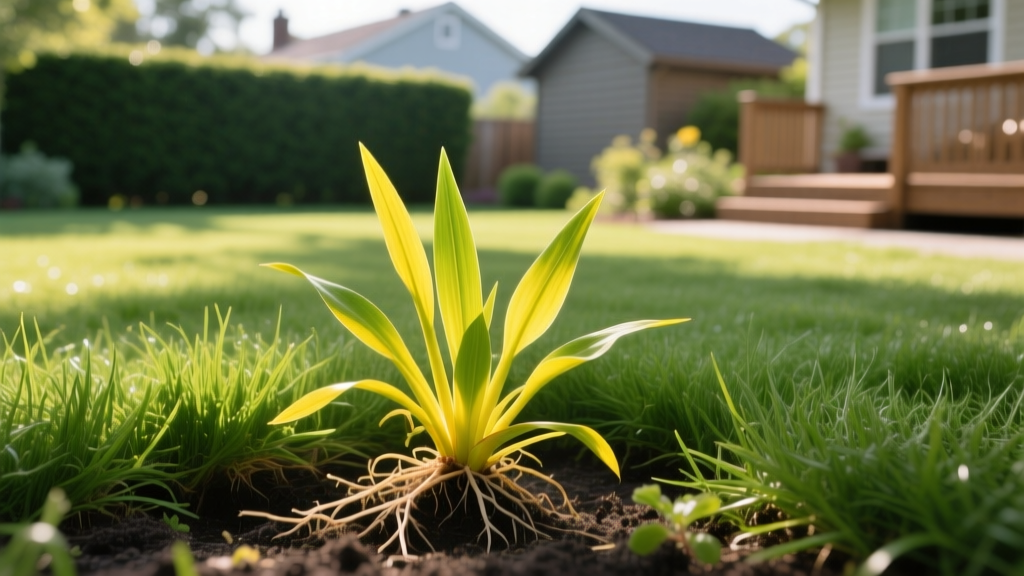
Best Yellow Nutsedge Weed Killer: Diagnosis and Lawn Rescue Fixes
Symptom Diagnosis: Is It Yellow Nutsedge or Just Weedy Grass?
Before deploying a chemical rescue, accurate identification is mandatory. Yellow nutsedge (Cyperus esculentus) is frequently mistaken for coarse grasses like crabgrass or dallisgrass, leading homeowners to waste money on ineffective broadleaf or standard grass herbicides. Unlike true grasses, nutsedge is a sedge, characterized by a distinct V-shaped or triangular stem, a lighter yellow-green hue, and an aggressive vertical growth rate that towers above your turf canopy within days of mowing.
Pro Diagnostic Trick: Roll the lower stem of the suspected weed between your thumb and index finger. If it feels distinctly triangular or V-shaped, you are dealing with a sedge. Remember the old turf manager's adage: 'Sedges have edges, rushes are round, grasses have nodes from their heads to the ground.'
Another definitive symptom is the root structure. If you pull a mature plant, you will often see a chain of small, hard, brown tubers (nutlets) attached to the rhizomes. These tubers are the biological engine of the infestation and the primary reason standard weed killers fail.
Why Standard Herbicides Fail Against the Tuber Network
Applying a standard 2,4-D amine or a basic glyphosate spot-treatment to yellow nutsedge will burn off the visible foliage, giving the illusion of success. However, NC State Extension notes that a single yellow nutsedge plant can produce hundreds of tubers in a single season. These tubers remain dormant in the soil profile, capable of surviving extreme drought, freezing temperatures, and non-specific contact herbicides.
When the top growth is destroyed without a systemic chemical translocating down the vascular system to the root zone, the plant's apical dominance is broken. This actually stimulates multiple dormant tubers to sprout simultaneously, turning one visible weed into a cluster of five or six new shoots. To execute a true rescue fix, you must select a specialized yellow nutsedge weed killer designed to translocate through the rhizomes and sterilize or destroy the tuber chain.
The Rescue Fix: Selecting the Right Yellow Nutsedge Weed Killer
The modern turf science arsenal relies on three primary active ingredients for post-emergent nutsedge eradication. Your choice depends on your turfgrass type, budget, and how quickly you need to see visual results.
| Active Ingredient | Top Product Example | Best For Turf Type | Avg. Cost (2026) | Translocation Speed |
|---|---|---|---|---|
| Halosulfuron-methyl | SedgeHammer Plus | Warm & Cool Season | $28 per 5-pack | Slow (14-21 days) |
| Sulfentrazone | Dismiss Turf Herbicide | Warm & Cool Season | $110 per 12oz | Fast (3-7 days) |
| Mesotrione | Tenacity Herbicide | Cool Season Only | $65 per 8oz | Moderate (7-14 days) |
Halosulfuron-methyl is widely considered the gold standard for yellow nutsedge. It is highly systemic and incredibly safe on almost all warm and cool-season turfgrasses. The trade-off is patience; it takes up to three weeks to see complete necrosis as the chemical slowly travels to the tubers. Sulfentrazone offers rapid visual burndown (often within 48 hours) and is excellent for severe infestations, though it carries a higher upfront cost. Mesotrione is unique as it acts as both a post-emergent and pre-emergent, bleaching the weeds white, but it is strictly limited to cool-season grasses and Centipedegrass, as it will severely damage Bermudagrass and Zoysia.
Step-by-Step Rescue Application Protocol
- Timing is Everything: Apply when soil temperatures are consistently above 60°F and the nutsedge is actively growing (usually late spring to mid-summer). Do not apply during severe drought stress.
- The Mowing Rule: Do not mow for 48 hours before application (to maximize leaf surface area) and wait at least 48 hours after application to allow maximum chemical translocation to the roots.
- Precision Mixing: For Halosulfuron-methyl, the standard rate is 0.9 grams per 1,000 square feet. Because the dosage is so low, you must use a digital gram scale, not volumetric spoons, to avoid turf phytotoxicity.
- Surfactant Requirement: Nutsedge leaves are thick and waxy. If using a product that does not include a built-in surfactant, add a Non-Ionic Surfactant (NIS) at 0.25% v/v (roughly 1/2 teaspoon per gallon) to break the surface tension and ensure the herbicide penetrates the cuticle.
- Spray Technique: Use a fine mist nozzle and spray until the leaves are uniformly wet but not dripping. Spot-treating individual clusters is more cost-effective than broadcast spraying unless the lawn is entirely overrun.
Advanced Tactic: Pre-Emergent and Post-Emergent Stacking
For lawns with a multi-year history of severe nutsedge pressure, a single post-emergent rescue is rarely enough. According to research published by Penn State Extension, tubers can remain viable in the soil for up to three years. To break the cycle, professionals use a 'stacking' approach.
In early spring, apply a pre-emergent herbicide containing prodiamine or dithiopyr to suppress the initial germination of nutlets. Then, in early summer, follow up with a post-emergent application of sulfentrazone or halosulfuron-methyl to eliminate any escapes. Note that standard pre-emergents like pendimethalin are largely ineffective against nutsedge tubers, as the tubers sprout from established energy reserves rather than true seeds, allowing them to push through standard pre-emergent barriers.
Critical Warning: Never hand-pull mature yellow nutsedge. Pulling snaps the fragile rhizome, leaving the tubers in the soil and actually stimulating dormant nutlets to sprout, multiplying your infestation. Always rely on systemic chemical translocation or deep mechanical excavation (removing at least 8 inches of soil) for physical removal.
Post-Application Care and Preventing Regrowth
Chemical control is only half the battle. Yellow nutsedge is an indicator weed for poor soil conditions, specifically chronic moisture retention and compaction. If your lawn remains a wetland microclimate, nutsedge will eventually return regardless of the herbicide used.
- Core Aeration: Perform deep-tine core aeration in the fall (for cool-season grasses) or late spring (for warm-season grasses) to alleviate soil compaction and improve subsurface drainage.
- Irrigation Auditing: Check your sprinkler zones. Nutsedge thrives in areas that receive runoff or have broken sprinkler heads creating boggy soil. Adjust precipitation rates to match your turf's actual evapotranspiration needs.
- Canopy Density: A thick, dense turf canopy shades the soil surface, depriving nutsedge seedlings of the high-intensity sunlight they require to establish. Follow a strict nitrogen fertilization schedule tailored to your specific grass cultivar to promote lateral spread.
Frequently Asked Questions
Can I use vinegar or boiling water to kill yellow nutsedge?
No. Organic contact methods like horticultural vinegar or boiling water will only burn the top growth. Because they lack systemic properties, they will not reach the underground tubers, resulting in rapid regrowth within 10 to 14 days.
Will SedgeHammer kill my Bermudagrass or St. Augustine?
Halosulfuron-methyl (SedgeHammer) is highly selective and safe for use on established Bermudagrass, St. Augustine, Zoysia, Kentucky Bluegrass, and Fescue when applied at the labeled rates. Always verify the product label for your specific turf cultivar.
How many applications are needed for total eradication?
Expect to make two to three applications spaced 21 to 28 days apart during the first year. The first application kills the primary mother plant and immediate tubers, while subsequent applications target secondary flushes of dormant nutlets that sprout after the initial canopy is removed.
For ongoing turf management and localized pest pressure, always consult your local university cooperative extension office for region-specific timing and regulatory updates regarding herbicide applications.

