
Pest Control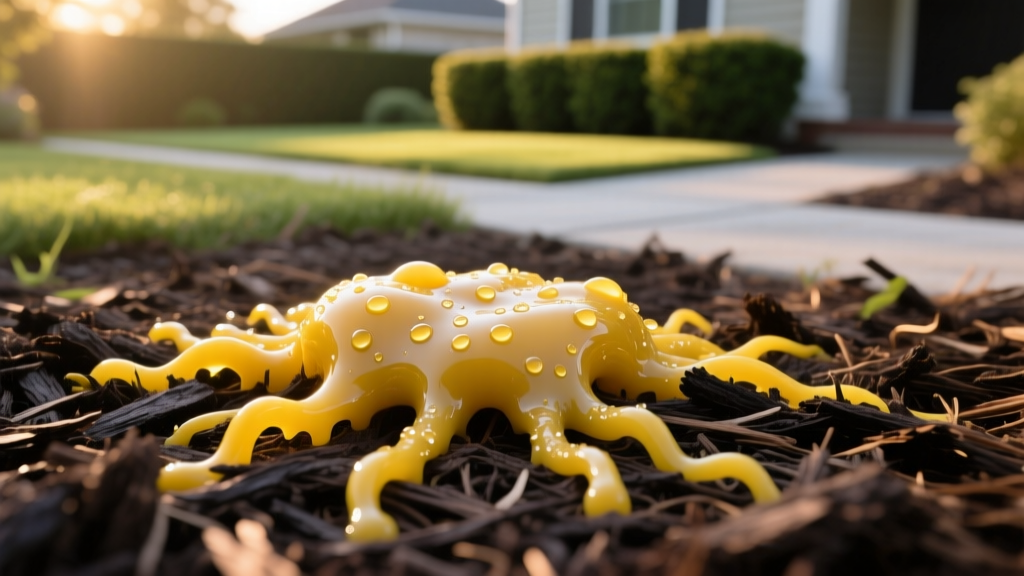
Yellow Slime Fungus on Mulch: Diagnosis & Rescue Fixes
The Biological Reality: It Is Not Actually a Fungus
Finding a bright, frothy yellow mass spreading across your garden beds or lawn is an alarming experience. Commonly referred to as yellow slime fungus, this organism is scientifically classified as a myxomycete (plasmodial slime mold), with Fuligo septica (often called dog vomit slime mold) and Physarum polycephalum being the most frequent culprits. Unlike true fungi, slime molds lack chitin in their cell walls and do not infect living plant tissue. Instead, they are bacteriovores—they crawl across damp surfaces consuming the bacteria and yeast that thrive on decaying organic matter.
Diagnostic Insight: Because slime molds feed on bacteria rather than plant cells, they are technically harmless to your turf and ornamentals. The damage they cause is purely cosmetic, resulting from temporary shading of the grass canopy or the unsightly appearance of their fruiting bodies on high-visibility hardscapes and mulch.
Symptom Diagnosis: Confirming the Culprit
Before initiating any rescue protocol, you must confirm you are dealing with a myxomycete and not a destructive true fungal pathogen like Pythium blight or Sclerotinia dollar spot. Misdiagnosis leads to unnecessary chemical applications that fail to resolve the issue and disrupt soil biology.
| Characteristic | Yellow Slime Mold (Fuligo septica) | True Fungal Pathogen (e.g., Pythium) |
|---|---|---|
| Organism Type | Myxomycete (Amoeba-like protist) | True Fungus (Oomycete or Ascomycete) |
| Primary Food Source | Bacteria, yeast, and fungal spores on decaying matter | Living plant tissue and cellular fluids |
| Texture & Appearance | Frothy, spongy, bright yellow; turns brown and powdery as it dries | Slimy, water-soaked lesions; white cottony mycelium in morning dew |
| Mobility | Plasmodium stage physically creeps up to 2 feet per day | Static; spreads via microscopic spores or mycelial growth |
| Turf Damage Level | None (may cause temporary yellowing from shade) | Severe; causes rapid tissue necrosis and turf death |
According to the University of Wisconsin-Madison Division of Extension, the defining characteristic of a slime mold is its ability to move. If you outline the mass with chalk and check it 24 hours later, the organism will have migrated toward moisture or food sources, leaving behind a dried, crusty spore mass.
The 48-Hour Rescue Protocol: Immediate Fixes
When yellow slime fungus overtakes a landscape bed or creeps onto your lawn, immediate action is required to restore curb appeal. Because standard turf fungicides target chitin (which slime molds lack), chemical eradication requires a different approach.
Step 1: Mechanical Disruption and Removal
The fastest way to eliminate the active plasmodium stage is physical disruption. Use a steel bow rake or a stiff-bristled broom to break up the yellow mass. Once broken, the slime mold loses its structural integrity and dries out rapidly. Scoop the fragmented mass into a yard waste bag. Do not compost it; the spores can survive standard composting temperatures and reintroduce the organism to your beds later.
Step 2: Organic Chemical Knockdown
If the slime mold is clinging to delicate groundcovers where raking is impossible, use a potassium bicarbonate spray. Mix 1 tablespoon of potassium bicarbonate (available in products like GreenCure) per gallon of water. Spray directly onto the fruiting bodies. The alkaline shift destroys the slime mold's cellular membrane on contact without harming surrounding ornamental plants. Avoid using household vinegar, as the acetic acid will burn the foliage of your desirable plants and lower soil pH unnecessarily.
Step 3: Moisture Starvation
Slime molds require near-100% humidity at the soil surface to remain in their active, feeding plasmodium state. Immediately halt overhead irrigation. If you use an automated controller (like a Rachio 3 or Hunter Hydrawise), pause the schedule for the affected zones for 3 to 5 days to allow the top inch of the mulch or thatch layer to dry completely.
Long-Term Prevention: Altering the Microclimate
Eradicating the visible fruiting body is only half the battle. Slime molds return when the microclimate favors the bacteria they feed on. Altering your landscape management practices is the only permanent solution.
Mulch Selection and Depth Management
Shredded hardwood mulch is the primary vector for yellow slime fungus in residential landscapes. Hardwood decomposes rapidly, creating a massive bloom of surface bacteria.
- Switch to Pine Bark or Cedar: Cedar and pine bark nuggets contain natural resins and decompose much slower, starving the bacterial food source. Expect to pay $40 to $55 per cubic yard for premium cedar, compared to $25 to $30 for hardwood.
- Limit Mulch Depth: Maintain a strict 2-inch to 3-inch mulch layer. 'Volcano mulching' (piling mulch 6+ inches deep against tree trunks) creates an anaerobic, perpetually damp environment that guarantees slime mold and root rot.
Thatch Control and Soil Aeration
When slime mold appears on the lawn rather than in beds, it indicates excessive thatch and poor surface drainage. The Penn State Extension notes that slime molds frequently fruit in lawns with a thatch layer exceeding 0.5 inches. Perform core aeration in the fall to break up soil compaction, and use a vertical mower (dethatcher) in early spring to remove the decaying organic layer where bacteria thrive.
"Slime molds are fascinating indicators of high soil biological activity. Rather than viewing them strictly as a pest, homeowners should recognize them as a symptom of excessive surface moisture and rapid organic decay. Fix the drainage, and the slime mold disappears."
— Adapted from the NC State Extension Plant Toolbox
Frequently Asked Questions
Is yellow slime fungus toxic to dogs or children?
No. Fuligo septica is not toxic, nor is it a skin irritant for humans. However, if a dog ingests a large quantity of the fruiting body, the massive dose of airborne spores can cause mild gastrointestinal upset or temporary sneezing. It is best to rake it away before pets have access to the area.
Why didn't my copper fungicide kill the slime mold?
Copper-based fungicides and traditional contact fungicides like chlorothalonil are designed to disrupt the enzymatic processes of true fungi. Because slime molds are protists with entirely different cellular structures, these chemicals are largely ineffective. Furthermore, repeated copper applications lead to heavy metal toxicity in your soil, harming earthworms and beneficial microbes.
Will the slime mold kill my grass if left alone?
No. The slime mold uses the grass blades merely as a scaffold to elevate its fruiting bodies for better spore dispersal. While a thick layer might temporarily block sunlight and cause the grass beneath to turn slightly pale or yellow, the turf will recover fully within a week once the slime mold dries up and is mowed or raked away.

