Tree Care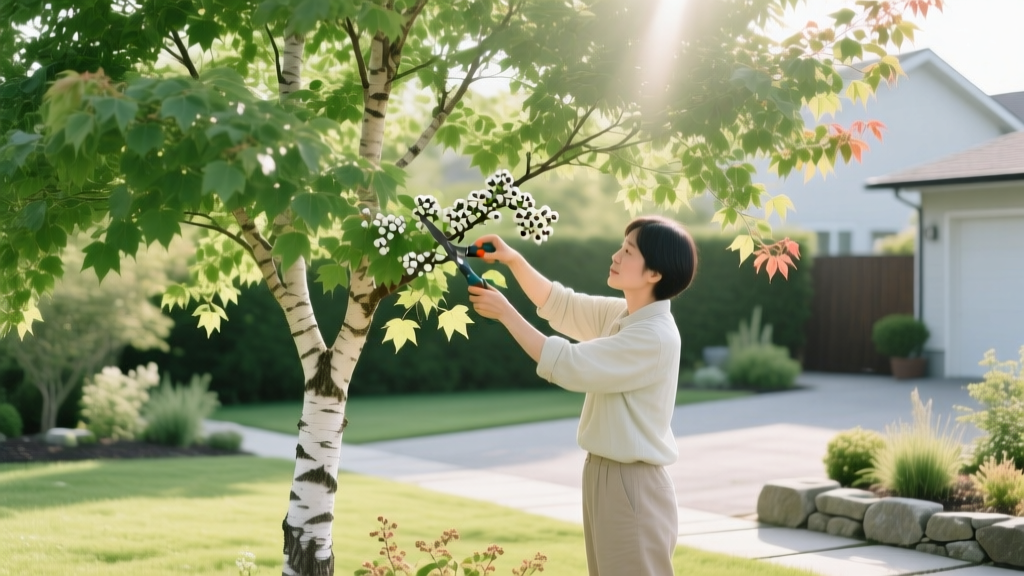
Landscaping When Allergic to Birch Tree Pollen: Safe Alternatives
The Science of Birch Pollen in Your Landscape
Birch trees (Betula genus) are prized for their striking white bark and elegant canopy, but they are also one of the most aggressive producers of allergenic pollen in the Northern Hemisphere. If you are allergic to birch tree pollen, the primary culprit is the Bet v 1 protein. Unlike insect-pollinated trees that produce heavy, sticky pollen, birches are wind-pollinated (anemophilous). A single mature birch catkin can release millions of microscopic pollen grains—measuring roughly 20 micrometers in diameter—that can travel up to 100 miles on spring wind currents.
⚠️ Cross-Reactivity Warning (Oral Allergy Syndrome):
The Bet v 1 protein is structurally similar to proteins found in several common garden edibles. If you are highly allergic to birch pollen, you may experience Oral Allergy Syndrome (OAS) when consuming raw apples, hazelnuts, carrots, or celery grown in your own garden. Cooking these crops denatures the protein and neutralizes the reaction.
The Bet v 1 protein is structurally similar to proteins found in several common garden edibles. If you are highly allergic to birch pollen, you may experience Oral Allergy Syndrome (OAS) when consuming raw apples, hazelnuts, carrots, or celery grown in your own garden. Cooking these crops denatures the protein and neutralizes the reaction.
According to the Asthma and Allergy Foundation of America (AAFA), tree pollen season typically peaks between April and May, though warming climate trends are pushing birch catkin shedding earlier into March in many USDA Hardiness Zones. For homeowners looking to design a sneeze-free yard, understanding pollination mechanics is the first step toward effective landscape planning.
Low-Allergen Tree Alternatives (Insect-Pollinated)
The most effective way to reduce local allergen loads is to replace wind-pollinated trees with insect-pollinated (entomophilous) species. Insect-pollinated trees produce heavy, nectar-coated pollen grains designed to stick to bees and butterflies, meaning they do not become airborne and trigger respiratory allergies.
| Tree Species | Botanical Name | Mature Height | 2026 Est. Cost (5-Gal) | Pollen Vector |
|---|---|---|---|---|
| Flowering Dogwood | Cornus florida | 15–30 ft | $65 – $95 | Insect (Safe) |
| Saucer Magnolia | Magnolia × soulangeana | 20–25 ft | $85 – $140 | Insect (Safe) |
| Eastern Redbud | Cercis canadensis | 20–30 ft | $55 – $80 | Insect (Safe) |
| Tulip Tree | Liriodendron tulipifera | 70–90 ft | $70 – $110 | Insect (Safe) |
| Crabapple | Malus sylvestris | 15–20 ft | $60 – $90 | Insect (Safe) |
When purchasing these alternatives, always opt for disease-resistant cultivars. For example, the Appalachian Spring dogwood variety offers high resistance to powdery mildew and dogwood anthracnose, reducing the need for chemical fungicide applications later on.
Safely Maintaining Existing Birch Trees
If removing a mature birch tree isn't an option—professional removal typically costs between $800 and $1,800 depending on trunk diameter and proximity to structures—you must manage the existing tree to minimize catkin production and pollen dispersal.
Strategic Pruning Timelines
Never prune a birch tree in early spring. Pruning during sap flow (February through April) not only causes severe "bleeding" that weakens the tree but also exposes you to peak pollen clouds when cutting near dormant catkins. The optimal pruning window is late July through mid-August. During this mid-summer window, pollen counts are virtually zero, and the tree's wound compartmentalization (CODIT) processes are highly active, preventing fungal infections like Inonotus hispidus.
Required PPE for Allergic Gardeners
Standard surgical masks are entirely ineffective against 20-micrometer pollen grains. If you must perform yard work near birches during spring, invest in proper respiratory protection:
- Respirator: 3M Half Facepiece Reusable Respirator 6200 paired with 2097 P100 pancake filters (Approx. $38 total). P100 filters block 99.97% of airborne particulates.
- Eye Protection: Uvex Stealth Chemical Splash Goggles with an anti-fog coating (Approx. $16) to seal the ocular mucous membranes from windblown pollen.
- Barrier Clothing: Disposable Tyvek coveralls prevent pollen from embedding in fabric fibers, which can later trigger indoor allergies.
💡 Pro Arborist Tip:
Avoid "topping" your birch tree to reduce catkins. Topping induces epicormic branching (water sprouts), which actually increases the tree's stress response and can lead to a massive overproduction of reproductive catkins the following spring as a survival mechanism. Instead, opt for selective crown thinning, removing no more than 15% of the live canopy in a single season.
Avoid "topping" your birch tree to reduce catkins. Topping induces epicormic branching (water sprouts), which actually increases the tree's stress response and can lead to a massive overproduction of reproductive catkins the following spring as a survival mechanism. Instead, opt for selective crown thinning, removing no more than 15% of the live canopy in a single season.
Groundcover Strategies to Trap Airborne Pollen
A common mistake homeowners make is leaving bare soil or using smooth river rock under birch canopies. When wind-pollinated grains settle on bare dirt or hardscaping, the next gust of wind re-aerosolizes them, creating secondary pollen clouds at ground level.
To trap settled pollen, utilize dense, low-growing groundcovers that act as a biological filter. The American College of Allergy, Asthma, and Immunology (ACAAI) notes that maintaining dense vegetation reduces the resuspension of settled allergens.
- Creeping Thyme (Thymus serpyllum): Grows 2–4 inches tall, tolerates light foot traffic, and its dense mat structure physically traps falling pollen grains, preventing them from blowing back into the air.
- Microclover (Trifolium repens var. 'Pirouette'): Unlike standard white clover, microclover produces very few flowers (reducing bee traffic if you are also allergic to stings) and stays under 6 inches tall. It also fixes atmospheric nitrogen, reducing your landscape fertilizer costs.
- Perennial Ryegrass (Lolium perenne): If you prefer a traditional walkable surface, keep turfgrass mowed strictly at 2.5 inches. Note that some turfgrasses produce their own allergenic pollen in early summer; choose sterile cultivars or maintain strict mowing schedules to prevent seed head formation.
Hardscaping Adjustments for Allergy Reduction
If your patio or walkways sit beneath a birch tree, pollen will inevitably accumulate in the joints between pavers. When dry, this pollen is easily kicked up by foot traffic. To mitigate this, re-grout your hardscaping using polymeric sand. Once activated with water and cured, polymeric sand hardens into a solid, flexible barrier that completely eliminates the crevices where pollen and mold spores accumulate. A 40-lb bag of polymeric sand costs roughly $35 and covers approximately 60 square feet of standard paver joints.
Frequently Asked Questions
Can I plant a river birch if I am allergic to paper birch pollen?
No. While river birch (Betula nigra) is more resistant to the bronze birch borer, it still produces wind-pollinated catkins containing the Bet v 1 protein. Cross-reactivity between birch species is nearly universal; if you are allergic to one, you will likely react to all members of the Betula genus.
Do birch pollen allergies get worse at night?
Yes, indirectly. Birch trees release pollen primarily in the early morning when humidity drops and anthers dry out. However, as evening temperatures cool, the air mass descends, bringing suspended pollen grains back down to ground level. Sleeping with open windows during April and May will expose you to this settling pollen cloud.
Will spraying the tree canopy with water reduce pollen?
Misting the canopy with a hose can temporarily weigh down airborne pollen, but it is a highly inefficient, short-term fix. Once the water evaporates, the pollen is easily re-released. Furthermore, consistently wetting birch foliage in late spring promotes fungal diseases like birch leaf spot (Cylindrosporium), which will defoliate and weaken the tree.