
Tree Care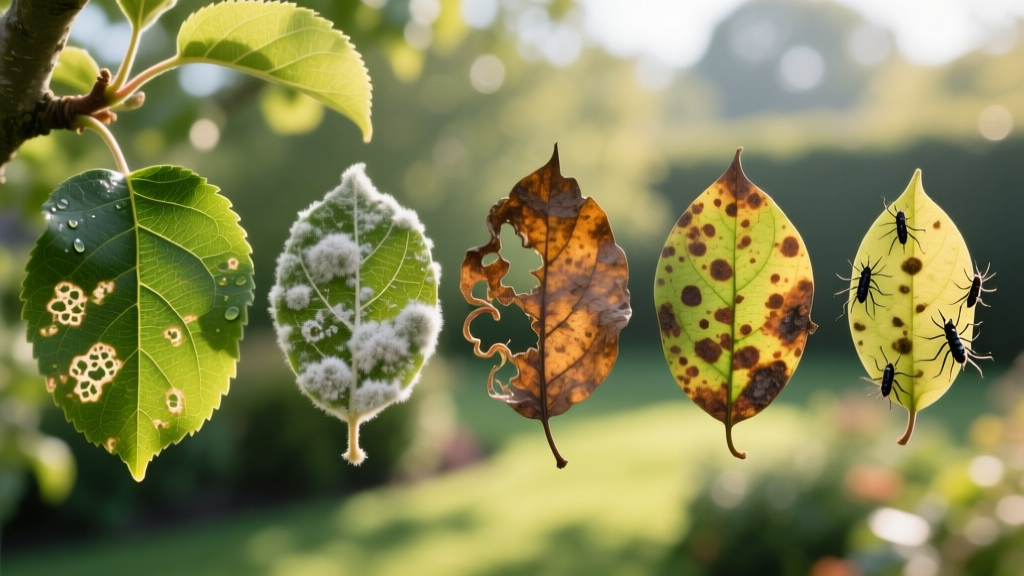
Apple Tree Leaf Diagnosis: Identify and Treat 5 Common Diseases
Apple tree leaf health directly dictates photosynthetic capacity and fruit sugar accumulation (Brix levels). A tree defoliated by mid-July will drop its current crop prematurely and fail to set next year's fruit buds. Because pathogens like apple scab and cedar apple rust can destroy up to 80% of a susceptible tree's foliage in a single wet spring, early and accurate apple tree leaf diagnosis is the most critical skill for home orchardists.
The Diagnostic Matrix: 4 Primary Apple Tree Leaf Diseases
Before applying any treatment, you must correctly identify the pathogen. Fungal, bacterial, and environmental issues require entirely different chemical and cultural interventions. Use this matrix to match your leaf symptoms to the correct disease.
| Disease | Initial Leaf Symptom | Progression & Edge Cases | Primary Vector / Cause |
|---|---|---|---|
| Apple Scab (Venturia inaequalis) | Olive-green, velvety spots on upper leaf surface. | Spots turn dark brown/black; leaf yellows and drops early. Highly susceptible varieties like Red Delicious defoliate completely. | Fungal spores overwinter in fallen leaf litter; splashed by spring rain. |
| Cedar Apple Rust (Gymnosporangium juniperi-virginianae) | Bright yellow-orange spots on upper surface. | Brown, tube-like structures (aecia) form on the leaf underside. Requires a Juniper host within a 2-mile radius. | Wind-blown spores from infected Juniper galls during wet spring days. |
| Fire Blight (Erwinia amylovora) | Water-soaked, dark lesions on leaf veins and petioles. | Leaves turn black but remain attached to the branch; shoot tips wilt into a 'shepherd's crook' shape. | Bacterial; spreads via rain splash, bees, and pruning tools during bloom. |
| Powdery Mildew (Podosphaera leucotricha) | White, powdery fungal coating on new shoots and leaf undersides. | Leaves curl upward, become brittle, and stunt shoot growth. Thrives in high humidity but does not require free water. | Fungal spores overwinter in dormant buds; spreads via wind in dry, humid conditions. |
For authoritative visual references and regional infection models, consult the Cornell University Plant Clinic and the University of Minnesota Extension.
Step-by-Step Apple Tree Leaf Inspection Routine
Routine inspections must align with the tree's phenological stages. Pathogens infect at specific developmental windows, and missing these windows renders most treatments ineffective.
1. Early Spring (Dormant to Pink Bud Stage)
- Tools Required: 10x jeweler's loupe, sterilized bypass pruners, clear plastic baggies.
- Action: Inspect the undersides of emerging leaves at the 'pink bud' stage (just before flowers open). Look for the microscopic olive-green pinpricks of apple scab. This is the primary infection period. If scab is present, apply a preventative fungicide immediately.
2. Summer (Petal Fall to Fruit Development)
- Tools Required: Flashlight for inner canopy inspection, soil moisture probe.
- Action: Check the inner canopy where humidity traps itself. Powdery mildew and cedar apple rust typically manifest 2 to 3 weeks after petal fall. If you see yellow spotting, check the leaf underside for rust aecia tubes. If you see white dusting on new terminal growth, it is mildew.
Warning: Copper Phytotoxicity
Never apply copper-based fungicides (like copper hydroxide) to apple tree leaves when temperatures exceed 75°F (24°C) or when the tree is under drought stress. Copper becomes highly soluble in heat and will burn the leaf tissue, causing severe defoliation that mimics disease damage.
Never apply copper-based fungicides (like copper hydroxide) to apple tree leaves when temperatures exceed 75°F (24°C) or when the tree is under drought stress. Copper becomes highly soluble in heat and will burn the leaf tissue, causing severe defoliation that mimics disease damage.
Treatment Protocols: Organic vs. Synthetic Fungicides
Once you have identified the apple tree leaf disease, select your treatment based on your management philosophy and the severity of the infection. Always read the label for exact dilution rates; the concentrations below are standard baseline recommendations for home orchards.
Synthetic Options (High Efficacy, Systemic/Contact)
- Myclobutanil (e.g., Spectracide Immunox): A systemic fungicide excellent for Apple Scab and Cedar Apple Rust. Mix rate: 1.5 fl oz per gallon of water. Pros: Absorbed into the leaf tissue, providing up to 14 days of rain-fast protection. Cons: Can suppress beneficial soil mycorrhizae if heavily drenched.
- Captan (e.g., Bonide Captan): A broad-spectrum contact fungicide. Mix rate: 1.5 tablespoons per gallon. Pros: Very low risk of pathogen resistance. Cons: Washes off in heavy rain; requires strict re-application every 7-10 days.
Organic Options (OMRI Listed)
- Neem Oil (Clarified Hydrophobic Extract): Best for Powdery Mildew. Mix rate: 2 tablespoons per gallon. Pros: Disrupts fungal cell membranes and repels aphids. Cons: Ineffective against Apple Scab and Fire Blight; can burn leaves if applied in direct midday sun.
- Bacillus subtilis (e.g., Serenade Garden): A biological bactericide. Mix rate: 2-4 fl oz per gallon. Pros: Highly effective against Fire Blight and Scab when applied preventatively. Cons: Must be applied before infection occurs; useless as a curative treatment once symptoms appear.
Cultural Controls: Pruning and Sanitation Tactics
Chemical treatments will fail if the tree's microclimate favors pathogen reproduction. You must alter the physical environment of the apple tree leaf canopy.
- Canopy Architecture: Prune to an open-center or modified-leader shape. Your goal is 30% light penetration to the inner canopy. Remove all watersprouts (vertical shoots) and crossing branches. Make cuts at a 45-degree angle, exactly 1/4 inch above an outward-facing bud to direct growth away from the center.
- Leaf Litter Decomposition: Apple scab overwinters in fallen leaves. In late autumn, apply a foliar spray of 5% urea (46-0-0 fertilizer) to the leaves just before they drop. This accelerates microbial decomposition of the leaf litter on the ground, destroying scab pseudothecia. Alternatively, rake and hot-compost all fallen leaves at temperatures exceeding 140°F.
- Fire Blight Pruning: If you identify the shepherd's crook wilting of Fire Blight, prune 12 inches below the visible margin of infection. Dip your pruning shears in a 10% bleach solution or 70% isopropyl alcohol between every single cut to prevent spreading the bacteria to healthy wood.
When to Call a Certified Arborist
Home sprayers typically max out at 2 gallons and lack the pressure to penetrate the upper canopy of mature, 20-foot apple trees. If your tree exceeds 15 feet in height, or if you are losing more than 40% of your crop annually to disease, hire an ISA Certified Arborist. Expect to pay $150 to $300 for a diagnostic visit and custom spray plan, and $200 to $500 per professional trunk-injection or high-pressure canopy spray application. For severe Fire Blight outbreaks, arborists can perform trunk injections of antibiotics like streptomycin, which are restricted from consumer purchase in most states.
Frequently Asked Questions
Why are my apple tree leaves curling but have no spots?
Curling without fungal spots usually indicates pest pressure or environmental stress. Inspect the undersides of the curled leaves for aphids (small green or black insects leaving sticky honeydew). If no insects are present, test your soil pH; a pH above 7.5 can lock out iron and manganese, causing leaf distortion and chlorosis.
Can I eat apples from a tree that has apple scab on the leaves?
Yes. Apple scab (Venturia inaequalis) is strictly a plant pathogen and poses zero risk to human health. If the scab has spread to the fruit, causing raised, corky, olive-green lesions on the apple skin, simply peel the fruit before eating or cooking. The flesh underneath remains perfectly safe and sweet.
How close does a Juniper tree need to be to cause Cedar Apple Rust?
The spores can travel on the wind for up to 2 miles. However, the highest infection rates occur when Juniper hosts (like Eastern Redcedar) are within 300 to 500 feet of your apple tree. Removing Junipers on your own property will reduce, but not entirely eliminate, the risk of rust on your apple tree leaves.

