
Tree Care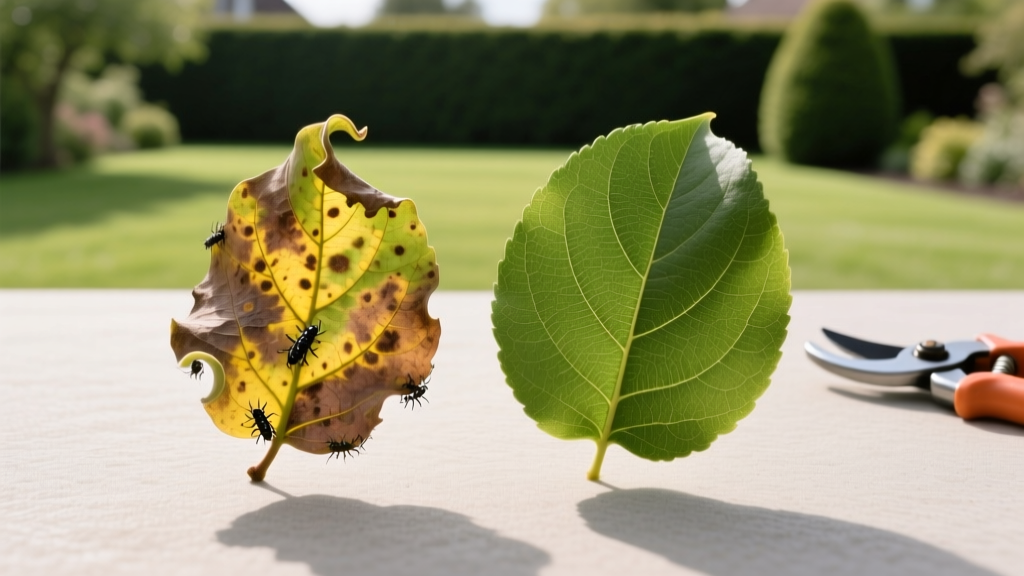
A Practical Guide to Diagnosing Sick Apple Tree Leaves
The Critical Role of Canopy Health
Healthy apple tree leaves are the biological engines of your orchard. Through photosynthesis, the canopy generates the carbohydrates required for fruit sugar development (Brix levels), root expansion, and winter hardiness. When foliar diseases strike, premature defoliation starves the tree, resulting in undersized, poorly colored apples and a severe reduction in next year's flower buds. Diagnosing and treating foliar issues requires moving beyond generic 'fruit tree sprays' and adopting a precise, phenology-based management strategy.
The 4 Most Destructive Apple Tree Leaves Pathogens
Misidentification leads to wasted chemical applications and irreversible canopy loss. Below is a diagnostic matrix for the primary pathogens targeting Malus domestica foliage in North America.
| Pathogen | Visual Symptoms on Leaves | Peak Infection Window | Primary 2026 Treatment |
|---|---|---|---|
| Apple Scab (Venturia inaequalis) | Olive-green, velvety spots that darken to black; leaves yellow and drop prematurely. | Spring (Pink Bud to Petal Fall) | Captan 50 WP (1.5 tbsp/gal) |
| Cedar Apple Rust | Bright yellow-orange spots on upper surface; tube-like fruiting bodies underneath. | Mid-spring during wet, humid spells | Myclobutanil (Immunox) |
| Powdery Mildew | White, powdery fungal coating primarily on new terminal leaves and shoot tips. | Late spring to early summer | Horticultural Oil or Sulfur |
| Fire Blight (Foliar phase) | Blackened, wilted leaves that cling to the branch; shepherd's crook shoot bending. | Bloom and immediate post-bloom | Copper Octanoate + Pruning |
According to the University of Minnesota Extension, apple scab remains the most economically damaging foliar disease in home orchards, capable of causing 100% defoliation by mid-July if left untreated in highly susceptible cultivars like Gala, McIntosh, and Cortland.
Phenology-Based Foliar Spray Schedule
Calendar-based spraying is obsolete. In 2026, advanced home orchardists rely on phenology—timing applications to the tree's physical growth stages. This ensures the fungicide is present on the apple tree leaves exactly when spores are released. Always add a non-ionic surfactant (like Southern Ag Surfactant at 1/2 teaspoon per gallon) to ensure the spray sticks to the waxy leaf cuticle during spring rains.
- Half-Inch Green Stage: Buds are swelling, showing green tissue. Apply a dormant horticultural oil (like Bonide All Seasons Oil at 2.5 oz per gallon) to smother overwintering scale and mite eggs before foliage emerges.
- Pink Bud Stage: Flower buds are swollen and showing pink, but not yet open. This is the most critical window for Apple Scab prevention. Apply Captan 50 WP at a rate of 1.5 tablespoons per gallon of water. Cost: ~$22 for an 8 oz bottle, which treats roughly 10 mature trees.
- Petal Fall: 90% of blossoms have dropped. Never spray during full bloom to protect native pollinators. Switch to a systemic fungicide like Myclobutanil (Spectracide Immunox) at 1.5 fl oz per gallon to protect the newly emerged apple tree leaves from Cedar Apple Rust and Powdery Mildew.
- First Cover (7-10 days post-petal fall): Reapply Captan or Myclobutanil to maintain the protective barrier on expanding foliage.
Differentiating Nutrient Deficiencies from Fungal Infections
Not all discoloration on apple tree leaves is caused by pathogens. Before applying fungicides, run through this diagnostic framework to rule out abiotic stress and soil imbalances.
Diagnostic Decision Matrix
- Uniform Pale Green/Yellowing (Older Leaves): Nitrogen deficiency. Fix: Apply 1 lb of actual nitrogen per 1,000 sq ft of root zone using a balanced 10-10-10 granular fertilizer in early spring.
- Interveinal Chlorosis (New Leaves Only): Iron deficiency, common in high-pH soils (above 7.0). Fix: Apply chelated iron (Fe-EDDHA) as a soil drench at 1 oz per inch of trunk diameter. Foliar sprays of iron sulfate (1 tbsp/gal) provide a temporary 14-day green-up.
- V-Shaped Yellowing at Leaf Margins: Magnesium deficiency. Fix: Apply Epsom salts (magnesium sulfate) at 2 tablespoons per gallon as a foliar spray, or broadcast 1 cup per tree around the drip line.
- Random Brown/Black Spotting with Yellow Halos: Fungal infection (Scab or Frog-eye leaf spot). Proceed with the fungicide schedule above.
Surgical Pruning and Tool Sanitation Protocols
When Fire Blight (Erwinia amylovora) strikes, the bacteria rapidly move from infected blossoms down the shoots and into the main trunk. The University of Wisconsin-Madison Extension recommends aggressive pruning to save the tree.
The 12-Inch Rule
Locate the lowest visible margin of necrotic (dead, blackened) tissue on the branch. Measure exactly 12 inches below this margin into healthy, green wood. Make a clean, 45-degree angled cut at this point. Do not tear the bark.
Warning: Never use a 10% bleach solution to sterilize pruning shears between cuts. Bleach pits the steel blades of bypass pruners (like the Felco F-2) and degrades the cutting edge within a single season. Instead, use 70% isopropyl alcohol or a quaternary ammonium disinfectant. Wipe the blades thoroughly for 30 seconds between every single cut when removing blighted wood.
Autumn Sanitation: The 3% Urea Accelerator
Raking and bagging fallen apple tree leaves is labor-intensive and often incomplete. A superior, science-backed method to reduce Apple Scab inoculum for the following spring is the autumn urea spray.
Apple scab overwinters in fallen leaves. By spraying a high-nitrogen urea solution directly onto the canopy right before natural leaf drop (typically late October in Zone 5/6), you accomplish two things:
- The nitrogen is absorbed into the tree's vascular system, boosting next spring's bloom vigor.
- The urea that coats the falling leaves accelerates microbial decomposition on the orchard floor. The scab fungus is outcompeted by saprophytic bacteria, destroying the overwintering fruiting bodies (pseudothecia) before spring.
Mixing Ratio: Dissolve 3 lbs of 42-0-0 agricultural urea in 100 gallons of water (or 3 tablespoons per gallon for small home sprayers). Apply until the apple tree leaves are dripping wet. Research indicates this single autumn application can reduce primary spring scab infections by up to 80%.
Frequently Asked Questions
Why are my apple tree leaves curling inward?
Leaf curling is rarely a disease; it is almost always caused by sap-sucking insects. Inspect the undersides of the curled leaves for Aphids or Leafhoppers. Treat with a 1% insecticidal soap spray (2.5 fl oz per gallon of water), ensuring thorough coverage of the leaf undersides.
Is it safe to compost diseased apple tree leaves?
No. Home compost piles rarely reach the sustained 140°F to 160°F required to kill Apple Scab and Cedar Apple Rust spores. Bag and dispose of infected foliage via municipal yard waste, or burn it where local ordinances permit.

