
Tree Care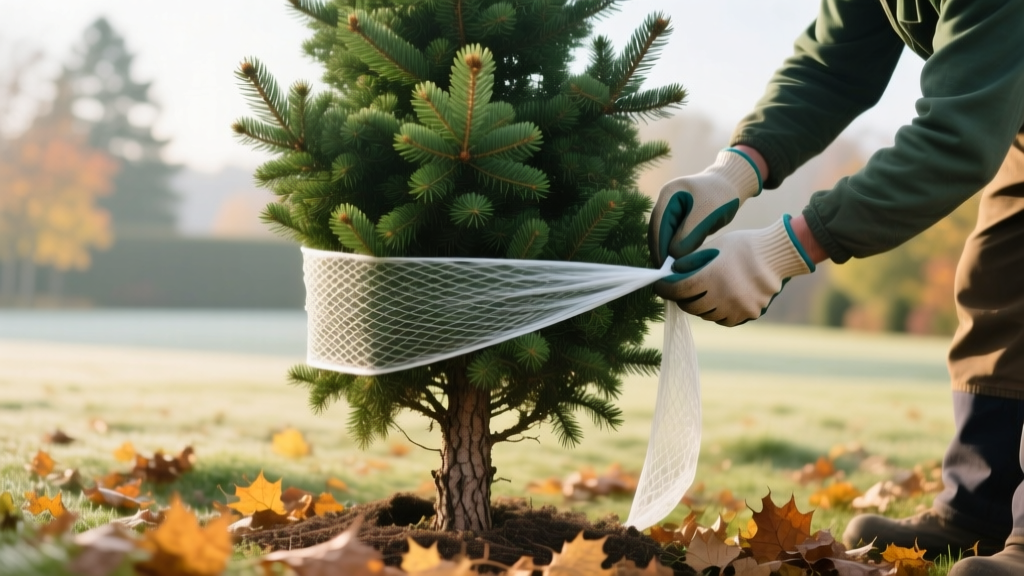
How to Apply Christmas Tree Wrap to Prevent Winter Desiccation
The Physiology of Winter Burn: Why Evergreens Desiccate
When homeowners plant a live Christmas tree in their yard or maintain nursery-grown evergreens, the first winter presents a severe physiological threat. Unlike deciduous trees that drop their leaves and enter full dormancy, evergreens retain their needles and continue to undergo transpiration—the process of drawing moisture from the soil and releasing it through their stomata. When the ground freezes solid, the root system cannot replace the water lost to harsh winter winds and bright, low-angle sunlight. This imbalance leads to winter desiccation, commonly known as winter burn.
Applying a proper christmas tree wrap creates a microclimate around the foliage and trunk, reducing wind velocity across the needles and reflecting solar radiation away from the vulnerable bark. According to the University of Minnesota Extension, physical barriers are the most effective defense against moisture loss in newly transplanted conifers, outperforming chemical anti-desiccant sprays which often degrade under UV exposure by mid-January.
The First-Year Vulnerability Rule: Any live Christmas tree or evergreen planted within the last 12 to 18 months lacks the established root mass required to access deep soil moisture. These specimens require mandatory canopy and trunk wrapping for their first two winters, regardless of the species' general cold hardiness.
Choosing the Right Christmas Tree Wrap Materials
Not all wraps serve the same purpose. Canopy wrapping requires breathable fabrics that block wind while allowing ambient light penetration, whereas trunk wrapping demands opaque, reflective materials to prevent bark temperature fluctuations. As of 2026, commercial arboriculture relies on three primary material categories for winterizing evergreens.
| Material Type | Best Application | Cost Estimate | Breathability |
|---|---|---|---|
| 10 oz Natural Jute Burlap | Full canopy windbreak & snow load protection | $18 - $25 per 12-yard roll | High (prevents fungal trapping) |
| Polypropylene Frost Blanket (1.5 oz) | Extreme sub-zero temperature insulation | $22 - $30 per 10-yard roll | Moderate (requires venting) |
| White Crepe Paper / Kraft Spiral Wrap | Trunk sunscald and rodent browsing defense | $6 - $10 per 100-foot roll | Low (water-resistant exterior) |
For most residential landscaping scenarios, a combination of 10-ounce burlap for the canopy and white spiral wrap for the lower trunk provides the optimal balance of protection and cost-efficiency.
Step-by-Step: Wrapping the Canopy for Windburn Protection
Canopy wrapping is a two-person job for trees exceeding six feet in height. The goal is to swaddle the foliage tightly enough to prevent wind penetration, but loosely enough to avoid crushing the terminal leaders and breaking lateral branches under the weight of heavy snow.
- Hydrate the Root Zone: Before the first hard freeze (typically when soil temperatures drop to 40°F at a 6-inch depth), apply 10 to 15 gallons of water per inch of trunk caliper. Moist soil retains heat better than dry soil and provides the final moisture reserve for the tree.
- Tie the Lower Branches: Gently gather the lower whorls of branches upward toward the central leader. Use biodegradable jute twine or specialized ArborTie. Never use wire or nylon zip-ties, which will girdle the bark as the tree sways in winter storms.
- Anchor the Base: Secure the bottom edge of your burlap roll to the trunk using a loose slip knot, leaving exactly 6 inches of bare trunk exposed above the soil line. This gap prevents the burlap from wicking ground moisture, which can cause basal rot.
- Spiral the Canopy: Unroll the burlap upward in a spiral motion, overlapping each layer by at least 3 inches. Ensure the overlap faces downward, mimicking shingles on a roof, so melting snow sheds away from the inner foliage.
- Secure the Apex: Once you reach the top, tie off the burlap securely to the central leader. If using a polypropylene frost blanket instead of burlap, punch three or four small ventilation holes near the top to allow excess humidity to escape on sunny winter days.
Step-by-Step: Spiral Trunk Wrapping for Sunscald
Winter sunscald, or 'southwest injury,' occurs when the low-angle winter sun heats the dark bark on the southwest-facing side of the trunk. This rapid heating stimulates cellular activity in the cambium layer. When the sun sets and temperatures plummet below freezing, the active cells flash-freeze and rupture, creating vertical fissures that invite Cytospora canker and wood-boring insects.
The Morton Arboretum recommends wrapping the trunks of young, thin-barked evergreens (such as White Pine and Fraser Fir) to reflect solar radiation and maintain a stable bark temperature.
- Start wrapping at the soil line (leaving a 2-inch gap to deter rodents from nesting directly against the root flare).
- Spiral the white tree wrap upward at a 45-degree angle, overlapping by half the width of the roll.
- Stop wrapping just below the first major lateral branch whorl, usually 4 to 5 feet up the trunk.
- Secure the top edge with a piece of masking tape or a biodegradable tie. Avoid taping the wrap directly to the bark, as adhesive residue can damage the lenticels.
When to Apply and Remove (The Temperature Triggers)
Timing is the most critical variable in winter tree protection. Applying wrap too early traps autumn moisture and encourages fungal pathogens; removing it too late in the spring creates a greenhouse effect that forces premature bud break.
Application Window: Apply christmas tree wrap after the tree has experienced at least two consecutive nights of air temperatures below 28°F, signaling that the tree has fully acclimated to winter dormancy. In most northern hardiness zones (USDA 3-5), this falls between late November and early December.
Removal Window: Remove all wraps in early spring as soon as the soil temperature consistently reaches 50°F and the threat of severe freezing winds has passed. A reliable phenological indicator is the blooming of Forsythia shrubs in your area. Prompt removal allows the bark to dry and prevents the wrap from constricting spring trunk expansion.
Common Mistakes and Pathogen Risks
The most frequent error homeowners make is leaving burlap or frost blankets on the tree well into May. Trapped moisture combined with rising spring temperatures creates an ideal incubator for needle cast diseases, such as Rhizosphaera kalkhoffii. Furthermore, if trunk wrap is left on for multiple seasons, the tree will grow into the material. As the trunk expands in diameter, the wrap acts as a tourniquet, severing the phloem and effectively girdling the tree. Always treat winter wrap as a temporary, single-season tool, and inspect the bark for abrasions or rodent chewing every time you remove the materials in spring.
By combining deep autumn hydration, breathable canopy swaddling, and reflective trunk wrapping, you can ensure your live Christmas tree transitions from a holiday centerpiece into a permanent, thriving fixture in your landscape for decades to come.

