
Tree Care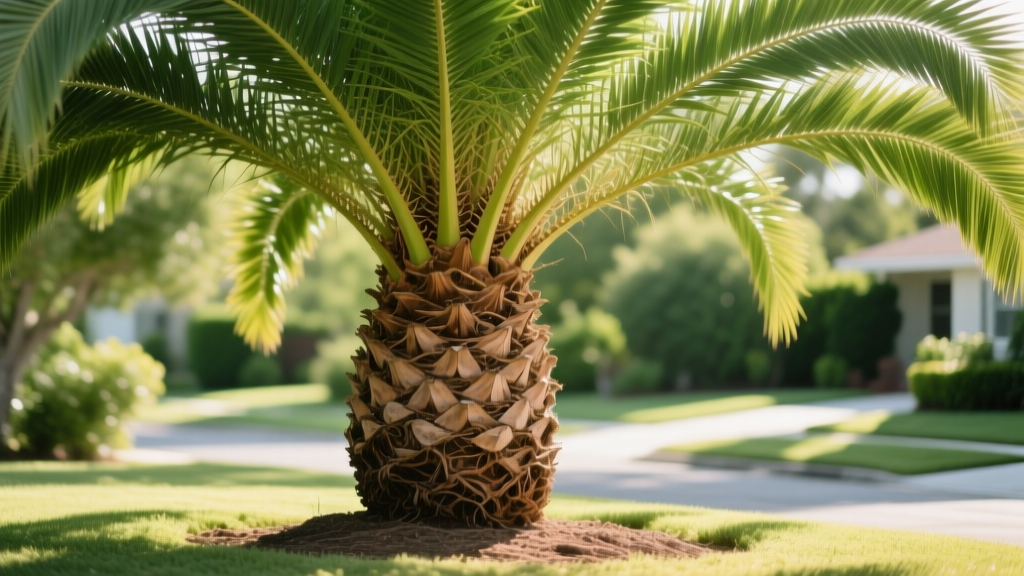
Are Palm Trees Actually Trees? Botanical Facts & Care Guide
The Botanical Verdict: Why Palms Are Not True Trees
If you ask a botanist, "are palm trees actually trees?", the answer is a definitive no. While palms possess a tall, woody-looking trunk and a canopy of leaves, they belong to the plant family Arecaceae and are classified as monocotyledons (monocots). This makes them more closely related to grasses, lilies, and bamboo than to true trees like oaks, maples, or pines, which are dicotyledons (dicots) or gymnosperms.
The distinction is not merely a matter of semantic trivia; it fundamentally dictates how these plants grow, how they respond to environmental stress, and how homeowners must maintain them. Treating a palm like a traditional hardwood tree is one of the most common mistakes in landscape management, frequently leading to fatal diseases, structural instability, and nutrient deficiencies.
Botanical Callout: The Cambium Layer
True trees possess a vascular cambium—a layer of actively dividing cells just beneath the bark that produces secondary growth (wood and bark), allowing the trunk to thicken and heal over wounds. Palms completely lack a vascular cambium. Once a palm's trunk reaches its mature diameter, it will never grow any wider, and it cannot heal over physical damage.
Anatomical Showdown: Palms vs. True Trees
To understand proper palm care, you must first understand the structural differences hidden beneath the bark. The internal plumbing and root architecture of a palm operate on an entirely different biological framework than a standard shade tree.
| Feature | True Trees (Dicots/Gymnosperms) | Palms (Monocots) |
|---|---|---|
| Trunk Structure | Concentric growth rings; thickens over time via vascular cambium. | Scattered vascular bundles; trunk diameter is fixed at maturity. |
| Root System | Taproot or large lateral roots that thicken and store energy. | Fibrous, adventitious roots of uniform thickness; no secondary thickening. |
| Growth Point | Multiple lateral buds; can resprout if the main leader is lost. | Single terminal bud (the "heart"); if destroyed, the entire palm dies. |
| Wound Healing | Compartmentalizes decay; grows callus tissue over wounds. | Cannot heal; wounds remain permanently and invite fungal pathogens. |
How Vascular Bundles Change Everything
According to the Encyclopædia Britannica, the internal structure of a palm trunk resembles a bundle of fiber-optic cables. Instead of rings, the trunk is packed with scattered vascular bundles (xylem and phloem) embedded in a matrix of fibrous tissue. Because the oldest vascular tissue is on the outside and the newest is on the inside, the outer layer of the trunk is actually the hardest and most structurally vital. Scraping or damaging the outer trunk of a palm severs its primary transport highways, causing permanent tissue starvation above the wound site.
How Palm Anatomy Dictates Your Care Routine
Understanding that palms are essentially giant, woody grasses requires a complete shift in maintenance strategies. Here is how their unique biology translates into actionable landscaping rules.
1. The "No-Heal" Pruning Rule
Because palms lack a cambium layer, they cannot compartmentalize decay like dicot trees. A chainsaw nick on a palm trunk is a permanent entry point for lethal pathogens like Thielaviopsis paradoxa (trunk rot). Furthermore, the practice of "hurricane cutting"—stripping a palm down to a few upright fronds to reduce wind resistance—is biologically disastrous. Palms rely on their older, lower fronds to recycle vital nutrients like potassium and magnesium back into the terminal bud.
- The 9-to-3 Rule: Only prune fronds that hang below an imaginary horizontal line across the canopy (the 9 o'clock to 3 o'clock positions on a clock face).
- Tool Hygiene: Always sterilize pruning saws with a 70% isopropyl alcohol solution between palms to prevent the spread of Fusarium wilt.
2. Root Pruning and Transplanting Advantages
Transplanting a mature oak requires a massive root ball to preserve its energy-storing lateral roots. Palms, however, possess a unique Root Initiation Zone (RIZ) located just below the soil line at the base of the trunk. According to research published by the University of Florida IFAS Extension, palms can regenerate entirely new adventitious roots from the RIZ even if the original root ball is completely severed.
When transplanting species like the Canary Island Date Palm (Phoenix canariensis), you can safely dig a root ball just 12 to 18 inches from the trunk base. The severed roots will not regrow, but the RIZ will push out hundreds of new fibrous roots within 6 to 8 weeks, provided the soil is kept consistently moist and temperatures remain above 70°F.
3. Staking Without Strangulation
Because a palm's trunk will never thicken over time, stakes left on a newly planted palm will eventually girdle and crush the trunk if not monitored. Never use wire, chain, or rigid hose wrapped tightly around the trunk.
- Drive three 2x4 wooden stakes into the ground outside the root ball perimeter.
- Wrap the palm trunk with a 6-inch wide band of burlap or heavy landscape fabric at the contact point.
- Use heavy-duty nylon strapping over the burlap, securing it to the stakes with enough slack to allow for slight wind sway, which stimulates trunk fiber strengthening.
- Remove all staking hardware after 6 to 8 months.
4. Specialized Fertilization Requirements
True trees often thrive on standard high-nitrogen lawn fertilizers. Palms, however, have a high demand for magnesium and boron, and are highly susceptible to potassium deficiency, which manifests as yellow spotting and necrosis on the oldest fronds. Standard turf fertilizers (like a 28-0-3 NPK) will induce severe nutrient imbalances in palms.
Always use a controlled-release palm-specific fertilizer with an analysis of 8-2-12-4 Mg (Nitrogen, Phosphorus, Potassium, Magnesium). Apply at a rate of 1.5 pounds per 100 square feet of canopy area in early spring, early summer, and early fall, broadcasting it evenly under the entire drip line.
Frequently Asked Questions
If palms aren't trees, what are they classified as?
Palms are classified as woody monocotyledons in the family Arecaceae. In botanical terms, they are arborescent (tree-like) monocots. They share their fundamental embryonic and vascular structure with lawn grasses, corn, and lilies.
Can you drill holes into a palm tree for lighting or climbing pegs?
Never drill into a palm trunk. Because the vascular bundles are scattered throughout the trunk and the palm cannot generate callus tissue to seal the wound, drilling creates a permanent, unhealing tunnel that invites wood-decaying fungi and structural weakness.
Do palm trees have growth rings you can count for age?
No. Since palms do not have a vascular cambium that produces secondary xylem (wood) annually, they do not form growth rings. Determining the age of a palm requires counting the leaf scars on the trunk, though this is highly inaccurate as older scars at the base eventually weather away or are buried by soil accumulation.

