Tree Care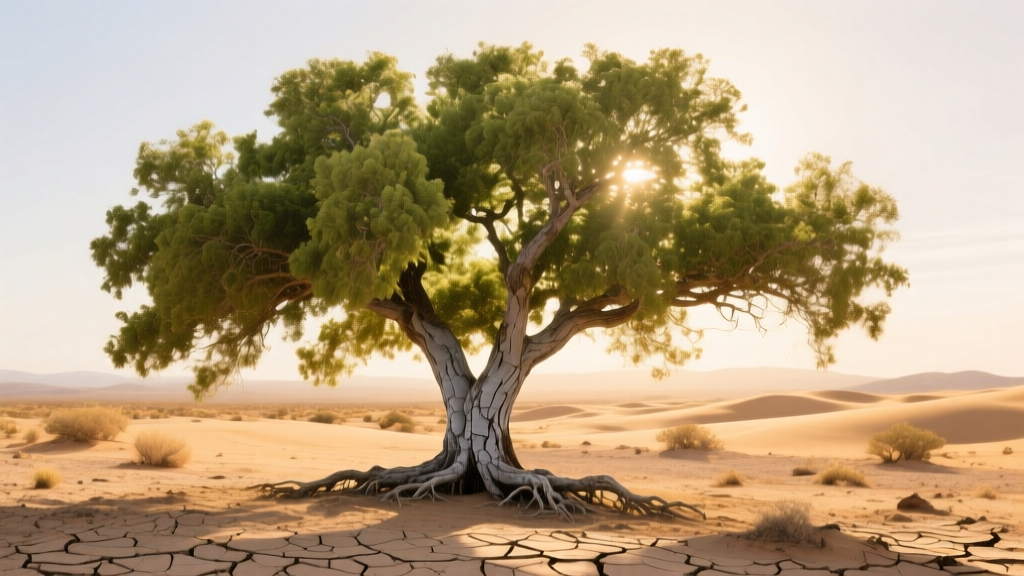
Best Arizona Shade Trees for Extreme Heat and Dry Soil
Diagnosing Your Arizona Site Conditions
Growing a lush, cooling canopy in the Sonoran Desert requires solving three compounding site-condition problems: extreme radiant heat (frequently exceeding 110°F), highly alkaline soils (pH 8.0 to 8.5), and shallow caliche hardpan layers. Selecting the right Arizona shade trees is not just about finding species that tolerate heat; it is about matching specific root architectures and foliage densities to your yard’s exact microclimate and soil profile.
Standard nursery tags often fail to account for the localized challenges of Arizona's urban soils. A tree that thrives in the sandy loam of the Midwest will quickly succumb to iron chlorosis or root rot when planted in the compacted, calcium-rich clay of Phoenix or Tucson. Below, we break down the highest-performing shade species for desert landscapes, backed by arboricultural data and real-world establishment costs.
Top 5 Arizona Shade Trees for Problem Yards
These five cultivars have proven track records in USDA Zones 8b through 10b, offering reliable canopy coverage without demanding excessive municipal water allocations.
1. Texas Ebony (Ebenopsis ebano)
Texas Ebony is the premier evergreen shade tree for low-desert patios. It produces a dense, dark-green canopy that drops ambient temperatures beneath it by up to 15°F compared to exposed hardscaping. Failure mode: Juvenile trees produce sharp stipular thorns and grow slowly for the first two years while establishing a deep taproot. Current nursery pricing: $350 to $450 for a 24-inch box specimen.
2. 'Keith Davey' Chinese Pistache (Pistacia chinensis)
For homeowners who want seasonal color, this male, fruitless cultivar offers brilliant orange-red fall foliage before dropping its leaves to allow passive solar heating of your home in winter. It is highly tolerant of alkaline soils. Failure mode: Susceptible to verticillium wilt if planted in poorly draining clay and overwatered during the summer monsoon. Canopy spread: 30 to 35 feet.
3. 'Shademaster' Thornless Honeylocust (Gleditsia triacanthos var. inermis)
This cultivar provides 'filtered' or dappled shade, making it the absolute best choice if you need to grow Bermuda or Zoysia turfgrass beneath the canopy. Its delicate leaves break down rapidly and do not require heavy autumn raking. Failure mode: Late-summer mimosa webworm infestations can defoliate the tree; treat early with Bacillus thuringiensis (Bt) sprays.
4. 'Cathedral' Live Oak (Quercus virginiana 'Cathedral')
The 'Cathedral' cultivar is selected specifically for its faster growth rate and more upright, uniform canopy compared to the standard Southern Live Oak. It remains evergreen in mild Arizona winters and provides massive, sweeping shade. Failure mode: Prone to oak root fungus (Armillaria) if drip emitters are placed too close to the trunk, keeping the root crown perpetually wet.
5. Desert Willow (Chilopsis linearis 'Barranco')
While technically a large shrub or small tree, the 'Barranco' cultivar can be trained into a multi-trunk shade tree reaching 25 feet. It features striking burgundy flowers and thrives on neglect once established. Failure mode: Brittle wood structure. If not structurally pruned to establish strong crotch angles in years one through three, branches will snap during July and August monsoon microbursts.
Species Comparison Matrix
| Species / Cultivar | Mature Height | Canopy Density | Turf Compatible? | Water Need (Est. Weekly) |
|---|---|---|---|---|
| Texas Ebony | 25 - 30 ft | Very Dense | No (Shade kills grass) | 15 - 20 gallons (deep) |
| Chinese Pistache | 30 - 35 ft | Dense (Deciduous) | No | 20 - 25 gallons (deep) |
| Thornless Honeylocust | 35 - 45 ft | Dappled / Filtered | Yes | 25 - 30 gallons (deep) |
| Cathedral Live Oak | 30 - 40 ft | Dense (Evergreen) | No | 20 - 30 gallons (deep) |
| Desert Willow | 15 - 25 ft | Light / Airy | Yes | 10 - 15 gallons (deep) |
The 'Bathtub Effect' Planting Protocol for Caliche
One of the most common causes of tree death in Arizona is the 'bathtub effect.' When homeowners dig a hole and backfill it with rich, organic potting soil, they create a porous sponge surrounded by impermeable caliche clay. During irrigation, water fills the amended hole but cannot drain into the surrounding native soil, drowning the roots. According to the University of Arizona Cooperative Extension, proper planting in caliche requires a specific technique:
- Test for Drainage: Dig your intended hole and fill it with water. If it takes more than 12 hours to drain, you have a caliche hardpan. You must either drill through the hardpan using a soil auger or plant the tree slightly above grade in a raised berm.
- Dig Wide, Not Deep: Excavate a hole 2 to 3 times the width of the root ball, but exactly the same depth. The root flare must sit 1 to 2 inches above the surrounding native soil grade.
- Use Native Backfill: Do not amend the backfill with compost or peat moss. Break up the native soil you just dug out and use it to backfill the hole. This forces the roots to adapt to the local soil chemistry immediately.
- Construct a Water Basin: Build a circular soil berm 3 feet in diameter around the tree to capture flood irrigation or hose water, ensuring it soaks down to a depth of 24 to 36 inches.
Warning: Iron Chlorosis Misdiagnosis
If your new tree's leaves turn yellow while the veins remain green, it is suffering from iron chlorosis caused by high soil pH locking up iron. Do not use standard EDTA chelated iron—it breaks down instantly in soils with a pH above 7.0. You must purchase EDDHA chelated iron (often sold as 'Sequestrene 138' or 'Sprint 138'), which remains stable and bioavailable in alkaline desert soils up to a pH of 9.0.
If your new tree's leaves turn yellow while the veins remain green, it is suffering from iron chlorosis caused by high soil pH locking up iron. Do not use standard EDTA chelated iron—it breaks down instantly in soils with a pH above 7.0. You must purchase EDDHA chelated iron (often sold as 'Sequestrene 138' or 'Sprint 138'), which remains stable and bioavailable in alkaline desert soils up to a pH of 9.0.
Establishment Irrigation and Cost Breakdown
Transitioning a tree from nursery irrigation to a sustainable desert watering schedule is critical. Nurseries water trees daily in shallow root balls. In your yard, you must train roots to grow deep to survive summer heat spikes. The Water - Use It Wisely coalition recommends deep, infrequent watering to promote drought resilience.
- Months 1-3 (Establishment): Water every 2 to 3 days. Apply 15 gallons per watering session directly over the root ball.
- Months 4-6: Water every 4 to 5 days. Apply 20 gallons, moving emitters 12 inches outward from the trunk to encourage lateral root expansion.
- Year 1 and Beyond: Water every 7 to 14 days depending on seasonal temperatures. Ensure the wetting front reaches 24 to 36 inches deep. Use a 3-foot soil probe to verify moisture depth.
Infrastructure Costs: Retrofitting a single tree zone with a pressure-compensating drip line (using 2 GPH emitters) costs approximately $45 to $70 in materials. Alternatively, installing a dedicated 1/2-inch bubbler head on a PVC riser costs about $25, but requires manual monitoring to prevent surface runoff on compacted soils.
Frequently Asked Questions
Can I plant Arizona shade trees in the summer?
While nurseries sell trees year-round, planting between June and August introduces severe transplant shock due to 110°F ambient temperatures and massive evapotranspiration rates. The optimal planting windows are late September through November (allowing root establishment before winter) or February through April.
Do mesquite trees provide good shade for patios?
Native mesquites (like Prosopis velutina) provide excellent, airy shade and require minimal water once established. However, they are notorious for producing aggressive surface roots that crack concrete patios and driveways. If planting near hardscape, install a 24-inch deep heavy-duty HDPE root barrier between the tree and the concrete to deflect roots downward.
How do I protect young tree trunks from sunscald?
Southwest-facing trunks of young deciduous trees (like Chinese Pistache) can suffer from sunscald, where the winter sun heats the bark, followed by a sudden nighttime freeze that kills the cambium layer. Wrap the trunks of newly planted deciduous trees with white, reflective tree wrap from Thanksgiving to Valentine's Day. Never use dark-colored materials or leave the wrap on year-round, as it will harbor borers and fungal pathogens.