
Tree Care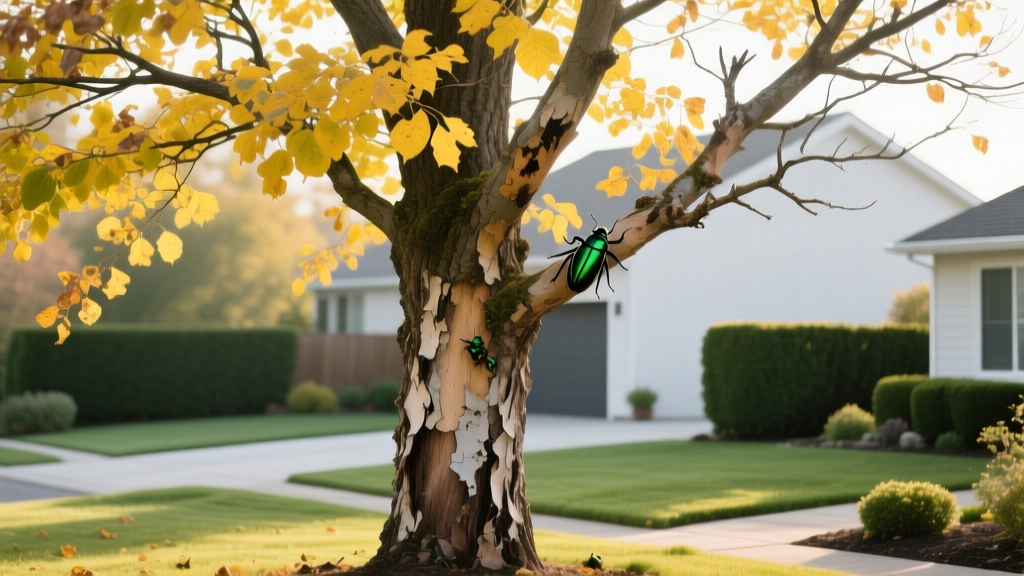
Ash Tree Virus Myths: Diagnosing Ash Yellows, EAB, and Dieback
When homeowners notice their ash tree’s canopy rapidly thinning, leaves turning yellow out of season, and branches dying back, a common internet search leads them to a supposed "ash tree virus." However, from a botanical and pathological standpoint, there is no major viral pathogen currently decimating ash populations (genus Fraxinus). What beginners often mistake for a virus is actually one of three distinct, highly destructive threats: Ash Yellows (a phytoplasma), Emerald Ash Borer (an invasive beetle), or Ash Dieback (a fungus).
Misdiagnosing the threat leads to wasted money on ineffective fungicides or viral treatments. This guide breaks down the exact symptoms, diagnostic steps, and 2026 treatment economics for the real threats killing your ash trees.
The "Ash Tree Virus" Misconception: Understanding Ash Yellows
When people refer to an ash tree virus, they are almost always describing Ash Yellows. This disease is caused by Candidatus Phytoplasma fraxini. Phytoplasmas are not viruses; they are specialized, wall-less bacteria that live in the plant's phloem (the inner bark tissue that transports sugars) and are spread by sap-sucking insects like leafhoppers.
💡 Beginner Insight: Why it looks like a virus
Because phytoplasmas systemically block the tree's vascular system, the symptoms mimic a viral infection: stunted growth, chlorosis (yellowing), and a deliquescent (wilted) branching pattern. However, unlike viruses, phytoplasmas trigger a very specific deformity known as "witches' broom"—dense, tangled clusters of twigs growing from a single point.
Because phytoplasmas systemically block the tree's vascular system, the symptoms mimic a viral infection: stunted growth, chlorosis (yellowing), and a deliquescent (wilted) branching pattern. However, unlike viruses, phytoplasmas trigger a very specific deformity known as "witches' broom"—dense, tangled clusters of twigs growing from a single point.
Key Symptoms of Ash Yellows
- Slow Decline: Unlike insect infestations that can kill a tree in 2-3 years, Ash Yellows causes a slow decline over 2 to 10 years.
- Witches' Broom: Tufted, abnormal sprouting on branches, particularly in the lower canopy or on stressed roots.
- Early Fall Color: Leaves turn yellow and drop prematurely in late summer.
- Species Target: Primarily affects White Ash (Fraxinus americana) and Green Ash (Fraxinus pennsylvanica).
Symptom Matrix: Ash Yellows vs. Emerald Ash Borer vs. Ash Dieback
To treat your tree correctly, you must identify the actual pathogen or pest. Use this diagnostic matrix to compare the three primary ash killers.
| Threat | Pathogen/Pest Type | Primary Visual Symptom | Treatment Viability |
|---|---|---|---|
| Ash Yellows | Phytoplasma (Bacteria-like) | Witches' broom, slow canopy thinning, chlorosis | No cure; manage stress or remove |
| Emerald Ash Borer (EAB) | Invasive Beetle (Agrilus planipennis) | D-shaped exit holes, S-shaped larval galleries under bark | Highly treatable with systemic insecticides |
| Ash Dieback | Fungus (Hymenoscyphus fraxineus) | Diamond-shaped bark lesions, blackened leaf bases | No cure; widespread in Europe, emerging globally |
Step-by-Step Diagnostic Field Guide
Do not guess. Follow this physical inspection sequence to determine what is actually killing your tree.
- Inspect the Upper Canopy: EAB always attacks the top third of the tree first. If the top is dead but the bottom is green, suspect EAB. If the whole tree is uniformly thinning, suspect Ash Yellows or root rot.
- Check the Bark for Woodpecker Damage: Woodpeckers strip the outer bark to eat EAB larvae. If you see "flecking" (light-colored patches where bark has been stripped off), EAB is highly likely.
- Look for D-Shaped Exit Holes: Peel back loose bark on the trunk. EAB leaves distinct, 1/8-inch D-shaped exit holes. Fungi and phytoplasmas do not cause exit holes.
- Examine the Roots and Lower Trunk: Look for witches' broom sprouting from the root collar or lower trunk. This confirms Ash Yellows.
⚠️ Warning: Bark Peeling Safety
Only peel bark that is already loose or dead. Ripping healthy, tightly bound bark off an ash tree will sever the remaining phloem, accelerating the tree's death regardless of the underlying disease.
Only peel bark that is already loose or dead. Ripping healthy, tightly bound bark off an ash tree will sever the remaining phloem, accelerating the tree's death regardless of the underlying disease.
2026 Treatment Protocols and Chemical Costs
If your diagnosis points to the Emerald Ash Borer, you have actionable, highly effective treatment options. If your tree has Ash Yellows or Ash Dieback, chemical treatments will not cure the systemic infection, and your budget is better spent on safe removal and replanting with resistant species.
For EAB, treatments are dosed based on the tree's Diameter at Breast Height (DBH). To find DBH, measure the trunk's circumference at 4.5 feet off the ground and divide by 3.14. A tree with a 63-inch circumference has a 20-inch DBH.
Chemical Options for EAB
- Imidacloprid (Soil Drench): Best for small trees (under 20" DBH). Applied to the soil in early spring.
Cost: $5 - $10 per inch of DBH.
Frequency: Annually. - Emamectin Benzoate (Trunk Injection): The gold standard for 2026. Products like Tree-âge G4 are injected directly into the xylem.
Cost: $15 - $25 per inch of DBH (professional application).
Frequency: Every 2 to 3 years. - Dinotefuran (Basal Bark Spray): Used as a rapid knockdown when EAB populations are high, often combined with Emamectin.
Cost: $10 - $15 per inch of DBH.
Frequency: Annually.
For a mature 25-inch DBH ash tree, expect to pay an arborist between $375 and $625 for a professional Emamectin benzoate trunk injection, which will protect the tree through 2028 or 2029. According to Purdue University Extension, professional trunk injections yield vastly superior survival rates compared to DIY soil drenches for trees over 15 inches in diameter.
The 30% Canopy Rule: Treatment vs. Removal Economics
Beginners often attempt to treat ash trees that are already too far gone. Systemic insecticides rely on the tree's vascular system to pull the chemical up into the canopy. If the tree has lost too much foliage, it cannot transpire enough water to move the chemical, rendering the treatment useless.
The Decision Framework
- Less than 30% Canopy Decline: Treat immediately with Emamectin benzoate. The tree has enough vascular function to distribute the chemical and recover.
- 30% to 50% Canopy Decline: Treatment is risky. The tree may survive, but it will take 2-3 years to regain aesthetic value. Consider the tree's location and your budget.
- Greater than 50% Canopy Decline: Do not treat. The vascular system is irreparably girdled by EAB larvae or blocked by Ash Yellows phytoplasmas. The tree is a structural hazard and must be removed.
Removal Costs and Safety
Dead or dying ash wood becomes exceptionally brittle within 12 to 18 months of severe decline. This makes climbing the tree highly dangerous for arborists. If your ash tree requires removal via crane due to brittleness or proximity to your home, expect 2026 removal costs to range from $1,200 to $3,500, heavily dependent on crane access and local labor rates. For more information on identifying and managing fungal and environmental threats to broadleaf trees, consult resources like Forest Research's Ash Dieback guidelines.
Summary: Stop Searching for a Virus, Start Measuring DBH
There is no "ash tree virus" hiding in your yard. Your tree is likely fighting Ash Yellows, Ash Dieback, or the Emerald Ash Borer. Grab a measuring tape, calculate your tree's DBH, check the upper canopy for dieback, and look for D-shaped holes under the bark. If it is EAB and the canopy is mostly intact, invest in professional Emamectin benzoate injections. If you see witches' broom and systemic yellowing, accept the Ash Yellows diagnosis and plan for safe removal and replanting with a resilient alternative like the Kentucky Coffeetree or Bald Cypress.

