Tree Care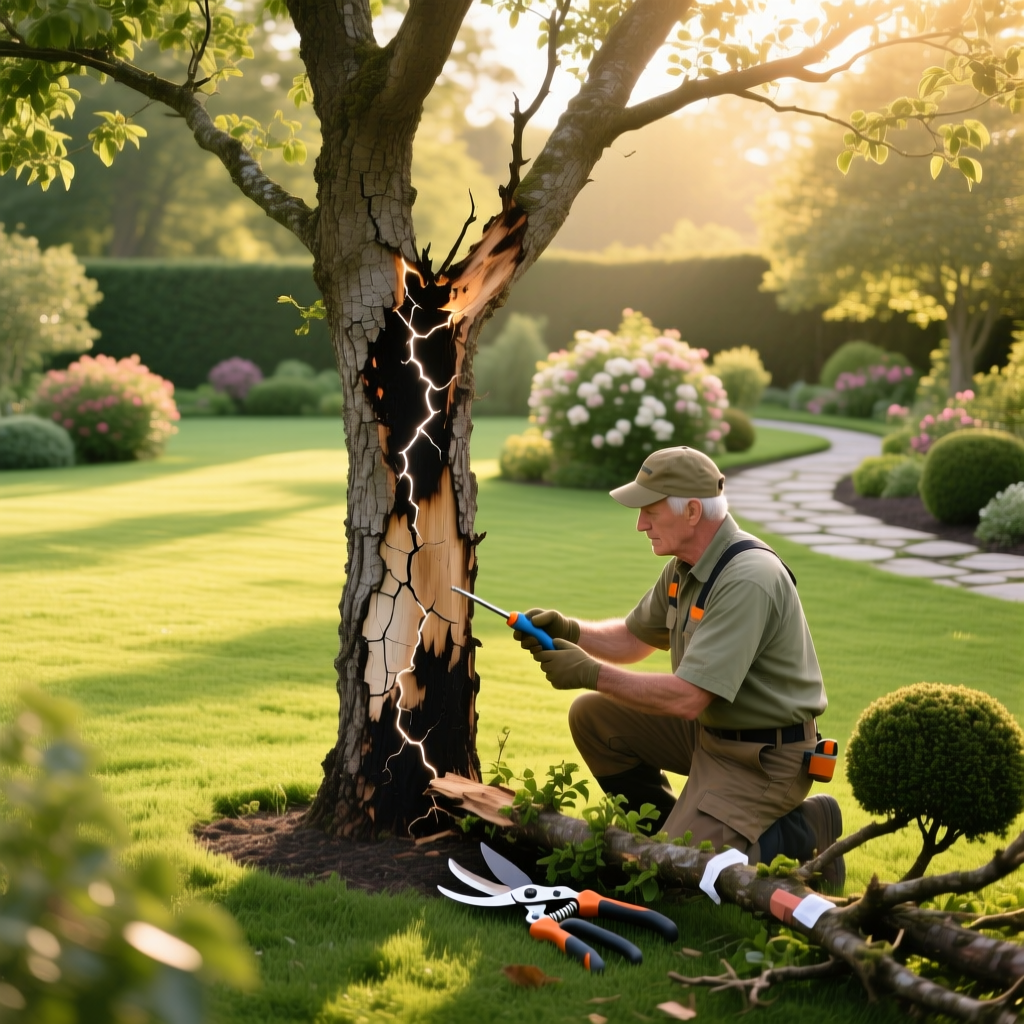
How to Assess & Treat Lightning Strike Damage in Trees
Lisa ThompsonPublished
How to Assess & Treat Lightning Strike Damage in Trees
Nature is both beautiful and unforgiving, and few natural phenomena demonstrate this duality quite like a lightning strike. When a bolt of lightning, carrying millions of volts of electricity and temperatures hotter than the surface of the sun, intersects with a towering tree, the results are instantaneous and often catastrophic. For homeowners and landscape enthusiasts, discovering a beloved shade tree or a vital landscape specimen has been struck can be a distressing experience. However, a lightning strike does not always mean an immediate death sentence for the tree. With rapid assessment, proper triage, and dedicated long-term care, many trees can survive and continue to thrive for decades.
Understanding the physiological impact of a lightning strike is the first step toward effective treatment. When lightning hits a tree, the electrical current travels down the trunk, seeking the path of least resistance to the ground. This path is typically the moisture-rich cambium layer and the sapwood. The intense heat instantly superheats the sap and water within the tree's cellular structure, turning it into steam. This rapid expansion causes a literal steam explosion, which can blow bark off the trunk, shatter branches, and splinter the wood. Beyond the visible trauma, the electrical shock can severely disrupt the tree's vascular system, impairing its ability to transport water & nutrients. In this comprehensive guide, we will explore how to accurately assess the damage, provide immediate first aid, execute proper pruning, and defend your tree against secondary threats like diseases & pests.
How to Assess Lightning Strike Damage in Trees
Before you can begin treating a lightning-damaged tree, you must thoroughly evaluate the extent of the trauma. Damage can range from superficial bark scorching to complete structural failure and root system devastation. A careful visual inspection, combined with an understanding of tree biology, will help you determine if the tree is a candidate for recovery or if it poses a hazardous risk that requires removal.
The most obvious sign of a lightning strike is the