
Tree Care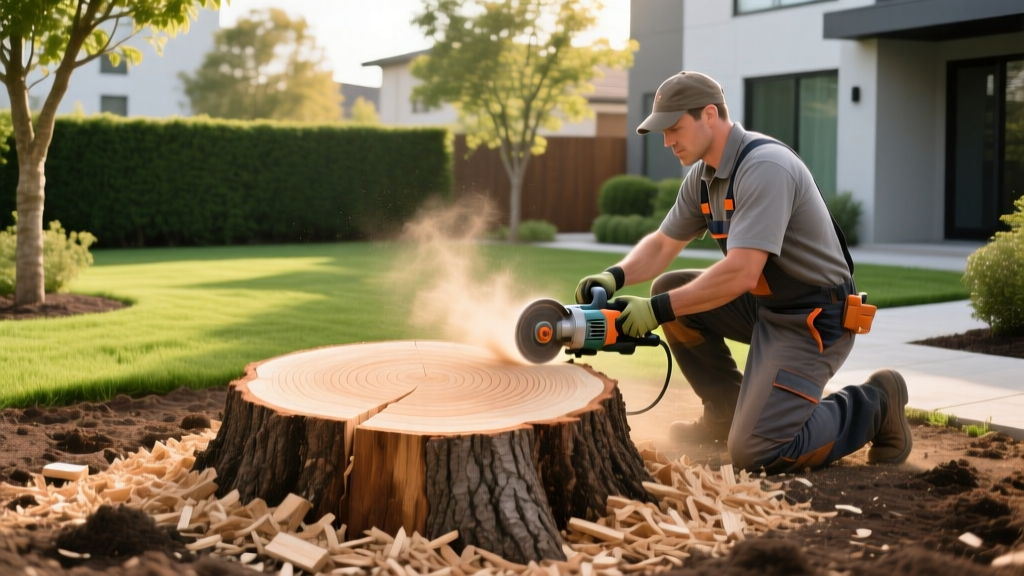
2026 Stump Removal Price Guide: Grinding, Chemical & Manual Costs
Understanding the Baseline Stump Removal Price
When budgeting for yard renovation or post-storm cleanup, the stump removal price is rarely a flat fee. In 2026, the national average for professional stump removal ranges from $150 to $500 per stump, but this baseline is heavily skewed by minimum call-out fees. To accurately predict your costs, you must shift from thinking about 'per stump' pricing to 'per diameter inch' pricing, while factoring in the extraction method, wood density, and site accessibility.
Leaving a stump to rot naturally can take 10 to 20 years depending on the species, harboring carpenter ants, termites, and fungal pathogens that can spread to nearby healthy trees. According to the University of Minnesota Extension, prompt removal mitigates these pest vectors and reclaims valuable square footage for new landscaping or hardscaping.
The 'Per-Inch' Pricing Rule: Most professional arborists calculate the stump removal price by measuring the diameter of the stump at ground level, then adding 2 to 4 inches to account for the surface root flare. The national average rate in 2026 is $3.50 to $5.50 per linear inch of diameter.
How Arborists Calculate Your Specific Quote
Before a grinder ever touches the wood, contractors evaluate three critical variables that dictate the final stump removal price:
- Wood Density and Species: Hardwoods like White Oak, Hickory, and Locust dull carbide grinder teeth rapidly. Expect a 20% to 30% surcharge for dense hardwoods compared to softwoods like Pine, Spruce, or Silver Maple.
- Gate Clearance and Access: Standard walk-behind stump grinders require a minimum 36-inch gate clearance. If your stump is in a fenced backyard with narrow access, the crew may need to use a specialized narrow-track grinder or manually dismantle fence sections, adding $100 to $250 in labor and repair fees.
- Proximity to Hazards: Stumps located within 3 feet of utility lines, irrigation heads, or concrete foundations require careful hand-digging to expose the root collar before grinding. Hitting a buried irrigation line or fiber-optic cable can result in massive liability, so contractors use underground utility locators (like 811 services) and charge a premium for high-risk zones.
Method 1: Stump Grinding Costs by Diameter
Stump grinding is the industry standard for residential properties. A high-torque grinder uses a rotating cutting wheel with tungsten carbide teeth to chip the stump away 8 to 12 inches below grade. This method leaves the deep taproot intact to decay naturally, which is perfectly safe for future turfgrass or shallow-rooted flower beds.
| Stump Diameter | Estimated Grinding Cost | Chip Volume Yield | Best Equipment Type |
|---|---|---|---|
| 12 - 18 inches | $150 - $225 (Min. Fee) | 4 - 8 cubic feet | Walk-behind grinder |
| 19 - 28 inches | $250 - $400 | 10 - 18 cubic feet | Walk-behind or small tracked |
| 29 - 40 inches | $450 - $700 | 20 - 35 cubic feet | Tracked remote grinder |
| 41+ inches | $800 - $1,200+ | 40+ cubic feet | Heavy-duty tracked grinder |
Method 2: Chemical Stump Removal (Potassium Nitrate)
If your budget is tight and you have a timeline of 4 to 8 weeks, chemical decay is a viable alternative. The most effective active ingredient is Potassium Nitrate (KNO3), commonly sold in 1-pound containers for $15 to $25. Unlike herbicides that kill living tissue, KNO3 acts as a high-nitrogen catalyst that accelerates the natural fungal decay process, turning the wood spongy and easy to break apart with a mattock.
Application Protocol for Chemical Decay
- Drilling: Use a 1-inch spade bit to drill holes 8 to 10 inches deep into the stump, spacing them 3 inches apart in a concentric circle near the outer edge (the cambium layer where nutrients flow).
- Dosing: Fill each hole with KNO3 granules, leaving 1 inch of space at the top.
- Activation: Pour warm water into the holes to dissolve the crystals. Cover the stump with a heavy black tarp and mulch to trap heat and moisture, creating an ideal environment for decay fungi.
Warning on Suckering Species: Chemical decay does not kill the living root system immediately. If you are removing highly aggressive suckering species like Tree of Heaven, Poplar, or American Elm, you must apply a systemic herbicide (like Triclopyr or Glyphosate) to the freshly cut outer cambium within 15 minutes of felling the tree. Otherwise, the roots will push up dozens of new shoots across your lawn.
Method 3: Manual Extraction & Heavy Machinery
Complete physical extraction removes the stump and the primary root ball, leaving a massive crater that must be backfilled. This is necessary if you plan to pour a concrete patio, install a pool, or plant a new large-caliber tree in the exact same location.
Manual Digging: Using a digging bar, mattock, and reciprocating saw with a pruning blade, a two-person crew can extract a 20-inch stump in 3 to 5 hours. At professional landscaping labor rates of $75 to $125 per hour, the stump removal price for manual extraction easily exceeds $600.
Mini-Excavator Rental: For larger stumps, renting a compact excavator (such as a Bobcat E35 or Kubota KX040) is more efficient. Daily rental rates in 2026 average $300 to $450, plus a $150 delivery fee. An experienced operator can rip out a 30-inch stump and root ball in under 20 minutes. However, the tracks will cause significant turf damage, requiring subsequent lawn aeration and reseeding.
Hidden Cost Factors: Cleanup and Nitrogen Tie-Up
The initial quote rarely includes the aftermath. When a stump is ground, it produces a massive volume of woodchips mixed with soil. A 30-inch stump yields roughly 20 cubic feet of debris.
- Debris Hauling: Contractors charge $75 to $150 to load and haul away the woodchips. If you choose to keep them, be aware of the Carbon-to-Nitrogen (C:N) ratio. Fresh woodchips have a C:N ratio of roughly 400:1. If you mix them directly into your garden soil, the microbes will consume all available nitrogen to break down the carbon, causing severe nitrogen deficiency (chlorosis) in your plants. Use the chips only as surface mulch, or let them compost for 12 to 18 months before soil incorporation.
- Backfill and Grading: Grinding leaves a hole filled with loose, airy chips that will sink significantly as they decompose. Budget an extra $50 to $100 for topsoil backfill and grading to ensure a level lawn surface.
Decision Matrix: Choosing Your Removal Method
Use this framework to match the extraction method to your specific landscaping goals and budget constraints.
| Method | Cost Range | Timeline | Best Use Case |
|---|---|---|---|
| Stump Grinding | $150 - $800 | 1 - 2 Hours | Replanting turf, general yard cleanup, budget efficiency. |
| Chemical Decay | $15 - $30 | 4 - 8 Weeks | Strict DIY budgets, remote property corners, no heavy gate access. |
| Manual / Excavator | $400 - $1,000+ | 2 - 6 Hours | Hardscaping, pouring concrete, planting a new large tree in the same spot. |
Ultimately, securing an accurate stump removal price requires measuring your stump's diameter, identifying the wood species, and evaluating your site's access points. By understanding the mechanics behind the per-inch pricing model and the hidden costs of debris management, you can negotiate confidently with local arborists and avoid unexpected landscaping overruns.
Frequently Asked Questions
Does stump grinding kill the roots?
No. Grinding only removes the trunk base and surface roots. The deeper root system remains in the soil and will slowly decay over 5 to 10 years, naturally returning organic matter to the earth.
Can I burn a stump out instead of grinding it?
While some homeowners drill holes, fill them with kerosene, and burn the stump, this is highly discouraged and often illegal under municipal fire codes. It creates a severe fire hazard for subterranean peat or dry root networks that can smolder underground for days before erupting in neighboring yards.

