Tree Care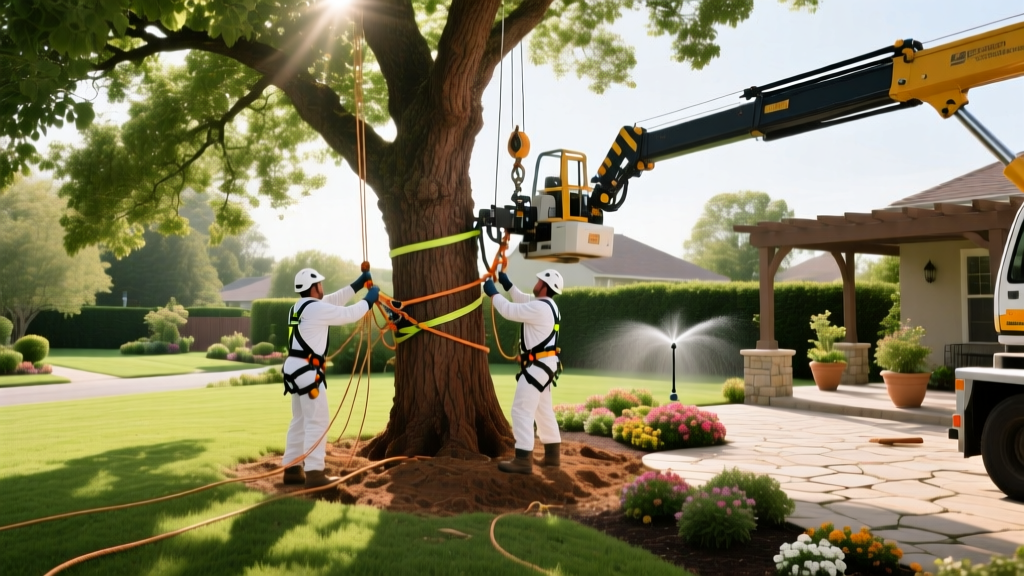
How Much Does It Cost to Cut Down Trees? 2026 Pricing Guide
The Real Cost of Tree Removal: 2026 National Averages
When homeowners ask, 'how much does it cost to cut down trees,' the answer depends heavily on physics, location, and biology. In 2026, the national average for professional tree removal sits at $1,150, with most standard residential jobs ranging between $400 and $2,500. However, pricing is rarely flat-rate. Arborists calculate bids based on the time required, the risk profile of the drop zone, and the heavy equipment needed to safely dismantle the canopy.
Quick 2026 Cost Summary:
• National Average: $1,150
• Typical Range: $400 – $2,500
• Extreme High (Giant/Complex Rigging): $6,000+
• Stump Grinding Add-on: $150 – $450
• National Average: $1,150
• Typical Range: $400 – $2,500
• Extreme High (Giant/Complex Rigging): $6,000+
• Stump Grinding Add-on: $150 – $450
According to Angi's national tree removal cost data, the primary driver of your final invoice is the tree's physical footprint and its proximity to structural hazards. A dead pine in an open field costs a fraction of what a healthy, towering oak nestled between two power lines will demand.
Cost Breakdown by Tree Height and Trunk Diameter
Arborists do not just look at how tall a tree is; they measure the Diameter at Breast Height (DBH), which is the trunk's width measured exactly 4.5 feet above the ground. DBH dictates the weight of the wood, the rigging gear required, and the chainsaw bar length needed to make the felling cuts.
| Tree Category | Height | Trunk DBH | 2026 Cost Range |
|---|---|---|---|
| Small | Up to 30 ft | Under 12 inches | $150 – $500 |
| Medium | 30 – 60 ft | 12 – 24 inches | $500 – $1,200 |
| Large | 60 – 100 ft | 24 – 36 inches | $1,200 – $2,500 |
| Giant / Mature | 100+ ft | 36+ inches | $2,500 – $6,000+ |
5 Hidden Variables That Spike Your Final Bill
The baseline prices above assume a straightforward removal. In reality, site-specific variables frequently push quotes into the higher tiers. Understanding these factors will help you decode why one arborist might bid $800 while another bids $2,200 for the exact same tree.
1. Crane Accessibility and Equipment Needs
If a tree is located in a confined backyard where branches cannot be dropped safely, arborists must use 'sectional rigging'—climbing the tree and lowering pieces via ropes and pulleys. This is highly labor-intensive. If the trunk is too massive or rotten to climb safely, a mobile crane is required. Crane rentals add $500 to $800 per day to your bill, plus the cost of a certified crane operator.
2. Stump Grinding vs. Complete Extraction
Cutting the tree down to ground level is usually included in the base price, but removing the stump is an entirely separate service. Stump grinding typically costs $3 to $5 per inch of stump diameter. A 30-inch oak stump will add $90 to $150 to your invoice. Complete root extraction, which requires heavy excavation equipment and leaves a massive hole, can cost upwards of $500 and is rarely necessary unless you are pouring a concrete foundation in that exact spot.
3. Wood Hauling and Debris Disposal
Arborists charge for the time and dump fees required to haul away debris. If you want the wood cut into 16-inch firewood rounds and left on your property, you can often negotiate a $100 to $200 discount on the total labor. Conversely, if you request that all brush and logs be chipped and hauled away, expect standard disposal fees to apply.
4. Emergency vs. Scheduled Removal
If a tree has fallen on your roof during a storm, or is leaning precariously after an ice event, you will pay an emergency premium. Storm-response tree removal often incurs a 20% to 50% surcharge due to the immediate danger, after-hours dispatch, and complex structural hazards involved in cutting wood that is under extreme tension.
5. Local Permit Requirements
Many municipalities have heritage tree ordinances or canopy preservation laws. If your tree has a trunk diameter exceeding a certain local threshold (often 30+ inches DBH), you may need a removal permit. These permits range from $50 to $250 and require an inspection by a city arborist, adding weeks to your timeline and extra administrative fees to your project.
Species-Specific Pricing: Why Hardwoods Cost More
Wood density directly impacts the labor and equipment wear required for removal. Softwoods like Eastern White Pine or Leyland Cypress are lighter, easier to cut, and faster to chip. Hardwoods like Live Oak, Hickory, and Maple are incredibly dense. A 60-foot Live Oak weighs significantly more than a 60-foot Pine, requiring heavier-duty rigging ropes, more frequent chainsaw chain sharpening, and slower, more deliberate lowering techniques to prevent the wood from shattering fences or damaging turf upon impact.
DIY vs. Hiring an ISA-Certified Arborist
DIY Removal (High Risk)
- Cost: $50 - $200 (Chainsaw rental, fuel, PPE)
- Best For: Small, dead saplings under 15 feet in open areas.
- The Reality: Homeowner injuries from kickback and falling limbs are common. If the tree hits your neighbor's house, your homeowner's insurance may deny the claim due to negligent, unlicensed work.
ISA-Certified Arborist (Recommended)
- Cost: $400 - $6,000+
- Best For: Any tree over 20 feet, or any tree near structures/power lines.
- The Reality: Professionals carry specialized liability and workers' compensation insurance. They understand load-bearing physics, notch-and-hinge felling, and negative rigging.
'Always ask to see a physical certificate of Workers' Compensation insurance before the crew unloads a single tool. If an uninsured worker is injured on your property while cutting down your tree, you can be held legally and financially liable for their medical bills.' — International Society of Arboriculture (ISA)
Step-by-Step: How to Get an Accurate Quote
- Measure the DBH: Wrap a measuring tape around the trunk at 4.5 feet off the ground. Divide the circumference by 3.14 (Pi) to get the diameter. This gives you a baseline for comparison.
- Assess the Drop Zone: Note exactly what is beneath and around the tree. Are there fences, sheds, power lines, or delicate landscaping beds? Take wide-angle photos.
- Request Three Itemized Bids: Do not accept a single verbal number over the phone. Require an on-site inspection and an itemized written quote that separates the felling cost, stump grinding, and debris hauling.
- Verify Credentials: Cross-reference the company's name with the ISA (International Society of Arboriculture) 'Find an Arborist' database to ensure they hold active, up-to-date certifications.
By understanding the mechanics of how arborists price their labor and equipment, you can confidently negotiate, avoid hidden fees, and ensure your property is cleared safely and efficiently.