
Tree Care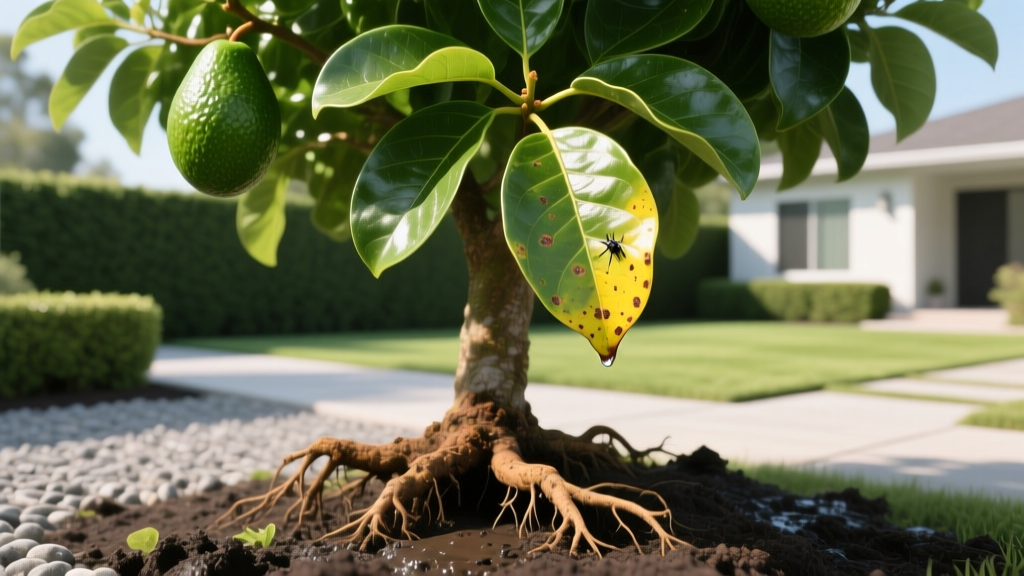
Avocado Trees Care: Diagnosing Leaf Drop, Root Rot, and Pest Damage
Avocado trees (Persea americana) are notoriously sensitive to environmental fluctuations, soil chemistry, and pathogens. Unlike robust shade trees, avocados possess shallow, highly susceptible feeder root systems that reside primarily in the top 6 to 12 inches of soil. When an avocado tree declines, the visible symptoms in the canopy—such as leaf drop, yellowing, or tip burn—are often delayed indicators of subterranean distress. Effective avocado trees care requires moving beyond generic watering schedules and adopting a clinical, symptom-driven diagnostic approach to identify the exact physiological or pathological failure point.
The Avocado Diagnostic Triage Framework
Before applying fertilizers or fungicides, map the symptom presentation. Misdiagnosing a salinity issue as a nutrient deficiency will accelerate tree decline. Use this rapid triage matrix to isolate the primary stressor:
⚠️ Critical Warning: Never apply high-nitrogen synthetic fertilizers to a declining avocado tree. If the root system is compromised by Phytophthora root rot, excess nitrogen will force unsustainable canopy growth that the damaged roots cannot support, accelerating tree death.
- Uniform Canopy Thinning + Small, Pale Leaves: Suspect chronic water stress or Nitrogen deficiency.
- Interveinal Chlorosis on NEW Growth: Suspect Iron or Zinc deficiency (often pH-induced).
- Necrotic Brown Margins + Premature Leaf Drop: Suspect Chloride/Salt toxicity or severe water deficit.
- Sudden Wilting + Dark, Brittle Feeder Roots: Suspect Phytophthora cinnamomi root rot.
Problem 1: Phytophthora Root Rot (The Silent Killer)
Root rot, caused by the soil-borne oomycete Phytophthora cinnamomi, is the most destructive disease in avocado cultivation. The pathogen thrives in poorly drained, heavy clay soils where waterlogging suffocates feeder roots, creating entry points for infection. Infected roots turn black and brittle, lacking the healthy white tips of a vigorous system. According to the UC Statewide IPM Program, above-ground symptoms include a sparse canopy of small, yellowish leaves, severe dieback, and an abundance of small, sun-ripened fruit that the tree drops prematurely as a survival mechanism.
The Gypsum and Phosphonate Protocol
Treating root rot requires a two-pronged approach: altering the soil chemistry to strengthen root cell walls and applying targeted fungicides to halt pathogen reproduction.
- Gypsum Application: Apply 15 to 20 pounds of agricultural gypsum (calcium sulfate dihydrate) per mature tree. Broadcast it evenly under the canopy drip line. The calcium ions displace sodium in the soil, improving flocculation and drainage, while directly fortifying root cell walls against oomycete penetration.
- Mulching: Apply a 6-inch layer of coarse wood chip mulch over the gypsum. This regulates soil temperature, retains moisture without waterlogging, and encourages beneficial Trichoderma fungi that parasitize Phytophthora.
- Phosphonate Fungicides: Use a phosphorous acid-based fungicide (such as Agri-Fos). For foliar application, mix 1.5 to 2 fluid ounces per gallon of water and spray until runoff during spring and autumn flushes. For severe infections, professional trunk injection of phosphonates yields higher systemic concentrations.
Problem 2: Decoding Leaf Chlorosis and Yellowing
Yellowing leaves (chlorosis) are the most common complaint in avocado trees care, but the underlying cause dictates entirely different treatments. Avocados are highly susceptible to micronutrient lockout in alkaline soils (pH > 7.2).
| Nutrient | Visual Symptom | Leaf Affected | Targeted Solution |
|---|---|---|---|
| Nitrogen (N) | Uniform pale green to yellow fading | Older, lower canopy leaves | Apply 1-2 lbs of actual N per year using slow-release urea or blood meal. |
| Iron (Fe) | Sharp interveinal chlorosis; veins remain dark green | Newest terminal growth | Soil drench with Fe-EDDHA chelate (1-2 oz per tree). Do not use Fe-EDTA in high pH soils. |
| Zinc (Zn) | Mottled yellowing, severely stunted leaf size, rosetting | New and intermediate growth | Foliar spray of zinc sulfate (1 lb per 100 gallons) during spring flush. |
💡 Expert Insight on Iron Chelates: Many gardeners fail to cure iron deficiency because they use Fe-EDTA or Fe-DTPA. These molecules break down and precipitate out of the soil solution at a pH above 7.0. If your soil pH is alkaline, you must purchase a chelate containing the ortho-ortho EDDHA isomer, which remains biologically available to avocado roots up to a pH of 9.0.
Problem 3: Persea Mite and Avocado Lace Bug
Pest pressure compromises the tree's photosynthetic capacity, leading to defoliation and sunburned fruit. The two most pervasive foliar pests are the Persea mite (Oligonychus perseae) and the Avocado lace bug.
Identification and Biological Control
Persea mites feed primarily on the underside of leaves along the midrib and secondary veins, creating dense, silken webbing and distinct necrotic brown spots. When populations exceed 100 mites per leaf, severe defoliation occurs, exposing the inner canopy and fruit to UV sunburn. The UC ANR Avocado Research program emphasizes that broad-spectrum insecticides often trigger Persea mite outbreaks by eliminating natural enemies.
- Biological Control: Release predatory mites, specifically Neoseiulus californicus or Euseius hibisci, at a rate of 5,000 to 10,000 mites per acre when pest populations are first detected.
- Chemical Intervention: If biological controls fail and defoliation threatens the crop, apply a 1.0% to 1.5% solution of narrow-range horticultural oil (415 oil). Ensure thorough coverage of the leaf undersides. Avoid applying oil when ambient temperatures exceed 85°F to prevent phytotoxicity.
Problem 4: Chloride Toxicity and Tip Burn
Avocado trees are exceptionally intolerant of salinity, specifically chloride ions. When irrigation water or soil contains chloride levels exceeding 100 ppm (mg/L), the roots absorb the ions and translocate them to the leaves. Because avocados lack an efficient mechanism to excrete excess chloride, it accumulates at the leaf margins and tips, causing progressive necrosis known as 'tip burn'.
The Leaching Fraction Strategy
If your municipal water supply or well tests high in chlorides, you must implement a leaching protocol to push salts below the active root zone.
- Calculate the Leaching Fraction: You must apply 15% to 30% more water than the tree's evapotranspiration (ET) rate requires. This excess water physically drags chloride ions down through the soil profile, past the 12-inch feeder root zone.
- Irrigation Frequency: Switch from infrequent, deep watering to frequent, shorter pulse irrigations. This maintains consistent soil moisture, diluting the chloride concentration in the soil solution and reducing the osmotic stress on the roots.
- Trunk Whitewashing: If tip burn leads to partial defoliation, paint the exposed trunk and major scaffolds with a 50/50 mixture of white interior latex paint and water. This prevents secondary damage from sunburn, which exploits the compromised canopy.
Mastering avocado trees care means abandoning reactive guesswork. By systematically evaluating root health, soil pH interactions, and precise pest thresholds, you can transition a declining tree back to vigorous, fruit-bearing health.

