
Tree Care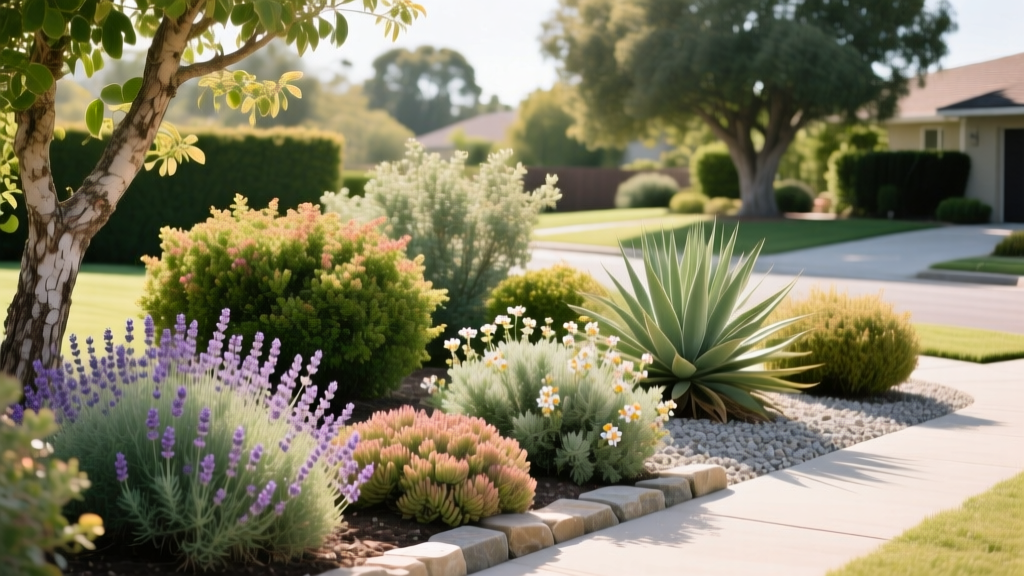
Beginner Guide to Xeriscape Bushes: Top Low-Water Shrubs
Xeriscaping is often misunderstood as a barren landscape of gravel and solitary cacti. In reality, a successful drought-tolerant landscape relies heavily on woody shrubs to provide structural backbone, microclimate shading, and year-round visual interest. For beginners, selecting and establishing the right xeriscape bushes is the difference between a thriving, low-maintenance yard and a graveyard of desiccated nursery stock.
According to the EPA WaterSense program, outdoor water use accounts for nearly 30% of total household water consumption, with much of it wasted on thirsty, non-native ornamentals. Transitioning to adapted xeriscape shrubs can cut landscape water use by up to 50%. However, drought-tolerant does not mean drought-proof on day one. This guide provides a precise, actionable framework for selecting, planting, and establishing low-water shrubs.
The 3 Golden Rules of Xeriscape Shrub Selection
- Hydro-Zoning: Group shrubs with identical water needs. Never plant a high-water hydrangea on the same drip valve as a drought-adapted sage.
- Mature Sizing: Select shrubs that fit their designated space at maturity. Pruning a xeriscape shrub to keep it small forces unnatural, water-demanding growth flushes.
- Soil Reality: Match the plant to your native soil. If you have heavy alkaline clay, avoid shrubs requiring sharp, acidic drainage unless you are planting in raised berms.
Top 3 Beginner-Friendly Xeriscape Bushes
When building a low-water landscape, rely on proven, widely available cultivars that forgive minor beginner mistakes. The following three species are renowned for their resilience, aesthetic value, and low input requirements once established.
1. Texas Sage (Leucophyllum frutescens 'Compacta')
Often called the "barometer bush," Texas Sage produces stunning purple blooms in response to humidity spikes and barometric pressure drops. While the straight species can grow 8 feet tall and wide, the 'Compacta' cultivar maxes out at 4x4 feet, making it ideal for foundation plantings and borders. Its silvery-gray foliage reflects intense solar radiation, reducing leaf temperature and transpiration.
- Cost: $35–$45 for a 3-gallon nursery pot; $120+ for 15-gallon architectural specimens.
- USDA Zones: 8–11.
- Failure Mode: Powdery mildew caused by overhead sprinkler irrigation. Always use drip lines at the base.
2. Dwarf Yaupon Holly (Ilex vomitoria 'Nana')
For a dense, evergreen workhorse that tolerates terrible soil conditions, Dwarf Yaupon Holly is unmatched. It thrives in both deep sands and heavy, poorly drained clays. The 'Nana' cultivar naturally forms a tight, mounding habit without the need for frequent shearing. It also produces small, translucent red berries that attract overwintering birds.
- Cost: $40–$55 for a 5-gallon pot.
- USDA Zones: 7–9.
- Failure Mode: Root rot in the first 60 days if planted too deeply. The root flare must sit 1 inch above the native soil grade.
3. Apache Plume (Fallugia paradoxa)
A semi-evergreen native shrub that offers multi-season interest. Apache Plume produces delicate white, rose-like flowers in spring, followed by striking, feathery pink seed heads that catch the wind and afternoon light. It is highly resistant to deer browsing and serves as a critical native pollinator magnet. You can verify its native range and ecological benefits via the Lady Bird Johnson Wildflower Center database.
- Cost: $28–$35 for a 2-gallon pot.
- USDA Zones: 5–9.
- Failure Mode: Woody, leggy base if not selectively pruned every three years to encourage fresh basal growth.
Species Comparison Matrix
| Species | Mature Size (H x W) | Post-Establishment Water | Sun Exposure |
|---|---|---|---|
| Texas Sage 'Compacta' | 4 ft x 4 ft | Deep soak every 14 days | Full Sun |
| Dwarf Yaupon 'Nana' | 3-5 ft x 4-6 ft | Deep soak every 10-14 days | Full to Part Sun |
| Apache Plume | 3-6 ft x 4-8 ft | Deep soak every 21 days | Full Sun |
The 90-Day Establishment Protocol
The most common myth in xeriscaping is that drought-tolerant plants require zero water upon planting. In reality, xeriscape bushes possess deep, extensive root systems designed to scavenge scarce moisture. Until those roots expand beyond the nursery potting soil into your native earth, the plant is entirely dependent on you. Follow this exact 90-day protocol:
- Dig Wide, Not Deep: Excavate a hole exactly as deep as the root ball, but 2.5 times as wide. Rough up the sides of the hole with a digging fork to prevent soil glazing, which restricts root penetration.
- Native Backfill Only: Do not amend the backfill soil with peat moss, compost, or rich topsoil. Amending creates a "bathtub effect" where water pools in the loose organic matter and rots the root crown. Use the native soil you just dug out.
- Construct a Water Berm: Use excess native soil to build a 3-inch-high circular berm at the outer edge of the planting hole (the future drip line). This forces water to pool and percolate downward rather than running off.
- Initial Deep Soak: Apply 3 to 5 gallons of water immediately after planting to collapse air pockets around the root ball.
- Apply Inorganic Mulch: Spread a 2-inch layer of 3/8-inch crushed decomposed granite (DG) or river rock over the soil surface. Keep the mulch 3 inches away from the main stem to prevent collar rot. Avoid wood chips, which harbor fungal pathogens in arid climates.
- Establishment Irrigation Schedule: For the first 90 days, deliver 2 gallons of water directly to the root zone twice a week via a drip emitter. After 90 days, reduce to 2 gallons once a week. By year two, transition to a deep soak every 14–21 days.
Critical Beginner Mistakes to Avoid
- Volcano Mulching with Rock: Piling decomposed granite against the trunk traps moisture against the bark, inviting fungal cankers and stem borers. Always maintain a 3-inch "donut" of bare soil around the trunk.
- Shearing into Meatballs: Using hedge trimmers to shape xeriscape bushes into tight spheres creates a dense outer canopy that shades out interior branches. This leads to dead wood buildup and increases the plant's overall water demand to sustain the artificial leaf density.
- Fertilizing Drought-Stressed Shrubs: Never apply high-nitrogen synthetic fertilizers to xeriscape bushes during a drought. Nitrogen forces rapid, succulent top growth that the compromised root system cannot support, leading to sudden canopy dieback.
Pruning for Water Conservation
Proper pruning reduces a shrub's transpiration rate and improves its structural integrity against high winds. For xeriscape bushes, practice selective thinning rather than heading cuts. Reach deep into the canopy and remove up to 20% of the oldest, thickest branches at their point of origin. This opens the center to sunlight and airflow, reducing the micro-humidity that breeds powdery mildew and scale insects.
Expert Tip: Time your pruning carefully. Never perform heavy pruning on xeriscape shrubs in late summer. Pruning stimulates tender new growth that requires massive amounts of water to sustain and will be highly vulnerable to the first autumn frost. Limit major structural pruning to early spring, just before the primary growth flush.
By selecting adapted species, respecting their native soil preferences, and utilizing targeted drip irrigation during the critical establishment window, beginners can build a xeriscape garden that is both ecologically responsible and visually striking. For further verification on native plant profiles and regional hardiness, consult the USDA Plants Database before finalizing your landscape design.

