
Tree Care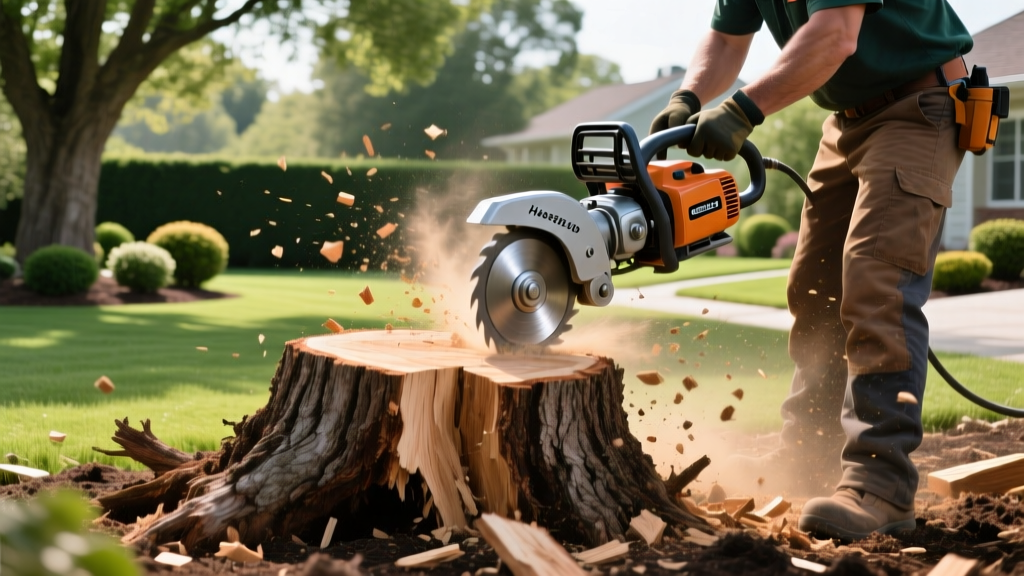
What Actually Kills Tree Stumps Fastest? Pro Guide
The Science of Stump Decay: Why Most DIY Methods Fail
Cutting a tree down only removes the canopy; the root system remains alive and will aggressively push out basal sprouts (suckers) for years. Understanding what effectively kills tree stumps requires targeting the vascular cambium—the thin layer of living tissue just inside the bark that transports nutrients. When evaluating chemical and natural treatments, the primary failure point for homeowners is applying desiccants or herbicides to aged, sealed stumps where the cambium has already calloused over, preventing systemic absorption.
According to forestry extension research, a stump's ability to absorb treatments drops by over 80% within 48 hours of cutting. Therefore, the method you choose must align with the stump's age, species, and your timeline for replanting the area.
Chemical Accelerators vs. Natural Desiccants
The market is saturated with products claiming to dissolve wood overnight. In reality, treatments fall into three distinct categories: systemic herbicides, decay accelerators, and osmotic desiccants. Below is a functional comparison of the active ingredients that actually work.
| Active Ingredient | Product Examples | Mechanism of Action | Time to Full Decay | Replanting Safety |
|---|---|---|---|---|
| Potassium Nitrate (KNO3) | Bonide Stump-Out, Hi-Yield | Feeds wood-decaying fungi | 4 to 8 weeks | Safe after decay |
| Glyphosate / Triclopyr | Ortho Brush-B-Gon, Roundup | Systemic tissue necrosis | 2 to 4 weeks (kill), 1+ year (rot) | Safe after 30 days |
| Imazapyr | Ortho GroundClear | Root system sterilization | 2 to 4 weeks (kill), 1+ year (rot) | Unsafe for 6-12 months |
| Magnesium Sulfate | Epsom Salt (Generic) | Osmotic moisture extraction | 6 to 12 months | Soil salinity risk |
Potassium Nitrate (Decay Accelerators)
Potassium nitrate does not technically "kill" living tissue; instead, it provides a massive nitrogen spike that hyper-accelerates the growth of lignin-decaying fungi. Products like Bonide Stump-Out (typically priced around $12 to $16 for a 16 oz bottle) are highly effective on dead or aging stumps where systemic herbicides will no longer translocate. The wood becomes spongy and can be broken apart with a mattock or burned safely once fully dried.
Systemic Herbicides (Glyphosate & Triclopyr)
If the stump is freshly cut (within 15 to 30 minutes), applying a 41% glyphosate solution or an 8% triclopyr ester directly to the outer cambium ring will kill the root system before it can sprout. The University of Minnesota Extension emphasizes that painting the entire top of the stump is wasteful; the herbicide only needs to be applied to the outer 2 inches of the cut surface where the vascular tissue is active.
The Imazapyr Warning (Soil Sterilization)
CRITICAL WARNING: Many homeowners use Ortho GroundClear because it is labeled as a "total vegetation killer." However, its active ingredient, Imazapyr, is a soil sterilant with a half-life of up to 90 days in soil. If you treat a stump near desirable trees, the herbicide can leach into the soil or travel through natural root grafts, killing your adjacent landscape. Never use Imazapyr if you plan to replant grass or shrubs in that exact spot within the next year.
Step-by-Step Application: The "Drill and Fill" Technique
For stumps that have been sitting for more than a few days, the cambium layer has sealed itself with sap and callus tissue. Surface application will fail. You must bypass the seal using the drill-and-fill method to deliver potassium nitrate or concentrated herbicide directly into the heartwood and lateral roots.
- Select the Right Bit: Use a cordless drill with a 1/2-inch to 1-inch spade bit. A 1-inch bit holds significantly more chemical volume per hole, reducing the number of holes you need to drill.
- Drill Pattern: Drill holes in a concentric circle, keeping them 2 to 3 inches from the outer bark edge. Space the holes 3 inches apart.
- Depth and Angle: Drill to a depth of 8 to 10 inches. Angle the drill slightly outward (about 15 degrees) so the chemical pools at the bottom of the hole rather than spilling out.
- Fill and Seal: Pour your chosen chemical (e.g., potassium nitrate granules) into the holes, leaving 1/4 inch at the top. Fill the remaining gap with water to dissolve the granules, then cap each hole with a dab of exterior silicone caulk or melted wax to prevent rain from washing the treatment out.
- Cover the Stump: Wrap the stump in a black plastic trash bag and tie it at the base. This blocks sunlight (preventing photosynthesis in any surviving tissue), retains moisture for fungal decay, and keeps rain from diluting the chemical.
Cost & Timeline Breakdown: Chemical vs. Mechanical Removal
While chemical treatments are inexpensive, they require patience. If you need to lay sod or install a patio immediately, chemical acceleration is the wrong choice. The Penn State Extension notes that mechanical grinding is the only viable option for immediate site restoration.
| Removal Method | Average Cost (2026) | Time to Completion | Best Use Case |
|---|---|---|---|
| DIY Drill & Fill (KNO3) | $15 - $25 | 6 to 10 weeks | Remote yard corners, budget projects |
| DIY Epsom Salt | $8 - $12 | 6 to 12 months | Small stumps, no immediate replanting |
| Professional Stump Grinding | $150 - $450 per stump | 1 to 2 hours | Immediate landscaping, large oak/pine stumps |
| Excavator Extraction | $300 - $800+ | 2 to 4 hours | Clearing multiple stumps for construction |
When to Skip Chemicals and Grind Instead
Chemical treatments have strict limitations. If the tree was removed due to a highly contagious pathogen like Armillaria (oak root fungus) or Dutch Elm Disease, leaving the stump to slowly rot provides a continuous incubation hub that can spread to neighboring healthy trees. In these disease-management scenarios, immediate mechanical grinding—specifically grinding at least 12 inches below the soil grade and removing the resulting woodchips from the site—is mandatory.
Furthermore, if the stump belongs to a species known for aggressive root sprouting, such as the Tree of Heaven (Ailanthus altissima) or certain poplars, chemical desiccants like Epsom salt will fail. These species will simply push the chemical out of the drill holes via root pressure. For highly invasive species, a targeted application of triclopyr ester to the fresh cut, followed by mechanical grinding three weeks later once the herbicide has translocated to the lateral roots, is the only guaranteed eradication protocol.

