
Tree Care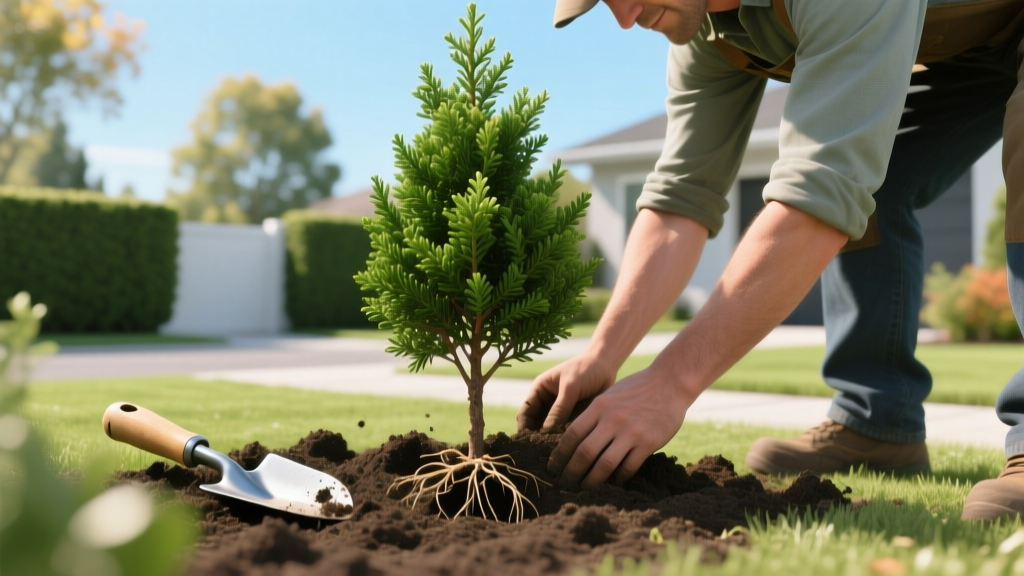
Best Time to Plant Arborvitae: Regional Seasonal Calendars
The Biological Window: Why Timing Dictates Survival
Determining the best time to plant arborvitae (Thuja species) is not a matter of calendar convenience; it is a strict biological calculation. Arborvitae cultivars like 'Green Giant' and 'Emerald Green' rely on specific soil temperature thresholds to initiate root growth before top-growth demands peak hydration. Roots actively expand when soil temperatures sit between 45°F and 85°F. Planting outside this thermal window forces the tree to rely on an underdeveloped root mass, leading to transplant shock, winter desiccation, or summer scorch.
Nursery stock is typically sold in two formats: Balled and Burlapped (B&B) or container-grown. As of 2026, a 5-to-6-foot B&B 'Green Giant' averages $90 to $160 at regional wholesale-to-retail nurseries, while a 3-gallon container 'Emerald Green' ranges from $45 to $85. Protecting this financial investment requires aligning your planting schedule with your specific USDA Hardiness Zone.
Regional Planting Calendars by USDA Hardiness Zone
The optimal planting window shifts dramatically depending on your regional climate. In northern zones, the primary threat is winter freeze damage to unestablished roots. In southern zones, the threat is summer heat stress. The table below outlines the precise seasonal windows for establishing Thuja privacy screens.
| USDA Zone | Primary Planting Window (Fall) | Secondary Window (Spring) | Climatic Edge Cases & Risks |
|---|---|---|---|
| Zones 3-4 | Mid-August to Mid-September | Early May to Early June | Fall planting carries high winter-desiccation risk. Spring is heavily preferred after soil thaws and drains. |
| Zones 5-6 | Early Sept to Mid-October | Mid-April to Late May | Ideal zones for fall planting. Roots establish before ground freeze. Avoid planting after October 15th. |
| Zones 7-8 | October to Late November | Early March to Mid-April | Fall is superior. Spring planting risks immediate heat stress if delayed into May. Ensure deep watering before summer. |
| Zones 9-10 | November to January | Not Recommended | Winter planting allows root growth during mild, wet months. Spring/Summer planting is fatal due to extreme evapotranspiration. |
According to research published by Penn State Extension, fall-planted evergreens in Zones 5 and 6 benefit from warm soil and cool air, which reduces transpiration rates while allowing the root ball to fuse with the native soil. However, in Zones 3 and 4, the ground freezes before the root ball can fully integrate, making spring planting the safer protocol.
Spring vs. Fall: A Strategic Comparison
While both seasons offer viable thermal windows, the physiological response of the arborvitae differs. Use this decision framework to select your planting season based on your site conditions and availability.
Fall Planting (The Gold Standard for Zones 5-8)
- Pros: Cooler air temperatures reduce canopy transpiration. Autumn rains supplement irrigation. Root systems establish deeply before the energy demands of spring foliage emergence.
- Cons: Requires strict adherence to anti-desiccant sprays (like Wilt-Pruf) in late November to prevent winter windburn. Nursery B&B inventory may be picked over by late October.
- Best For: Large-scale privacy screen installations using heavy B&B 'Green Giants' or 'Excelsa' cultivars.
Spring Planting (The Northern Necessity)
- Pros: Avoids the risk of winter root-heave and freeze-damage. Capitalizes on the natural spring growth flush. Maximum nursery inventory availability.
- Cons: Requires rigorous, manual irrigation schedules as summer approaches. Newly planted trees must endure peak UV and heat stress with an immature root system.
- Best For: Homeowners in Zones 3-4, or those planting smaller container-grown 'Emerald Green' or 'Nigra' specimens.
The Summer Planting Danger Zone
Planting arborvitae between June 1 and August 31 in Zones 4 through 8 is strongly discouraged. During this period, evapotranspiration rates exceed the capacity of a severed root ball to uptake moisture. If emergency summer planting is unavoidable, you must deploy temporary 50% shade cloth over the specimens for the first 30 days and commit to daily drip-irrigation. The Arbor Day Foundation explicitly warns that summer-planted evergreens suffer mortality rates exceeding 40% without commercial-grade irrigation infrastructure.
Execution: Planting Depths and Hydration Metrics
Knowing the best time to plant arborvitae is only half the battle; the physical execution dictates long-term viability. Improper planting depth is the number one cause of Thuja decline in residential landscapes.
The Root Flare Rule
Arborvitae are highly susceptible to Phytophthora root rot if the trunk is buried. When extracting the tree from its container or B&B wire basket, you must locate the root flare—the point where the trunk widens and transitions into the structural roots. The root flare must sit 1.5 to 2 inches above the final grade level. If the nursery soil covers the flare, excavate it before planting. The planting hole should be exactly as deep as the root ball, but 2.5 times as wide to allow lateral root expansion into the native soil.
Hydration Math for Newly Planted Thuja
Overhead sprinklers are entirely ineffective for establishing B&B arborvitae. You must apply water directly to the root ball. Follow this volume metric:
- Volume: Apply 5 gallons of water per inch of trunk caliper, per watering session.
- Frequency (First 30 Days): Every 2 to 3 days, regardless of light rain.
- Frequency (Days 30-90): Twice a week, providing 1.5 inches of total weekly water volume.
- Delivery Method: Use a soaker hose coiled directly over the root ball, or a 5-gallon bucket with a 1/8-inch weep hole drilled into the bottom, placed adjacent to the trunk.
Mulching Protocol
Apply a 2-to-3-inch layer of double-shredded hardwood mulch over the root zone to retain soil moisture and moderate soil temperature. Crucially, maintain a 3-inch mulch-free radius around the trunk itself. 'Volcano mulching' against the arborvitae bark invites fungal cankers and rodent girdling during winter months.
Frequently Asked Questions
How late in the fall can I plant a Green Giant arborvitae?
In Zones 5 and 6, the absolute cutoff is mid-to-late October. The soil temperature must remain above 45°F for at least 4 to 6 weeks post-planting to allow the fine feeder roots to penetrate the native soil. If you are planting in November, you risk the root ball freezing solid before integration, leading to fatal winter desiccation.
Should I amend the backfill soil with peat moss or compost?
No. Modern arboriculture standards advise against amending the backfill soil. Creating a 'bathtub effect' with rich, porous amendments encourages roots to circle within the planting hole rather than expanding into the denser native clay or loam. Backfill with the exact native soil you excavated, breaking up large clods to eliminate air pockets.
Do I need to stake newly planted arborvitae?
Only if the specimens are over 8 feet tall and situated in high-wind corridors. If staking is required, use two flexible, wide-strap ties placed at the lower third of the trunk. Remove the stakes after exactly one year; prolonged staking prevents the trunk from developing natural structural taper and wind-resistance.

