Tree Care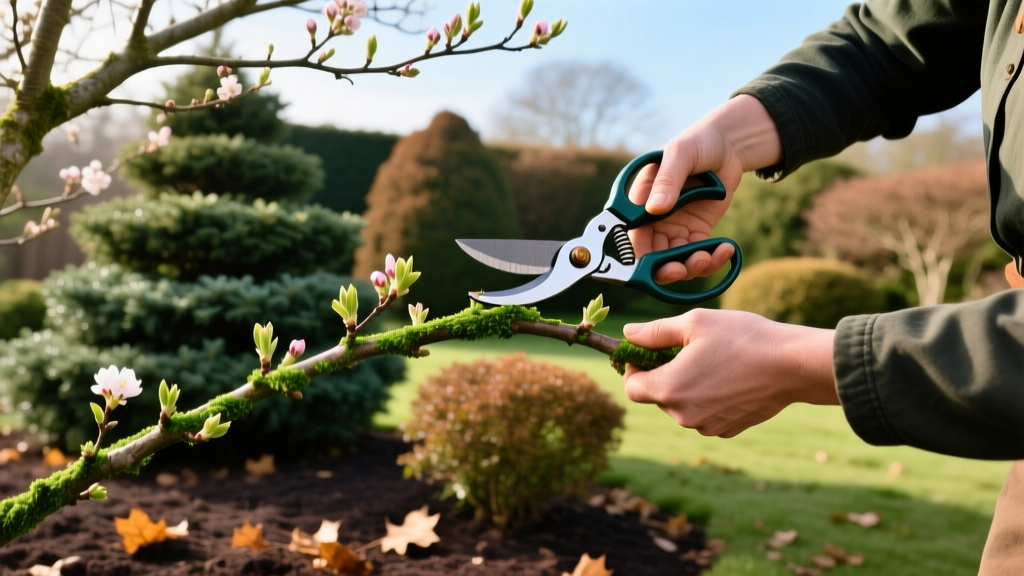
When Is the Best Time for Pruning Bushes and Shrubs? Expert Guide
The Biological Clock: Why Timing Dictates Bloom Success
The most common mistake homeowners make when pruning bushes and shrubs is treating all woody perennials with a single calendar date. Shrubs do not operate on a universal schedule; their pruning windows are strictly dictated by their flowering biology. Cutting a shrub at the wrong time of year will not kill it, but it will completely erase the next season's floral display by removing dormant buds.
To master the timing of pruning bushes and shrubs, you must first categorize your landscape plants into two distinct groups: those that bloom on "old wood" (growth produced the previous summer) and those that bloom on "new wood" (growth produced in the current spring). According to the Morton Arboretum, misidentifying these categories is the primary cause of barren spring landscapes.
Old Wood vs. New Wood Bloomers
Spring-flowering shrubs like lilacs, forsythia, and azaleas set their flower buds in late summer and autumn. If you prune these during winter dormancy, you are physically cutting off the flowers before they even open. Conversely, summer and fall bloomers like panicle hydrangeas and butterfly bushes set buds on fresh spring growth, making late winter the optimal time to cut them back aggressively.
| Shrub Species | Bloom Period | Wood Type | Ideal Pruning Window |
|---|---|---|---|
| Lilac (Syringa) | Mid-Spring | Old Wood | Within 3 weeks post-bloom |
| Panicle Hydrangea | Late Summer | New Wood | Late winter (Feb-March) |
| Azalea / Rhododendron | Spring | Old Wood | Immediately after flowering |
| Butterfly Bush | Summer/Fall | New Wood | Early spring before bud break |
| Forsythia | Early Spring | Old Wood | Within 2 weeks post-bloom |
Precision Gear: 2026 Tool Recommendations for Clean Cuts
Ragged cuts tear the cambium layer, inviting fungal pathogens and delaying the formation of protective callus tissue. Upgrading from hardware store shears to professional-grade bypass pruners is a non-negotiable step for serious plant health.
- Hand Pruners (Up to 3/4-inch branches): The Felco F-2 Classic ($62) remains the industry standard due to its replaceable hardened steel blade and sap groove. For a lighter alternative with superior cutting leverage, the ARS HP-VS8Z ($75) offers a rotating handle that reduces wrist fatigue during long sessions.
- Loppers (Up to 2-inch branches): The Corona SL 4264 ComfortGEL Bypass Lopper ($45) features fiberglass handles that absorb shock when cutting dense, woody stems like overgrown privet.
- Hedge Trimmers (For formal shaping): If you maintain extensive boxwood or yew hedges, the EGO Power+ 24-Inch Hedge Trimmer (HT2400) ($249) provides gas-like cutting speed without the exhaust or carburetor maintenance, running up to 75 minutes on a 5.0Ah ARC Lithium battery.
Pro Tip: Always use bypass blades (scissor action) for live wood. Anvil pruners (one sharp blade crushing against a flat plate) are strictly for removing dead, brittle wood. Using anvil pruners on live stems crushes the vascular tissue, leading to dieback.
The Three-Cut Method for Thick, Woody Shrubs
When removing thick structural branches from large, multi-stemmed shrubs like viburnum or oakleaf hydrangea, a single cut often causes the heavy branch to tear downward, stripping the bark down the main trunk. The Iowa State University Extension mandates a specific three-cut sequence to prevent this catastrophic bark tearing.
- The Undercut: Measure 6 to 12 inches away from the main trunk or branch collar. Cut upward from the bottom of the branch, going about one-third of the way through the wood. This severs the bark and prevents tearing.
- The Relief Cut: Move one inch further out from the undercut. Cut downward from the top until the branch snaps off cleanly. This removes the bulk of the weight.
- The Final Collar Cut: Locate the branch collar (the swollen, wrinkled area where the branch meets the trunk). Make your final cut just outside this collar at a slight angle. Never cut flush against the trunk; doing so removes the tree's natural chemical defense zone and guarantees decay.
Rejuvenation Pruning: The Hard Reset for Neglected Hedges
When shrubs become leggy, overgrown, and sparse at the base, routine tip-pruning will not fix the problem. Rejuvenation pruning involves cutting the entire plant down to 6 to 12 inches above the soil line to force latent buds to push out vigorous new growth.
Critical Warning: Rejuvenation pruning only works on multi-stemmed deciduous shrubs with active latent buds on old wood (e.g., Lilac, Forsythia, Spirea, Privet). Never perform a hard reset on conifers, junipers, arborvitae, or yews. These species lack latent buds in their "dead zones" (the brown, inner wood) and will die permanently if cut back past the green foliage.
For eligible shrubs, perform this hard reset in late winter just before the spring growth flush. Expect the plant to look like a cluster of bare sticks for about six weeks. By mid-summer, it will push 3 to 5 feet of fresh, dense foliage. Note that spring-blooming shrubs subjected to rejuvenation pruning will sacrifice their flowers for one full season while they rebuild their vegetative structure.
Sanitation: Halting Disease Transmission Between Cuts
Pruning tools are highly efficient vectors for spreading bacterial and fungal diseases, particularly Fire Blight (Erwinia amylovora) and Cytospora canker. If you are pruning a diseased shrub, sterilizing your tools is mandatory.
According to research published by the University of Maryland Extension, a 10-second dip in 70% isopropyl alcohol is highly effective and safe for tool metallurgy. While a 1:9 bleach-to-water solution is also effective, sodium hypochlorite rapidly pits and corrodes carbon steel blades, ruining expensive pruners over a single season. For a commercial alternative, quaternary ammonium compounds (found in original Lysol disinfectant sprays) offer excellent pathogen kill rates without the corrosive damage of bleach.
"When managing Fire Blight in susceptible species like cotoneaster or pear, prune at least 8 to 12 inches below the visible margin of infection, and sterilize your saw between every single cut. It is tedious, but it is the only way to save the plant."
Frequently Asked Questions
Should I paint large pruning cuts with wound sealer?
No. Modern arboriculture has completely abandoned the use of black asphalt wound paints or sealants. These products trap moisture and fungal spores against the exposed wood, accelerating internal decay. A healthy shrub will naturally compartmentalize the wound and grow callus tissue over the cut within a single growing season.
How much of a shrub can I safely remove in one year?
The universal rule of thumb for routine maintenance pruning is the "one-third rule." Never remove more than one-third of a shrub's total live canopy in a single growing season. Exceeding this threshold starves the root system of carbohydrates, triggering a panic response that produces weak, vertical "water sprouts" instead of healthy lateral branching.