
Tree Care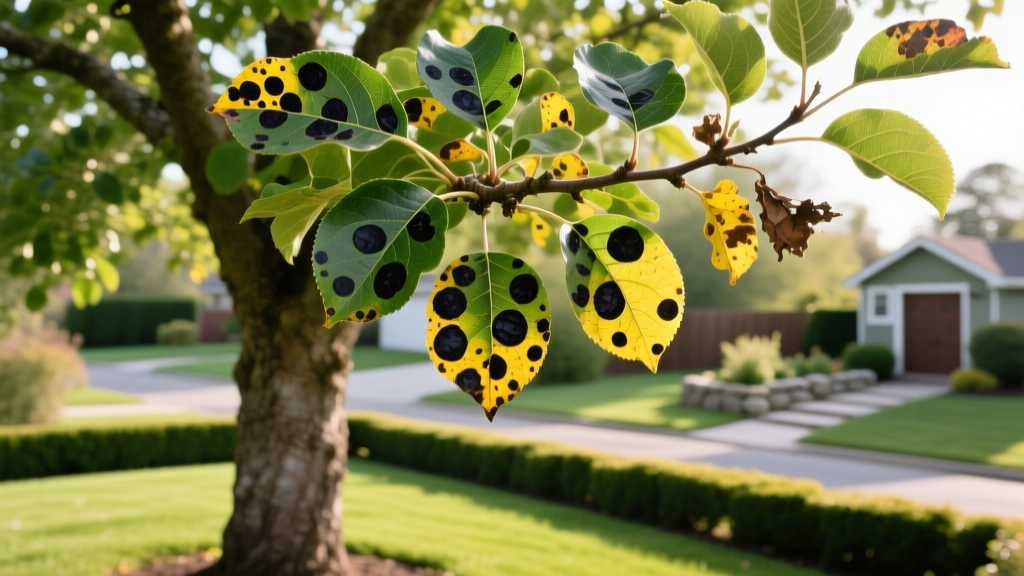
Black Spot Apple Tree Diagnosis: Symptoms & Rescue Fixes
The Diagnostic Matrix: Is it Scab, Rot, or Blotch?
When homeowners report a 'black spot apple tree' issue, they are usually observing one of three distinct fungal pathogens. Misidentifying the disease leads to ineffective treatments and wasted money on the wrong fungicides. Apple Scab (Venturia inaequalis) accounts for roughly 85% of black spot complaints, but Black Rot and Sooty Blotch require entirely different management strategies.
| Disease Pathogen | Leaf Symptoms | Fruit Symptoms | Texture & Depth | Primary Environmental Trigger |
|---|---|---|---|---|
| Apple Scab (V. inaequalis) | Velvety olive-green spots turning dark black/brown; causes yellowing and premature leaf drop. | Corky, sunken black lesions with a silvery sheen; fruit often cracks and deforms. | Velvety to the touch; lesions penetrate the leaf cuticle. | Cool, wet springs (60°F with 9+ hours of continuous leaf wetness). |
| Black Rot (B. obtusa) | Frog-eye leaf spot: large circular spots with dark brown margins and tan centers. | Firm, brown rot expanding in concentric rings; eventually turns black and mummifies. | Leathery and firm on fruit; does not easily rub off. | Warm, humid weather (75°F–85°F); often enters through insect wounds. |
| Sooty Blotch (Complex of fungi) | Rarely affects leaves directly; primarily a fruit surface issue. | Superficial, smudgy black or dark green patches resembling soot or flyspeck. | Strictly superficial; can be rubbed off with a thumb or washed off. | Prolonged high humidity in late summer; poor canopy airflow. |
Deep Dive: Apple Scab Infection Mechanics
Apple scab is the most destructive and common cause of black spots on apple trees. The fungus overwinters in infected leaf litter on the orchard floor. In early spring, as temperatures rise above 55°F and rain events occur, the fungus releases ascospores into the air. According to the University of Minnesota Extension, these spores land on emerging apple tissue and require a specific duration of continuous moisture to germinate and infect the plant.
The infection timeline is highly temperature-dependent. At 50°F, leaves must remain wet for 12 hours for infection to occur. At the optimal 60°F to 75°F range, infection can establish in just 6 to 9 hours of wetness. Once the fungus penetrates the leaf tissue, the incubation period lasts 8 to 14 days before the characteristic velvety black spots appear and begin producing secondary conidia spores, which spread locally via wind and rain splash throughout the summer.
Rescue Fixes: Immediate Action Plan for Infected Trees
If your tree is actively displaying black spots during the growing season, you cannot cure the already-infected leaves. The goal of a rescue treatment is to halt the spread of secondary spores and protect new, uninfected growth and developing fruit. Follow this exact protocol:
Sanitation Warning: Never compost scab-infected leaves or mummified fruit. Home compost piles rarely reach the 140°F required to kill Venturia inaequalis spores. Bag infected debris and send it to municipal green waste, or burn it where local ordinances permit.
- Triage and Canopy Thinning: If the tree is heavily shaded, perform immediate summer pruning. Remove water sprouts (vertical shoots) and crossing branches. Your target is 30% canopy openness—meaning you should be able to see dappled sunlight hitting the ground beneath the tree. This reduces the leaf-wetness duration that scab requires to infect.
- Apply a Contact Fungicide (Synthetic Route): For rapid knockdown of active sporulation, use a Captan-based fungicide (e.g., Bonide Captan 50 WP). Mix at a rate of 1.5 tablespoons per gallon of water. A mature 15-foot tree requires approximately 2.5 to 3 gallons of mixed solution to achieve full coverage. Apply until the leaves are dripping.
- Apply a Systemic Fungicide (Alternative Route): If rain is in the forecast within 24 hours, use Myclobutanil (e.g., Spectracide Immunox). Mix at 1.5 fluid ounces per gallon. Myclobutanil is locally systemic, meaning it penetrates the leaf cuticle and provides up to 10 days of protection even if washed by light rain.
- Maintain a 7-to-10-Day Spray Interval: During active spring and early summer growth, reapply your chosen fungicide every 7 to 10 days, or immediately after a heavy rain event that washes the chemical residue off the foliage.
Organic vs. Synthetic Fungicide Efficacy
Choosing the right chemical control depends on your tolerance for cosmetic damage and your application frequency. Organic options require significantly more labor and carry specific environmental caveats.
- Sulfur (Organic): Effective against scab but requires application every 3 to 5 days. Crucial Caveat: Sulfur causes severe phytotoxicity (leaf burn) if applied when temperatures exceed 85°F or if applied within 14 days of an oil-based spray like Neem.
- Bordeaux Mixture (Organic Copper): Excellent for dormant season application (late fall after leaf drop and early spring before bud swell). Costs roughly $18 per pound of powder. Do not apply to green tissue during the growing season, as copper will burn apple leaves and cause russeting on the fruit skin.
- Captan (Synthetic): The industry standard for home orchards. Costs around $22 for a 1lb container. Provides 7 to 10 days of protectant coverage. Do not mix with oil-based products or highly alkaline substances.
- Myclobutanil (Synthetic Systemic): Best for erratic weather where rain threatens to wash off contact sprays. Costs about $15 per 10oz bottle. Limit to 2-3 applications per season to prevent the fungus from developing chemical resistance.
Long-Term Prevention: Dormant Protocols
Rescue fixes manage active outbreaks, but long-term control happens during the dormant season. The most effective way to reduce the primary inoculum (the spores that start the spring infection cycle) is to accelerate the decomposition of fallen leaves.
In late autumn, after all leaves have dropped, rake the entire area beneath the tree's drip line. Alternatively, mulch the leaves directly into the soil using a lawn mower. To further accelerate breakdown, spray the leaf litter with a 5% urea solution (0.5 lbs of agricultural urea per gallon of water) just before leaf drop in autumn. According to research cited by Penn State Extension, urea increases the microbial activity that consumes the fungal structures, reducing the spring spore load by up to 70%.
Frequently Asked Questions
Can I eat apples that have black spots on them?
If the spots are superficial and rub off (Sooty Blotch), the fruit is perfectly safe and tastes normal. If the fruit has Apple Scab, the lesions are corky and bitter; you can peel the apple and eat the unaffected flesh. However, if the fruit exhibits Black Rot (firm, brown, expanding concentric rings), the internal flesh is compromised and should be discarded, as it may harbor secondary mycotoxin-producing molds.
Will black spot kill my apple tree?
Apple scab will rarely kill a mature, established tree directly. However, severe, unmanaged defoliation (losing 70%+ of leaves by mid-summer) forces the tree to push a second flush of growth in late autumn. This depletes the tree's carbohydrate reserves, making it highly susceptible to winter freeze damage and secondary borers. University of Wisconsin Extension notes that consecutive years of severe defoliation will eventually lead to tree decline and death.
Are there apple tree varieties immune to black spot?
No apple is 100% immune, but many are highly resistant to Apple Scab. If you are planting a new tree in an area with a history of scab, select resistant cultivars such as 'Liberty', 'Enterprise', 'Freedom', or 'Williams Pride'. Avoid highly susceptible heirlooms like 'McIntosh', 'Cortland', and 'Jonathan' unless you are committed to a rigorous 12-spray annual fungicide schedule.

