
Tree Care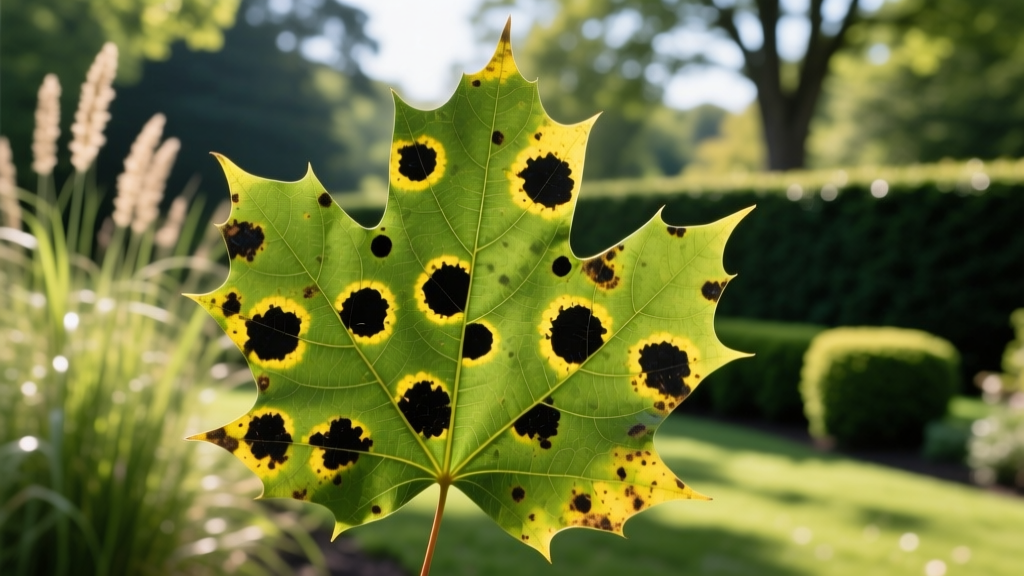
Fixing Black Spots on Maple Leaf: Tar Spot Diagnosis and Rescue
The Anatomy of Black Spots on Maple Leaf Surfaces
When you notice black spots on maple leaf surfaces in late summer, you are almost certainly looking at the fruiting bodies, known as stromata, of a fungal pathogen. The most frequent culprit is Rhytisma acerinum, which causes the large, raised, blister-like black spots commonly called Maple Tar Spot. A closely related species, Rhytisma punctatum, causes smaller, pinpoint black spots primarily on silver and red maples. While the aesthetic damage is alarming, understanding the pathogen's lifecycle is the first step in an effective rescue protocol.
Tar spot is rarely fatal to mature, established trees. However, severe infections can cause premature defoliation in late August or September. For young maples (under 5 years old) or trees already stressed by drought, soil compaction, or root damage, this early leaf drop severely reduces the tree's ability to photosynthesize and store carbohydrates for the winter, leading to a compounding cycle of decline.
Diagnostic Matrix: Tar Spot vs. Anthracnose vs. Sooty Mold
Homeowners frequently misdiagnose foliar issues, leading to wasted money on the wrong chemical treatments. Use this diagnostic matrix to confirm your specific issue before purchasing any fungicides.
| Pathogen / Issue | Visual Signature | Primary Maple Hosts | Texture & Location |
|---|---|---|---|
| Tar Spot (Rhytisma) | Glossy, raised black blisters (up to 1 inch wide) | Norway, Silver, Red Maples | Raised, crusty; upper leaf surface only |
| Anthracnose (Discula) | Irregular brown/black blotches, often along veins | Sugar, Silver, Norway Maples | Flat, papery; causes leaf curling and distortion |
| Sooty Mold (Capnodium) | Powdery, matte black coating | All species (secondary to aphids) | Powdery, wipes off easily; upper surface |
| Phyllosticta Leaf Spot | Small brown spots with dark borders and gray centers | Sugar, Norway Maples | Flat, often falls out leaving a shot-hole |
The Fungicide Timing Trap (Why August Sprays Fail)
The most common mistake homeowners make when treating black spots on maple leaf tissue is applying fungicides in mid-to-late summer when the spots are most visible. This is biologically useless. By the time a spot turns black and raised, the fungus has already fully colonized the leaf tissue and is producing spores for next year. No contact or systemic fungicide will erase existing black spots.
Critical Timing Rule: Fungicides for tar spot are strictly preventative. They must be applied in the spring when the buds are breaking and the new leaves are expanding. The goal is to coat the vulnerable young tissue before the wind-blown Rhytisma spores from last year's fallen leaves can land and penetrate the leaf cuticle.
According to the University of Minnesota Extension, the optimal window for chemical intervention is when leaves are half-expanded, typically requiring a second application 10 to 14 days later if spring weather remains cool and wet.
Step-by-Step Rescue and Management Protocol
If your maple suffered heavy defoliation from tar spot this year, implement this integrated rescue protocol to protect next season's canopy.
Step 1: Aggressive Sanitation and Inoculum Reduction
The fungus overwinters exclusively in fallen leaf litter. Raking and removing all maple leaves from the yard in autumn is the single most effective cultural control. Do not compost these leaves in a standard backyard pile. The Rhytisma fungus requires sustained temperatures of at least 140°F to be destroyed. Unless you are managing a hot compost system with a long-probe thermometer, bag the leaves for municipal yard waste disposal.
Step 2: Canopy Airflow Pruning
Tar spot thrives in humid, stagnant microclimates. Prune your maple during late winter dormancy to open the canopy. Your target metric is 20% light penetration—meaning roughly 20% of the ground beneath the tree should receive dappled sunlight when the tree is fully leafed out. Remove deadwood, crossing branches, and water sprouts. Always sterilize your pruning shears and saws between cuts using 70% isopropyl alcohol to prevent spreading secondary bacterial infections into fresh wounds.
Step 3: Targeted Chemical Control (Spring Only)
Chemical treatment is only recommended for young trees, high-value landscape specimens, or trees that have suffered consecutive years of severe defoliation. For mature maples over 25 feet tall, DIY spraying is impractical due to canopy height; hire an ISA-certified arborist (expect to pay $150 to $300 per treatment for hydraulic trunk injection or high-pressure canopy spraying).
For DIY application on smaller trees, use one of the following proven active ingredients:
- Chlorothalonil (e.g., Daconil Landscape Fungicide or Bonide Fung-onil): A broad-spectrum protectant. Cost is approximately $20 to $25 for a 16 oz concentrate. Mix at a rate of 1 tablespoon per gallon of water. Apply until runoff.
- Copper Fungicides (e.g., Bonide Liquid Copper Fungicide): An organic-compliant alternative. Cost is around $15 for a 16 oz bottle. Mix at 2 tablespoons per gallon. Note that copper can cause phytotoxicity (leaf burn) on some maple cultivars if applied during hot, humid weather.
Safety Note: When mixing and applying chlorothalonil, always wear nitrile gloves, long sleeves, and an N95 respirator to avoid inhaling aerosolized droplets.
Long-Term Root Zone and Soil Management
A tree's immune response to fungal pathogens is directly tied to its root health. Maples with compromised root systems cannot produce the chemical defenses needed to wall off fungal infections. The Morton Arboretum emphasizes that maintaining proper soil moisture and eliminating trunk competition are vital for disease resilience.
Apply a 2-to-3-inch layer of organic hardwood mulch over the root zone, extending out to the dripline if possible. Crucially, keep the mulch at least 4 inches away from the trunk flare to prevent bark rot and rodent damage. During summer droughts, provide 1 inch of water per week via a slow-drip soaker hose placed over the root zone, rather than frequent, shallow sprinkling which encourages surface rooting and fungal humidity.
Trees under environmental stress, particularly those suffering from drought or poor drainage, are far more susceptible to the secondary impacts of tar spot, such as premature leaf drop and subsequent winter dieback. Managing the soil environment is just as critical as managing the canopy.
Frequently Asked Questions
Will black spots on maple leaf surfaces spread to my other plants?
No. The Rhytisma fungi that cause maple tar spot are highly host-specific. They will not infect your roses, vegetables, turfgrass, or non-maple trees. However, different maple species in the same yard can cross-infect each other.
Is it safe to use tar spot-infected leaves as mulch in my garden beds?
It is not recommended. Unless the leaves are deeply buried or shredded and composted at high heat (140°F+), the fungal stromata will survive the winter and release spores the following spring, reinfecting your maples. Always dispose of heavily infected leaves off-site.
My maple dropped all its leaves in August due to tar spot. Is it dead?
Almost certainly not. Tar spot causes premature defoliation, but the buds for next year's leaves are already formed and dormant by mid-summer. The tree will simply push out new foliage next spring. However, you must implement the sanitation and spring fungicide protocols outlined above to prevent a repeat infection that could further weaken the tree.
For further reading on regional maple disease management and specific cultivar resistance, consult your local cooperative extension office or review the comprehensive disease databases maintained by the Penn State Extension.

