
Tree Care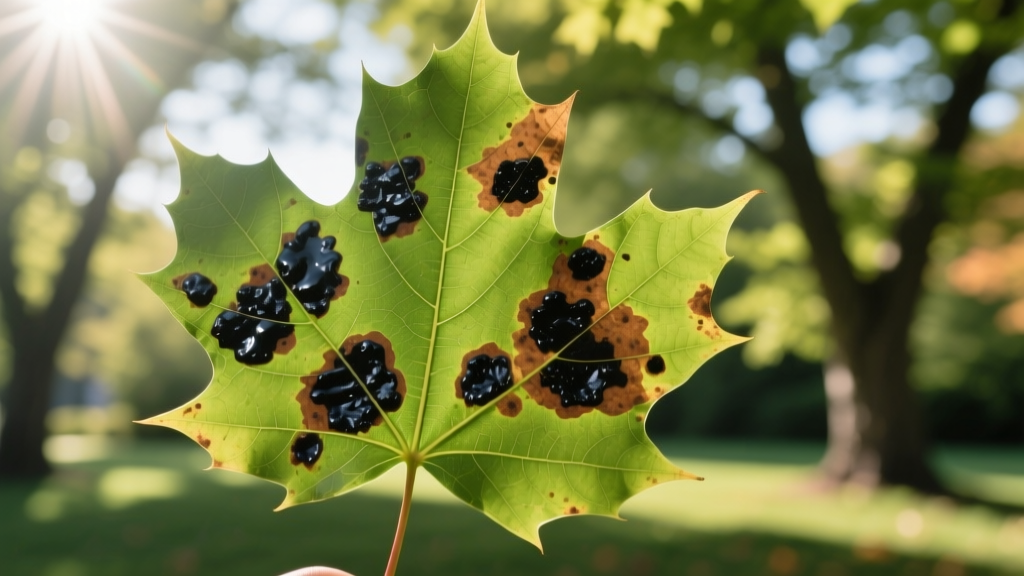
Black Spots on Maple Leaves: Tar Spot Diagnosis & Rescue
The Diagnostic Matrix: Identifying the Culprit
When homeowners notice black spots on maple leaves, the immediate assumption is often a lethal disease or severe pest infestation. In reality, the vast majority of these blemishes are cosmetic fungal infections. However, accurate identification is the prerequisite for any effective rescue protocol. Misdiagnosing the pathogen leads to wasted money on ineffective fungicides and unnecessary stress on the tree.
Before purchasing treatments, cross-reference your tree's symptoms against this diagnostic matrix to isolate the exact pathogen.
| Disease | Visual Characteristics | Primary Leaf Location | Threat Level |
|---|---|---|---|
| Tar Spot (Rhytisma acerinum) | Distinct, raised, shiny black pustules (1/8 to 3/4 inch). Starts as pale yellow in early summer, turns black by late summer. | Scattered randomly across the entire leaf surface. | Low (Cosmetic) |
| Anthracnose (Discula spp.) | Irregular, brown-to-black necrotic blotches, often following leaf veins. Leaves may curl, wither, and drop prematurely. | Concentrated along leaf margins and major veins. | Moderate (Defoliation risk) |
| Maple Blight (Didymella / Phyllosticta) | Small, dark brown/black spots with a defined purple or reddish border. Centers may eventually drop out, creating a 'shot-hole' effect. | Older, lower-canopy leaves in shaded, humid areas. | Low to Moderate |
Deep Dive: The Tar Spot Lifecycle
If your diagnosis points to Tar Spot, you are dealing with the Rhytisma fungus. According to The Morton Arboretum, this pathogen is highly host-specific, primarily targeting Norway, Silver, and Red maples. The black spots you see in August are not the initial infection; they are the stroma—the hardened, protective fungal fruiting bodies that develop over months.
The actual infection occurs in early spring. Ascospores are released from overwintered leaf litter on the ground precisely when maple buds are breaking. These spores are carried by wind onto newly emerging, highly susceptible tender foliage. Once the spore lands, it penetrates the leaf cuticle, remaining dormant and asymptomatic for weeks before manifesting as yellow freckles, eventually maturing into the signature raised black tar spots by late summer.
Warning: The Composting Trap
Do not compost tar-spot-infected maple leaves in a standard backyard bin. Home compost piles rarely sustain the 140°F (60°C) core temperature required to destroy Rhytisma stromata. Spores will survive the winter and reinfect your tree the following spring. Bag the leaves for municipal yard waste pickup, where industrial composters reach 160°F+.
Do not compost tar-spot-infected maple leaves in a standard backyard bin. Home compost piles rarely sustain the 140°F (60°C) core temperature required to destroy Rhytisma stromata. Spores will survive the winter and reinfect your tree the following spring. Bag the leaves for municipal yard waste pickup, where industrial composters reach 160°F+.
Rescue Protocol: Actionable Treatment Steps
Because the infection window is narrow and occurs early in the season, treating black spots on maple leaves requires precise timing rather than reactive spraying in mid-summer when the spots are already visible.
Phase 1: Fall and Winter Sanitation
Sanitation is the single most effective cultural control for Tar Spot. Since the fungus overwinters exclusively in fallen leaf debris, removing the inoculum source breaks the lifecycle.
- Timing: Complete leaf removal within 14 days of the first hard frost.
- Execution: Rake all leaves beneath the canopy drip line. For large properties, use a commercial-grade lawn vacuum (e.g., DR Leaf and Lawn Vacuum, approx. $1,200) rather than standard raking to ensure micro-debris is captured.
- Cost Factor: If hiring a professional landscaping crew for fall cleanup and off-site disposal, expect to pay $250 to $450 for a standard 1/4-acre lot with mature maples.
Phase 2: Spring Fungicide Application
If your maple has a history of severe defoliation from Tar Spot or Anthracnose, or if the tree is already stressed by drought, a preventative fungicide program is warranted. UMass Amherst Extension emphasizes that fungicides will not cure existing black spots; they only protect new growth.
- Identify Bud Break: Monitor your maples in early spring. A reliable phenological indicator for spore release is when local Forsythia bushes drop their yellow petals.
- Select the Active Ingredient:
- Chlorothalonil (e.g., Bonide Fung-onil Multi-Purpose Fungicide, 29.6% concentration, ~$18 for 16 oz). Mix rate: 1.5 tablespoons per gallon of water.
- Copper-based (e.g., Southern Ag Liquid Copper Fungicide, ~$14 for 32 oz). Mix rate: 2 tablespoons per gallon. Note: Copper can cause phytotoxicity (leaf burn) on some maple cultivars in high heat; apply only in cool spring weather.
- Application Schedule: Apply the first coat at 10% bud break. Repeat at 14-day intervals until the leaves are fully expanded and hardened off (usually 2 to 3 total applications).
- Equipment Limits: Standard hose-end sprayers max out at 25 feet of vertical reach. If your maple exceeds 30 feet, DIY spraying will miss the upper canopy. Hire an ISA-certified arborist for hydraulic trunk injections or high-pressure canopy sprays (typical cost: $150-$300 per treatment).
Cultural Prevention and Canopy Management
Fungi thrive in stagnant, humid microclimates. Modifying the physical environment around your maple reduces leaf wetness duration, which is critical since Rhytisma spores require continuous moisture to germinate and penetrate the leaf cuticle.
Strategic Pruning for Airflow
During the dormant season (late November through February), perform structural pruning to open the canopy. Remove crossing branches, water sprouts, and any limbs with crotch angles tighter than 45 degrees. Aim to allow sunlight to penetrate the inner canopy, which accelerates morning dew evaporation.
Root Zone Optimization
A stressed tree is highly susceptible to secondary infections like Anthracnose, which causes much more severe black blotching and premature leaf drop than Tar Spot.
- Mulching: Apply a 3-inch layer of arborist wood chips in a 4-foot radius around the trunk. Crucial: Keep the mulch 3 inches away from the actual trunk bark to prevent basal rot and rodent girdling.
- Hydration: During summer droughts, provide 10 gallons of deep-root watering per inch of trunk diameter (measured at 4.5 feet above ground) every 10 days. Use a soaker hose placed at the drip line, not at the trunk base.
'While tar spot is unsightly, it rarely causes long-term health decline in established maples. Homeowners should reserve aggressive chemical interventions for young, newly transplanted trees or specimens already suffering from compaction and drought stress.' — Penn State Extension
Troubleshooting FAQ
Will black spots kill my maple tree?
No. If the spots are raised, shiny, and distinct (Tar Spot), the disease is strictly cosmetic. The tree will continue to photosynthesize adequately through the unblemished leaf tissue. However, if the black spots are accompanied by rapid leaf curling, branch dieback, and early defoliation in June or July, you may be dealing with Anthracnose or Verticillium Wilt, which require immediate soil testing and professional arborist intervention.
Can I use neem oil to treat tar spot?
Neem oil is largely ineffective against Rhytisma stromata once they have formed. Neem acts primarily as a contact fungicide and insecticide. Because Tar Spot spores penetrate the leaf tissue internally during the brief spring window, topical horticultural oils applied in summer will not reach the pathogen. Stick to synthetic protectants like Chlorothalonil or Copper for spring prevention.
Quick-Reference Summary Card
- Primary Suspect: Tar Spot (Rhytisma acerinum)
- Threat Level: Low (Cosmetic only)
- Best Defense: 100% fall leaf litter removal
- Chemical Control: Chlorothalonil applied at spring bud break
- When to Call a Pro: Trees over 30 feet tall or showing signs of branch dieback

