
Tree Care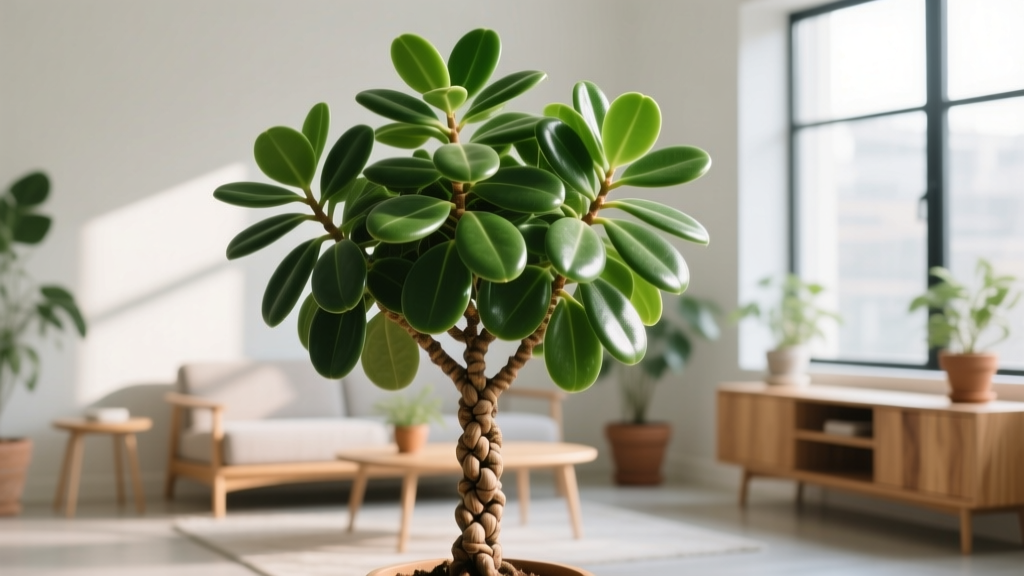
How to Water, Prune, and Braid Money Tree Plants Indoors
The Anatomy of a Thriving Pachira Aquatica
Money tree plants (Pachira aquatica) are native to the wetlands of Central and South America, where they grow as massive, 60-foot canopy trees. Indoors, they are prized for their braided trunks and palmate leaves. However, the transition from a tropical swamp to a climate-controlled living room creates specific physiological stressors. To keep these plants thriving, you must replicate their native hydrology and light conditions while managing their aggressive apical growth.
Quick Reference Care Matrix
| Parameter | Target Specification |
|---|---|
| Light Intensity | 1,500 – 3,000 lux (bright, indirect) |
| Soil pH | 6.0 – 7.5 (slightly acidic to neutral) |
| Humidity | 40% – 60% ambient RH |
| Temperature | 65°F – 80°F (avoid drafts below 55°F) |
Precision Watering: Avoiding the #1 Killer (Root Rot)
Overwatering is responsible for nearly 80% of indoor money tree fatalities. Pachira aquatica develops a thick, water-retentive caudex (trunk base) that is highly susceptible to hypoxia and Pythium root rot if left in saturated soil. According to the University of Minnesota Extension, the 'soak and dry' method is critical for tropical houseplants to allow root respiration.
The 4-Inch Moisture Rule
Never water on a fixed calendar schedule. Instead, insert a digital soil moisture meter or a wooden chopstick exactly 4 inches into the soil profile.
- If using a meter: Water only when the reading drops to 3 or below (on a 1-10 scale).
- If using a chopstick: Water only when the wood comes out completely dry and free of dark soil particles.
When watering, apply room-temperature filtered water until 10% of the total volume drains from the bottom holes. Crucial step: Empty the drainage saucer within 15 minutes. Allowing the pot to sit in standing water reverses the oxygen gradient in the soil, suffocating the lower root mass within 48 hours.
Step-by-Step Guide to Braiding Young Money Tree Plants
The iconic braided trunk is not a natural growth habit; it is a horticultural technique performed on young, pliable seedlings. If you purchase a multi-trunked plant, you will eventually need to re-braid or prune new growth to maintain the aesthetic.
- Identify the Window of Pliability: Trunks must be semi-hardwood—green, flexible, and roughly 1/4-inch to 1/2-inch in diameter. If the bark has turned brown and rigid, it cannot be braided without snapping the vascular cambium.
- Prepare the Bindings: Cut three 6-inch lengths of soft botanical twine or stretchy grafting tape. Avoid wire or zip-ties, which will girdle the expanding trunks and cut off phloem transport.
- Weave the Pattern: Gently cross the outer right trunk over the center trunk, then the outer left over the new center. Keep the tension firm enough to hold the shape, but loose enough to slide a pinky finger between the bark and the twine.
- Secure and Monitor: Tie off the top of the braid just below the leaf nodes. Check the bindings every 45 days; as the trunks undergo secondary thickening, you must snip and replace the twine to prevent girdling.
Pruning for Canopy Density and Structural Balance
Money trees exhibit strong apical dominance, meaning they want to grow straight up with sparse lateral branching. To force a lush, umbrella-like canopy, you must disrupt the auxin hormone flow through strategic pruning.
Pro Tip: The Node-Cut Method
Always make your pruning cuts at a 45-degree angle exactly 1/4 inch above a leaf node (the small bump on the stem where a leaf attaches). Cutting too far above the node leaves a dead stub that invites fungal pathogens; cutting into the node damages the dormant lateral bud.
Always make your pruning cuts at a 45-degree angle exactly 1/4 inch above a leaf node (the small bump on the stem where a leaf attaches). Cutting too far above the node leaves a dead stub that invites fungal pathogens; cutting into the node damages the dormant lateral bud.
Use sterilized bypass pruners (wiped with 70% isopropyl alcohol) to snip the primary leader if the plant is getting too tall. This forces the plant to push energy into the lateral buds just below the cut, resulting in two or three new branches. Perform major structural pruning in early spring (March or April) when the plant is entering its active growth phase and can quickly compartmentalize the wounds.
Troubleshooting: Leaf Drop, Yellowing, and Pests
Diagnosing a declining money tree requires looking at the specific pattern of the symptoms. Use this decision framework to identify the exact failure mode:
Symptom: Lower Leaves Turning Yellow and Dropping
Cause: Chronic overwatering or poor drainage leading to early-stage root rot.
Fix: Immediately halt watering. If the soil smells sour or anaerobic, you must unpot the plant, trim away any black/mushy roots with sterile scissors, and repot into a fresh, dry, well-draining mix.
Symptom: Crispy Brown Leaf Tips and Edges
Cause: Low ambient humidity (below 30%) or salt buildup from synthetic fertilizers.
Fix: Flush the soil by pouring 2 gallons of distilled water through the pot to leach out accumulated salts. Relocate the plant away from HVAC vents and use a room humidifier to maintain 45%+ RH.
Symptom: Fine Webbing and Stippled (Speckled) Leaves
Cause: Spider mites (Tetranychidae), which thrive in dry indoor air.
Fix: Isolate the plant immediately. Apply a 2% cold-pressed neem oil emulsion (1.5 tablespoons neem oil + 1 teaspoon mild liquid castile soap per gallon of water). Spray the undersides of all leaves thoroughly. According to the Environmental Protection Agency (EPA), neem oil acts as an effective botanical insecticide and growth regulator. Repeat every 5 days for three cycles to break the reproductive cycle.
Soil and Fertilizer Formulations
Standard commercial 'potting soil' retains too much moisture for Pachira aquatica. You must engineer a custom, high-porosity substrate to ensure rapid drainage and oxygen availability to the roots.
The Ideal Custom Soil Mix
- 50% High-Quality Peat or Coco Coir: Provides baseline moisture retention and cation exchange capacity.
- 30% Coarse Perlite (Size #3 or #4): Creates macro-pores for rapid water drainage and root aeration.
- 20% Orchid Bark or Pumice: Prevents soil compaction over time and adds structural stability for the heavy braided trunk.
Fertilization Strategy
Money trees are light feeders. Over-fertilizing causes rapid, weak, leggy growth and fertilizer burn. During the active growing season (April through August), apply a balanced 20-20-20 water-soluble fertilizer (such as Jack's Classic) diluted to one-quarter of the manufacturer's recommended strength. Apply this diluted solution once every 30 days in place of a regular watering. Cease all fertilization from September through March to allow the plant to enter its natural winter dormancy.
Pet Safety Warning
While money tree plants are highly popular, it is vital to verify their safety in homes with curious pets. Fortunately, the ASPCA Animal Poison Control lists Pachira aquatica as non-toxic to both cats and dogs. However, ingestion of large quantities of fibrous leaves can still cause mild gastrointestinal upset or pose a choking hazard, so it is best to keep the canopy out of reach of aggressive chewers.
While money tree plants are highly popular, it is vital to verify their safety in homes with curious pets. Fortunately, the ASPCA Animal Poison Control lists Pachira aquatica as non-toxic to both cats and dogs. However, ingestion of large quantities of fibrous leaves can still cause mild gastrointestinal upset or pose a choking hazard, so it is best to keep the canopy out of reach of aggressive chewers.
By adhering to strict moisture monitoring, executing precise pruning cuts, and utilizing a high-porosity soil matrix, your braided money tree will transition from a fragile nursery specimen into a resilient, long-lived architectural centerpiece in your home.

