
Tree Care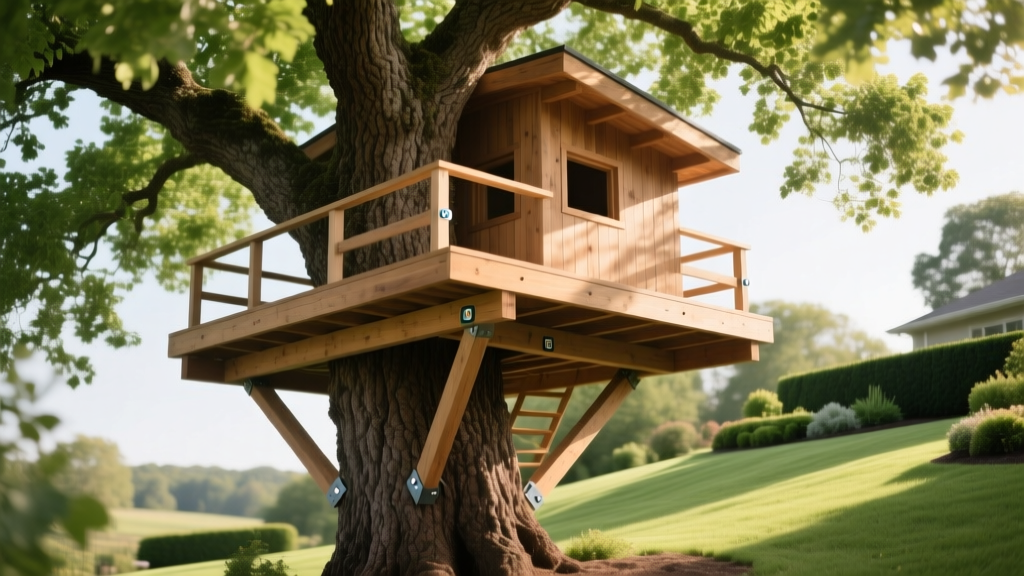
How to Build a Treehouse Around the Tree Trunk Safely
The Biology of Tree Wounds and the Cambium Layer
Building a treehouse is a premier backyard project, but the trunk is the lifeblood of the tree. The most critical layer of a tree is the vascular cambium, a microscopic layer of cells located just beneath the bark responsible for transporting water and nutrients. When beginners attempt to build a treehouse around the tree trunk by wrapping beams, ropes, or wires tightly against the bark, they compress this layer. This process, known as girdling, effectively strangles the tree, cutting off nutrient flow to the canopy and roots.
Trees do not heal wounds the way human skin does; they compartmentalize them. According to the University of Minnesota Extension, trees use a process called CODIT (Compartmentalization of Decay in Trees) to wall off damaged tissue. Every nail, screw, or tight wrap creates a permanent wound that the tree must expend energy to seal. Therefore, modern treehouse engineering relies on minimizing the number of punctures and maximizing the structural load of each individual fastener.
⚠️ CRITICAL WARNING: Never use nails, standard lag screws, or wrap-around cables to secure main support beams to a living tree. These methods cause massive cambium damage and will eventually lead to structural failure as the tree rejects the hardware or decays around the wound.
The Modern Solution: Treehouse Attachment Bolts (TABs)
To safely support thousands of pounds of lumber, hardware, and human weight without girdling the trunk, professional builders use Treehouse Attachment Bolts (TABs). A TAB is a heavy-duty, hot-dipped galvanized or stainless steel bolt featuring a wide, flat boss (collar) that rests against the outer bark, leaving a deliberate air gap between the wooden beam and the tree trunk.
Sizing Your TABs for Specific Wood Species
The holding power of a TAB depends entirely on the shear strength of the wood species and the diameter of the bolt. For a standard 8x8 foot treehouse platform, you will typically need four 1.25-inch or 1.5-inch diameter TABs.
- Hardwoods (White Oak, Hickory, Maple): Extremely high shear strength. A 1.25-inch TAB can safely support up to 8,000 lbs of shear load. Drill a 1-inch or 1-1/8-inch pilot hole using a ship auger bit.
- Softwoods (Southern Yellow Pine, Douglas Fir, Spruce): Lower shear strength. Upgrade to a 1.5-inch TAB to distribute the load over a wider area of the xylem. Drill a 1-1/4-inch pilot hole.
Step-by-Step: Installing the Main Supports
Proper installation of TABs requires precision. The Arbor Day Foundation emphasizes that maintaining tree health during construction requires minimizing bark tearing and ensuring clean, sharp drill cuts.
- Mark the Elevation: Use a laser level or water level to mark the exact height for your main beams. Never rely on the ground as a reference point, as terrain slopes.
- Drill the Pilot Holes: Use a heavy-duty 1/2-inch drill motor and a sharp ship auger bit. Drill perfectly level, perpendicular to the trunk. Stop drilling the moment the bit's threaded tip pulls through the opposite side of the bark to prevent blowout.
- Install the TABs: Thread the TAB onto a specialized installation wrench. Drive it into the pilot hole until the back of the boss (collar) is exactly 2 to 3 inches away from the bark. This gap is non-negotiable; it allows for radial trunk growth and prevents the beam from rubbing against the bark during wind sway.
- Mount the Main Beams: Rest your 2x10 or 4x6 pressure-treated main beams on the TAB's upper ledge. Secure the beam to the TAB using the provided top-fixing screws through the pre-drilled slots in the bolt's head.
Framing the Platform Hole Around the Trunk
Once your main beams are secured via TABs, you must frame the floor joists around the trunk. The trunk will sway in the wind independently of the platform, and it will grow outward. If your floorboards touch the bark, the friction will strip the bark off, inviting pests and fungal pathogens.
The Trimmer and Header Joist Method
Treat the trunk exactly like you would treat a stairwell opening when framing a house floor. You must create a rigid box around the trunk using trimmer and header joists.
PRO TIP: Maintain a minimum 3-inch clearance gap on all sides of the trunk. For fast-growing species like Silver Maple or Sycamore, increase this gap to 4 inches to account for rapid radial expansion over the next decade.
Install joist hangers on your main beams to support the trimmer joists. The trimmer joists run parallel to the main beams, while the header joists connect the trimmers, creating a square or octagonal frame around the trunk. Fill in the remaining field joists at 16 inches on-center, and lay your 5/4-inch cedar or composite decking boards. When cutting the decking boards around the trunk, use a compass to scribe the exact curve of the bark, maintaining your 3-inch gap.
2026 Material and Hardware Cost Matrix
Budgeting for a safe, tree-friendly build requires investing heavily in specialized hardware. Standard lumber yard lag bolts will not suffice. Below are current estimated costs for a standard 8x8 platform built around a single mature oak trunk.
| Component | Specification | Qty | Est. Cost (2026) |
|---|---|---|---|
| Treehouse Attachment Bolts (TABs) | 1.25" Hot-Dipped Galvanized | 4 | $380 - $450 |
| Main Support Beams | 2x10x10 PT Southern Yellow Pine | 2 | $55 - $70 |
| Floor Joists | 2x6x8 PT Lumber | 12 | $110 - $140 |
| Decking | 5/4x6x8 Cedar Boards | 25 | $220 - $280 |
| Heavy-Duty Joist Hangers & Fasteners | 18-gauge galvanized steel | 1 Lot | $65 - $85 |
| Total Estimated Platform Material Cost | $830 - $1,025 | ||
Managing Dynamic Loads and Tree Sway
If your treehouse design extends beyond a single trunk and relies on branches or adjacent trees for support, you must account for dynamic movement. Trees sway at different frequencies based on their height, canopy density, and root structure. If you bolt a rigid beam between two separate trees, the first major windstorm will tear the hardware out of the wood.
For multi-point supports, use sliding brackets. A sliding bracket features a long, horizontal slotted hole. The beam is bolted to the bracket, but the bolts are left slightly loose, allowing the beam to slide back and forth within the bracket as the tree sways. This ensures the treehouse moves harmoniously with the tree's natural biomechanics rather than fighting against it.
Frequently Asked Questions
Will drilling large holes for TABs kill my tree?
No, provided the tree is healthy and mature. A 1.25-inch hole drilled into the heartwood of a 20-inch diameter oak tree affects less than 1% of its vascular system. The tree will rapidly compartmentalize the wound around the galvanized steel. The danger lies in making dozens of small holes with nails, which creates a shotgun pattern of decay that the tree cannot effectively isolate.
Can I build a treehouse around a pine tree trunk?
Yes, but softwoods like pine require specialized engineering. Pine has lower shear strength and is prone to sap weeping from wounds. You must use larger diameter TABs (1.5-inch minimum) to distribute the weight, and you should expect the tree to push sap out of the drill site for the first few months. Place a drip catch or flashing below the bolt to prevent sap from ruining your lumber.
How do I seal the gap between the deck boards and the trunk?
Do not seal it. Beginners often attempt to use expanding foam, rubber gaskets, or caulking to close the 3-inch gap around the trunk to keep bugs and rain out of the space below. This is a severe mistake. The gap must remain entirely open to allow for wind sway, radial growth, and air circulation. If debris management is a concern, install a removable mesh screen underneath the platform instead of sealing the trunk.

