
Tree Care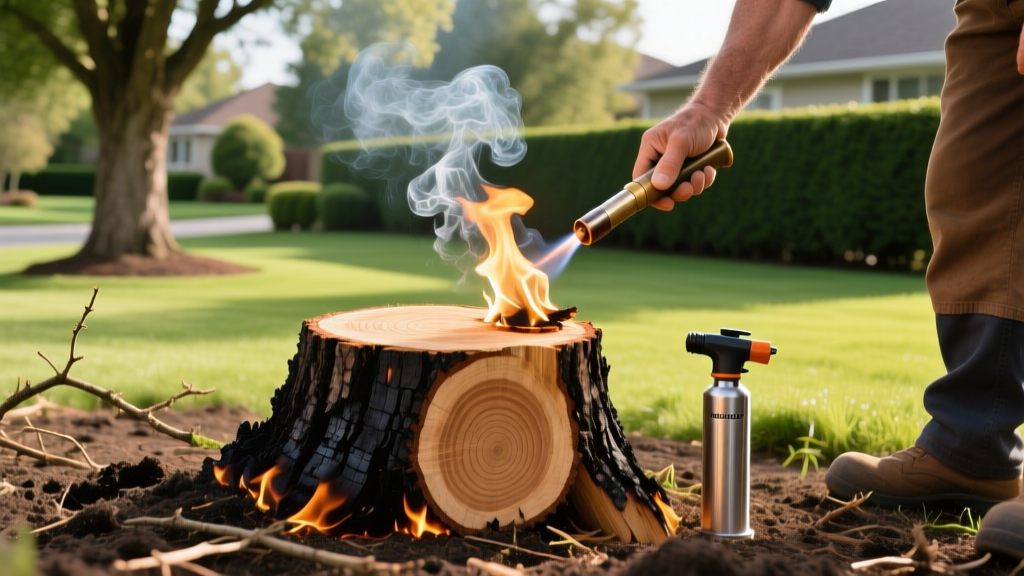
Burning a Stump Safely: A Guide to Fire and Chemical Removal
The Reality of Burning a Stump vs. Professional Grinding
Removing a tree leaves behind a stubborn root ball and trunk base that can harbor pests, disrupt mowing, and sprout unwanted suckers. While professional stump grinding typically costs between $150 and $400 depending on the diameter and root spread, burning a stump is a highly effective, low-cost alternative that requires less than $50 in materials. However, it is not an overnight fix. The process relies on a combination of chemical wood degradation and controlled smoldering, taking anywhere from four to eight weeks from initial preparation to final ash cleanup.
Unlike grinding, which physically shreds the wood into mulch, burning alters the cellular structure of the wood, turning it into ash that can be easily broken apart and mixed into the surrounding soil. According to the University of Minnesota Extension, chemical and fire-based removal methods are best suited for stumps located away from structures, utility lines, and highly flammable dry vegetation.
CRITICAL SAFETY WARNING: Before initiating any open burn or smoldering process, you must check your municipal code. Many counties enforce strict seasonal burn bans due to drought conditions. Furthermore, the National Fire Protection Association (NFPA) mandates that all outdoor fires be attended at all times and kept at least 50 feet away from structures. Violating local burn ordinances can result in severe fines and liability for any spread of fire.
Essential Tools and Materials
To successfully burn out a stump, you must bypass the outer bark and heartwood's natural fire resistance. You will need the following specific equipment:
- Power Drill with a 1-Inch Spade Bit: Standard twist bits are too narrow. A 1-inch spade bit allows for adequate chemical pooling and oxygen flow.
- Potassium Nitrate (KNO3): Sold as stump remover (e.g., Spectracide Stump Remover, approx. $12 for a 16 oz bottle). This chemical accelerates wood decay by providing oxygen to the decomposition process.
- Kerosene or Charcoal Lighter Fluid: Do not use gasoline. Gasoline flashes too quickly and poses a severe explosion risk. Kerosene burns slower and penetrates deeper into the drilled channels.
- Heavy-Duty Tarp and Bricks: To retain moisture during the chemical soaking phase.
- Garden Hose and Class A Fire Extinguisher: Mandatory for site safety and final dousing.
Step-by-Step Execution: The Drill-and-Burn Method
Phase 1: Drilling and Chemical Application (Weeks 1-4)
- Clear the Base: Use a mattock or shovel to expose the top and upper sides of the stump, removing soil and surface roots.
- Drill Vertical Holes: Drill holes straight down into the top of the stump using the 1-inch spade bit. Space the holes 3 to 4 inches apart. Drill as deep as possible, ideally 8 to 12 inches into the heartwood.
- Drill Angled Holes: Drill additional holes at a 45-degree angle from the sides of the stump, aiming to intersect with the vertical holes. This creates a internal channel network.
- Apply Potassium Nitrate: Fill each hole to the brim with the KNO3 granules. Pour warm water into each hole to dissolve the chemical and carry it deep into the wood fibers.
- Cover and Wait: Cover the stump with a dark plastic tarp, weighing down the edges with bricks. This traps moisture and heat, accelerating the chemical breakdown. Leave it undisturbed for 4 to 6 weeks. The wood will become spongy and highly combustible.
Phase 2: The Ignition and Smolder (Week 5)
- Prepare the Perimeter: Clear all dry leaves, twigs, and flammable mulch within a 10-foot radius. Wet the surrounding soil with a garden hose to create a firebreak.
- Add Fuel: Remove the tarp. Pour a small amount of kerosene into the drilled holes and over the top of the stump. Allow it to soak in for 15 minutes.
- Ignite: Light the stump using a long-reach butane lighter. The KNO3-treated wood will not produce a roaring bonfire; instead, it will create a deep, intense smolder that works its way down into the root system.
- Monitor Continuously: A stump can smolder for 12 to 24 hours. You must monitor it continuously. If the fire flares up, mist it lightly with water to maintain the smolder without extinguishing the core heat.
Accelerants vs. Natural Burn-Out: A Comparison Matrix
Choosing the right preparation method dictates your timeline, cost, and environmental impact. Below is a comparison of common stump removal accelerants.
| Method / Accelerant | Time to Burn-Ready | Approx. Cost | Effectiveness & Notes |
|---|---|---|---|
| Potassium Nitrate (KNO3) | 4 - 6 Weeks | $12 - $20 | Highest success rate. Chemically alters wood to sustain a deep smolder without constant fuel addition. |
| Epsom Salt (Magnesium Sulfate) | 3 - 6 Months | $8 - $15 | Dries and kills the wood but does not make it highly combustible. Better for natural rot than burning. |
| Diesel Fuel Soak | 1 - 2 Weeks | $15 - $30 | Highly flammable and toxic to surrounding soil. Not recommended due to severe groundwater contamination risks. |
| Natural Air-Dry (No Chemicals) | 6 - 12 Months | $0 | Requires the wood to fully cure and dry out. Green or damp stumps will simply extinguish and fail to burn to the roots. |
Managing the Smolder and Post-Burn Cleanup
Once the stump has burned down below the soil line, the remaining root mass will be a mixture of white ash and charcoal. Do not attempt to dig it out immediately while it is still hot; subsurface roots can retain heat for days and cause severe burns or ignite dry subsoil.
After 48 hours of cooling, use a pickaxe or digging bar to shatter the remaining charcoal. Because the KNO3 breaks down the lignin and cellulose, the roots will crumble easily. Mix the resulting wood ash into the surrounding soil. Wood ash is highly alkaline (pH 9-11) and rich in potassium and calcium. If your soil is naturally acidic, this ash acts as a beneficial lime substitute. However, if you plan to plant acid-loving shrubs like azaleas or rhododendrons in that exact spot, you should remove the ash and replace the cavity with fresh topsoil to prevent pH shock.
When to Abandon the Burn and Call a Professional
Burning a stump is highly effective for isolated yard trees, but specific site conditions make it dangerous or impossible. Hire a certified arborist with a mechanical stump grinder if you encounter any of the following edge cases:
Edge Case 1: Proximity to Hardscapes and Foundations. If the stump is within 5 feet of a concrete driveway, retaining wall, or home foundation, the intense subsurface heat can cause thermal cracking in the concrete or damage waterproofing membranes.
Edge Case 2: High Clay Content Soil. Heavy clay soils retain heat much longer than loamy or sandy soils. A smoldering root system in dense clay can bake the surrounding soil, sterilizing it and killing the root zones of nearby desirable trees or turfgrass.
Edge Case 3: Utility Line Interference. If the tree was located near underground gas, water, or fiber-optic lines, burning the taproot risks melting PVC piping or damaging line insulation. Always call 811 to have utility lines marked before attempting deep stump removal.
Edge Case 2: High Clay Content Soil. Heavy clay soils retain heat much longer than loamy or sandy soils. A smoldering root system in dense clay can bake the surrounding soil, sterilizing it and killing the root zones of nearby desirable trees or turfgrass.
Edge Case 3: Utility Line Interference. If the tree was located near underground gas, water, or fiber-optic lines, burning the taproot risks melting PVC piping or damaging line insulation. Always call 811 to have utility lines marked before attempting deep stump removal.
Frequently Asked Questions
Can I burn a stump that was recently cut down?
No. A freshly cut stump is saturated with moisture and sap, which will actively resist burning. You must allow the stump to dry and cure for at least 3 to 6 months, or use the Potassium Nitrate drilling method to chemically force the moisture out and break down the cellular structure before ignition.
Will burning a stump kill the surrounding grass?
The immediate heat will scorch the grass within a 2-to-3-foot radius. Furthermore, the resulting wood ash will temporarily spike the soil pH. To rehabilitate the area, rake out the excess ash, till the soil to a depth of 6 inches, and apply a sulfur-based soil acidifier if a soil test indicates the pH has risen above 7.5 before reseeding.
How deep do the roots actually burn?
The fire will consume the taproot and major lateral roots until it hits the soil moisture barrier or the wood tapers below the thickness required to sustain a smolder (usually around 1 inch in diameter). You will typically burn 12 to 18 inches below the original grade, which is sufficient to prevent regrowth and allow for new landscaping.

